
24/7 Customer Support

Free returns

Same-day & Next-day Delivery

Quality Guaranteed

Unlock Your Welcome Offers: FREE Delivery | Up to 80% OFF | Free 30-day JoyPlus trial
Download the APP
By Joybuy Product Recommendation Officer
Whether you want smooth peanut butter for toast, crunchy peanut butter for texture or a large jar for cooking, the label can make comparison harder than it needs to be. Terms such as “natural”, “protein” and “no added sugar” do not always describe the same formulation.
A sensible purchase starts with three checks: the ingredient list, the intended use and the pack size. This helps UK shoppers avoid paying for unnecessary extras or buying a product that does not suit their household.
A jar may look like natural peanut butter but contain sugar, palm oil, salt and emulsifiers. These ingredients are not automatically unsuitable, but they change the product’s nutritional profile and may matter if you specifically want no added sugar peanut butter or a short ingredient list.
For example, products made with 100% peanuts have a different formulation from spreads containing 90% or 96% peanuts. Always check the ingredients rather than relying on front-of-pack wording.
Peanut butter naturally contains protein, but a “protein” snack may be a chocolate-coated bar or an oat product with added soya protein rather than a jar of peanut spread. KIND Protein Crunchy Peanut Butter bars provide 8.4g protein per 42g bar, while Quaker Peanut Butter Protein sachets contain 22g protein per 100g dry mix and 9g per serving according to the supplied product information.
These products serve different purposes. One is a portable snack and the other is a cooked breakfast, so compare the per-serving figures, not just the product name.
A peanut butter multipack or 1kg jar can be practical for families and frequent users, but an opened jar may need to be consumed within a stated period. Pip & Nut’s 1kg smooth peanut butter advises consumption within three months after opening, while its 300g crunchy version also advises eating within three months.
If you use peanut butter occasionally, a 280g–340g jar may reduce waste. If you prepare sandwiches, smoothies, sauces or porridge regularly, the larger format may offer more convenience.
For a simple spread, look for the proportion of peanuts near the beginning of the list. Whole Earth Smooth Peanut Butter and Meridian Smooth Peanut Butter are listed as containing 100% peanuts. Morrisons Smooth Peanut Butter 1kg also lists peanuts as its only ingredient and provides 26.1g protein per 100g.
Other products may include sugar, salt, palm oil or emulsifiers to adjust sweetness, texture and oil separation. This is particularly important when comparing natural peanut butter, vegan peanut butter or a spread for everyday family use.
Smooth peanut butter is easy to spread, blend into porridge and use in sauces. It is generally more practical for baking, smoothies and sandwich fillings.
Crunchy peanut butter contains peanut pieces and works well when you want contrast on toast, crackers or apple slices. Pip & Nut Crunchy Peanut Butter contains 99.4% Argentinian hi-oleic peanuts and 0.6% sea salt, while Tropical Sun Crunchy Peanut Butter contains ground and kibbled peanuts alongside sugar, palm oil, salt and an emulsifier.
Natural oil separation is normal in some products. If the label instructs you to stir the jar, do so before judging its consistency.
Peanut butter is energy-dense. The supplied products generally provide around 590–620 kcal per 100g, with fat forming a significant part of the nutritional profile. That does not make them unsuitable, but portion size matters.
Check protein, fibre, sugars, saturates and salt together. For instance, Whole Earth Smooth Peanut Butter lists 29.6g protein, 8.5g fibre and 0g salt per 100g. Morrisons Smooth Peanut Butter 340g lists 23.4g protein and 7.9g sugars per 100g because its formulation includes sugar.
Also check allergen information. Peanut products must be avoided by people with peanut allergies, and mixed pastes may contain other allergens such as sesame or soya. Products should be stored according to the packaging, and young children should be supervised because thick spreads can present a choking risk.
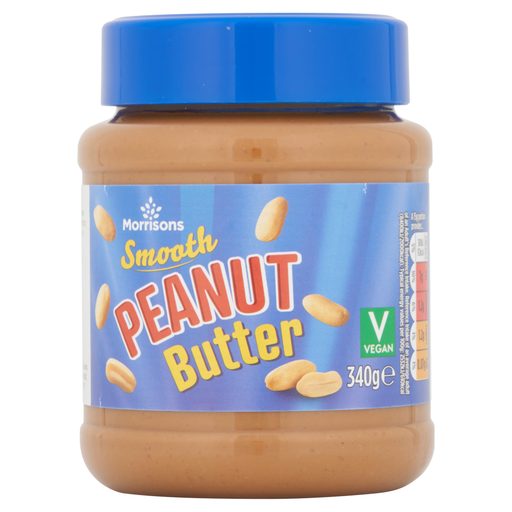
Why This Fits Their Persona: A practical everyday jar for shoppers trying peanut butter for toast, fruit, porridge or simple sandwiches without committing to a large format.
The product information clearly lists 96% peanuts, so shoppers can see that it is not a 100% peanut recipe and can account for the added palm oil, sugar and salt.
Smooth texture; 340g format; listed as suitable for vegans and vegetarians.
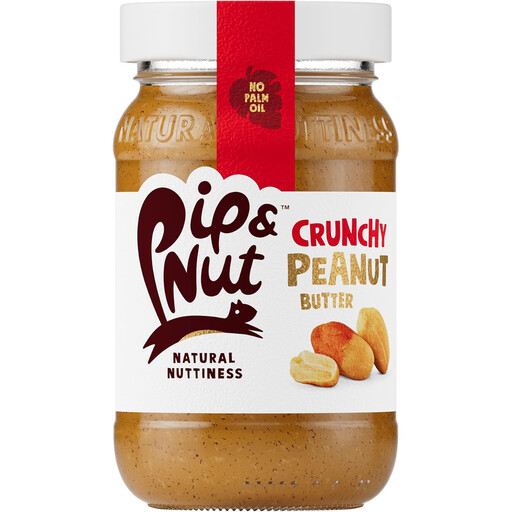
Why This Fits Their Persona: Suits shoppers who prioritise a short ingredient list and a noticeable crunchy texture for breakfast, snacks and desserts.
The stated recipe contains 99.4% peanuts and 0.6% sea salt, with no palm oil listed. Oil separation is identified as natural rather than a product fault.
27g protein per 100g; 7.5g fibre per 100g; crunchy peanut pieces.

Why This Fits Their Persona: A large cupboard format for households using peanut butter for cooking, baking, smoothies, porridge and frequent sandwiches.
The 1kg pack is made with 100% peanuts and lists no added sugar, salt or palm oil, helping frequent users avoid repeatedly buying smaller jars with extra ingredients.
1kg quantity; 26.1g protein per 100g; suitable for vegans and vegetarians.
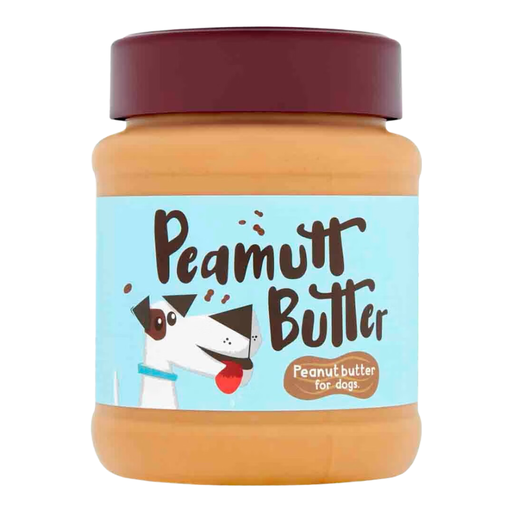
Why This Fits Their Persona: Designed for dog owners who want a spread for lick mats, enrichment toys or occasional training rewards rather than a human food jar.
It is formulated specifically for dogs and lists peanuts and palm oil, with no added sugar, salt or artificial sweeteners. It is not for human consumption.
97.5% peanuts; 340g pack; suitable for dogs at all life stages according to the supplied listing.
We have compiled a complete, real-time list of products that fully satisfy these strict selection criteria and UK safety regulations.
Some peanut butter products are suitable for vegans, particularly those made only with peanuts or peanuts and salt. However, recipes vary. Check for milk, honey and other animal-derived ingredients, and always read the current packaging.
Most jars should be kept in a cool, dry place and tightly sealed. Oil separation can be natural, particularly in products without stabilising ingredients. Stir before use where instructed. Some mixed peanut and sesame pastes require refrigeration after opening, so follow the label rather than assuming all jars have identical storage requirements.
Use only a product specifically formulated for dogs or one whose ingredients have been checked carefully. Avoid products containing added sugar, salt or artificial sweeteners, and never give peanut butter to a dog with a known peanut allergy. Serve small amounts as an occasional treat, supervise consumption and consult a vet if you are uncertain about suitability.