Choose a reduced-fat peanut butter if you want less fat than a comparable standard spread, but do not treat the wording as meaning the product is low fat. Tesco states that its Reduced Fat Peanut Butter has 30% less fat than its smooth peanut butter, yet declares 35.1g fat per 100g; Food & Drink Innovation & Assurance lists no more than 3g per 100g as the condition for a low-fat claim on solid food. Compare the fat figure per 100g, then check the portion you plan to eat and any ingredients that matter to you.
Who needs which checks?
The useful distinction is whether your plan calls for a low-fat food, a relative reduction in fat, or a different feature such as less salt.
Shoppers with an absolute fat limit
If a food must meet a specific per-100g limit, check its nutrition panel rather than relying on a reduced-fat claim. The peanut products discussed here have fat figures well above the condition Food & Drink Innovation & Assurance lists for a low-fat claim on solid food.
Peanut-butter users seeking a relative reduction
A reduced-fat spread may suit someone who wants peanut butter for toast or recipes while comparing it with a standard version. Its total fat and ingredients still need checking.
Snackers comparing salt and ingredients
Unsalted peanuts address salt rather than total fat. An ingredients list can also distinguish a peanut-only spread from a spread containing other ingredients.
What should you compare?
Start with fat per 100g to compare formats on the same basis, then look at the portion, ingredients and pack information relevant to your choice.
| Priority | What to check | Your needs |
|---|
| Fat claim |
Read the fat figure per 100g. Food & Drink Innovation & Assurance lists no more than 3g per 100g as the condition for a low-fat claim on solid food; a reduced-fat claim compares a product with another version. |
If I need a food that meets an absolute low-fat limit, a reduction from standard peanut butter is not enough on its own. |
| Portion |
Compare per-100g figures first, then read the stated serving size and its fat and energy figures. Tesco declares 35.1g fat per 100g for its reduced-fat spread; Tesco Groceries lists 15g fat per 30g serving for KP Unsalted Peanuts. |
A spoonful of spread and a handful of peanuts are different portions. I want to check the amount I would actually use. |
| Ingredients |
Compare the full lists. Tesco lists roasted peanuts, dried glucose syrup, maltodextrin, palm oil and salt in its reduced-fat spread; Sainsbury's lists peanuts as the sole ingredient in its 100% Smooth Peanut Butter. |
I may prefer a peanut-only spread, even though Sainsbury's declares 49.6g fat per 100g for that product. |
| Salt and allergens |
Read the salt declaration separately from fat. Tesco Groceries lists less than 0.01g salt per 30g serving for KP Unsalted Peanuts, alongside 51g fat per 100g. Check the current pack for ingredients and allergen statements. |
Unsalted matters to me, but it does not answer my question about fat. If allergens are relevant, I need the current pack information rather than an assumption based on a short ingredients list. |
Common label mistakes
-
Reading “reduced fat” as “low fat”
Tesco declares 35.1g fat per 100g for its Reduced Fat Peanut Butter. That is above the 3g-per-100g condition Food & Drink Innovation & Assurance lists for a low-fat claim on solid food.
If an absolute limit matters, use the per-100g nutrition figure rather than the comparative wording.
-
Choosing unsalted peanuts to reduce fat
Unsalted describes salt, not fat: Tesco Groceries lists 51g fat per 100g for KP Unsalted Peanuts.
Compare salt and fat as separate entries on the nutrition panel.
-
Overlooking ingredients in a reduced-fat spread
Tesco's reduced-fat spread lists ingredients beyond peanuts, while Sainsbury's 100% Smooth Peanut Butter lists peanuts only. Their different fat figures do not tell you which ingredients each contains.
Read both the nutrition panel and ingredients list before choosing between them.
-
Using an online listing instead of the current pack
Ingredients and pack information can change. The Food Standards Agency explains that precautionary allergen labelling communicates the possible unintended presence of an allergen.
Check the current pack's nutrition, ingredients and allergen statements, as well as availability before purchase.
Relevant brand examples
These examples illustrate different label and ingredient choices; they are not a list of brands available on Joybuy.
Tesco
Tesco Reduced Fat Peanut Butter illustrates a relative reduction in a spread.
- Tesco states that it has 30% less fat than Tesco smooth peanut butter and declares 35.1g fat per 100g.
- Its ingredients include dried glucose syrup, maltodextrin, palm oil and salt as well as roasted peanuts. The declared fat figure is above the low-fat-claim condition for solid food listed by Food & Drink Innovation & Assurance.
Sainsbury's
Sainsbury's 100% Smooth Peanut Butter offers a peanut-only ingredients comparison.
- Sainsbury's lists peanuts as its sole ingredient.
- The same product declares 49.6g fat per 100g; a short ingredients list does not make it low fat.
KP
KP Unsalted Peanuts provide an example of a snack labelled for salt rather than fat.
- Tesco Groceries lists less than 0.01g salt per 30g serving for KP Unsalted Peanuts.
- The listed ingredients are peanuts and sunflower oil, and the product declares 51g fat per 100g.
Peanut products on Joybuy
These peanut products offer whole-kernel and unsalted-snack options to compare by label and intended use. None should be treated as low fat simply because it is plain or unsalted.
 No image available
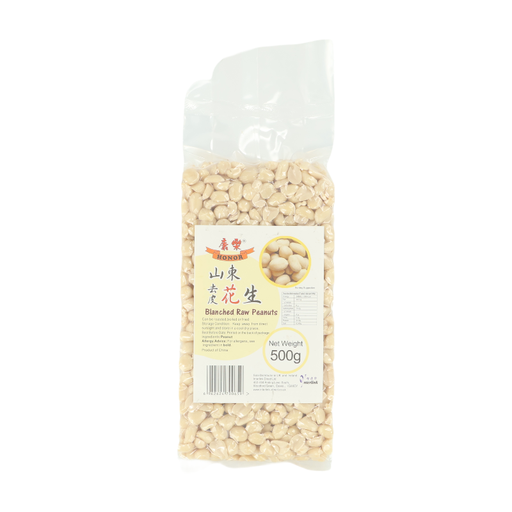
HONOR Blanched Peanut Kernels 500g
Blanched kernels are an option if you want peanuts to prepare yourself rather than a flavoured snack. Check the pack's preparation directions before eating and compare its fat per 100g with any limit you need to meet.
View on Joybuy
 No image available
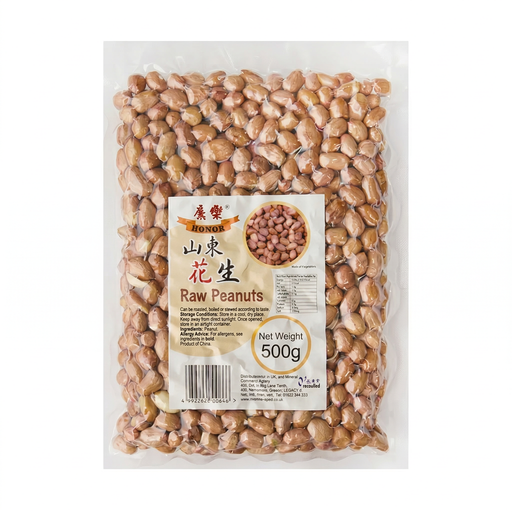
Honor Shandong Raw Peanuts 500g
Raw peanuts suit a plan to prepare the kernels at home, not to eat them straight from the pack. Follow the pack's cooking directions and check its per-100g fat figure when comparing it with other peanut products.
View on Joybuy
 No image available
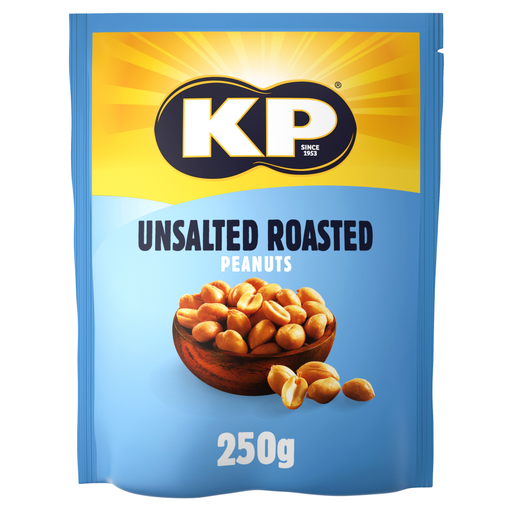
KP Snacks Unsalted Roasted Peanuts 250g
An unsalted roasted-peanut snack if salt is the feature you are comparing. Tesco Groceries lists peanuts and sunflower oil as ingredients, less than 0.01g salt per 30g serving, and 51g fat per 100g; unsalted does not mean low fat.
View on Joybuy
Questions about fat and peanut products
Does “reduced fat” mean peanut butter is low fat?
No: reduced fat describes a comparison with another product, not an absolute fat figure. Tesco states that its Reduced Fat Peanut Butter has 30% less fat than Tesco smooth peanut butter, but declares 35.1g fat per 100g. Food & Drink Innovation & Assurance lists no more than 3g per 100g as the condition for a low-fat claim on solid food.
Should I compare fat per serving or per 100g?
Use per 100g to compare products on the same basis, then check the stated serving size against the amount you intend to eat. Tesco Groceries lists 15g fat per 30g serving for KP Unsalted Peanuts; a different portion will contain a different amount.
Are unsalted peanuts lower in fat?
An unsalted label does not establish a lower fat content. Tesco Groceries lists less than 0.01g salt per 30g serving for KP Unsalted Peanuts, but 51g fat per 100g. Read the fat and salt entries separately.
Is a short ingredients list enough to judge allergen risk?
No. Check the current pack's allergen declaration and any precautionary statement as well as its ingredients. The Food Standards Agency explains that precautionary allergen labelling communicates the possible unintended presence of an allergen; an ingredients list alone does not settle that question.


