Home workers prioritising lower fat
If a peanut-based ingredient is part of your lunch, compare fat per 100g and the stated reduced-fat reference product. An unsalted or peanut-only label answers a different question.


If reducing fat is the priority for a working-from-home lunch, start with a peanut product that states a reduced-fat comparison, then check its fat per 100g and ingredients. Tesco Reduced Fat Peanut Butter, for example, states 30% less fat than Tesco smooth peanut butter; unsalted whole peanuts serve a different purpose, while peanut powder needs a current pack label before you make a numerical comparison.
If a peanut-based ingredient is part of your lunch, compare fat per 100g and the stated reduced-fat reference product. An unsalted or peanut-only label answers a different question.
A peanut-only butter may suit a short ingredient-list preference. Compare its fat value separately and decide how much you plan to use at lunch.
Check the ingredients and any precautionary allergen statement on each pack, particularly when switching between whole nuts, spreads, powders and mixed-ingredient bars. The Food Standards Agency explains that precautionary wording can indicate possible unintended allergen presence.
Choose the format that works for your lunch, but use the nutrition panel—not the format name—to assess fat.
| Priority | What to check | Your needs |
|---|---|---|
| Fat comparison | Look for the named reference product behind a reduced-fat claim. Compare fat per 100g, then the amount in the portion you expect to use. | I want to reduce the fat in my peanut-based lunch, rather than assume that “unsalted” means lower fat. Tesco Groceries states that its Reduced Fat Peanut Butter has 30% less fat than Tesco smooth peanut butter. |
| Product format | Decide whether you need a ready-to-spread butter, whole peanuts or a powder you will mix into food. For powder, check the current pack nutrition panel before making a numerical comparison. | A spread is convenient for a sandwich; I might use powder in a filling or sauce if I am happy to mix it. Tesco Groceries Marketplace describes PBfit Pure Peanut Powder as pressed roasted peanuts, but its listed nutrition values need checking against the pack. |
| Ingredients | Read the full ingredient list alongside the fat value. A reduced-fat spread and a peanut-only butter need not have the same ingredients. | If a short ingredient list matters to me, I will compare that preference separately from fat. Sainsbury’s lists peanuts as the ingredient in its 100% Crunchy Peanut Butter. |
| Salt and portion | Read salt and fat for the same serving size, and check fat per 100g when comparing different products. | For a desk lunch, I would portion whole peanuts rather than eat from the pack. Tesco Groceries lists less than 0.01g salt but 15g fat per 30g serving for KP Unsalted Peanuts. |
| Allergens | Check declared ingredients and precautionary allergen wording on the pack each time you change products. | I need to know whether peanuts, other nuts or possible unintended allergens affect the product I can choose. The Food Standards Agency says precautionary labelling communicates possible unintended allergen presence. |
Those descriptions concern salt or ingredients. Tesco Groceries lists 51g fat per 100g for KP Unsalted Peanuts, while Sainsbury’s lists 49.8g per 100g for its 100% Crunchy Peanut Butter.
Compare the fat line per 100g first, then check the amount in your intended portion.
Tesco Reduced Fat Peanut Butter includes dried glucose syrup, maltodextrin, palm oil and salt alongside roasted peanuts; Sainsbury’s 100% Crunchy Peanut Butter lists peanuts as its ingredient.
Read the ingredients and nutrition panel together if both composition and fat matter to you.
Tesco Groceries Marketplace describes PBfit Pure Peanut Powder as pressed roasted peanuts, but its displayed nutrition values are inconsistent.
Use the current physical pack or manufacturer panel for a numerical fat or energy comparison.
A peanut powder, spread or mixed-ingredient bar can carry different ingredient and precautionary allergen statements. The Food Standards Agency explains that precautionary wording signals possible unintended allergen presence.
Check the wording on the specific pack rather than assuming it matches another product in the range.
Its Reduced Fat Peanut Butter provides an explicit comparison with Tesco smooth peanut butter.
Its Unsalted Peanuts offer a whole-peanut option with nutrition information for a 30g serving.
Its 100% Crunchy Peanut Butter is a reference point for a peanut-only ingredient list.
Its 100% Smooth Peanut Butter is another peanut-only spread to compare by ingredient and nutrition label.
Its Protein Nuts Mix is a mixed-nut reference rather than an identified reduced-fat option.
These options cover a portioned peanut-and-fruit bar and unsalted whole peanuts for a home lunch. Compare their pack labels against your fat, ingredient and allergen needs; neither format alone establishes a reduced-fat claim.
 Image unavailable
The individual bars offer a defined portion for lunch. This is a fruit-and-nut bar rather than peanut butter or plain peanuts; check the pack’s fat value and its peanut, hazelnut and other allergen information.
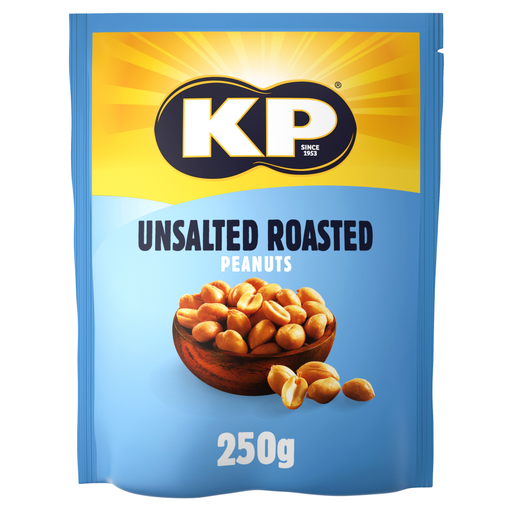 Image unavailable
Choose these when unsalted whole peanuts, rather than a reduced-fat spread, fit your lunch. Tesco Groceries lists 15g fat and less than 0.01g salt per 30g serving, and 51g fat per 100g; check the pack for allergens.
No. Unsalted describes salt, not fat. Tesco Groceries lists less than 0.01g salt and 15g fat per 30g serving for KP Unsalted Peanuts, so check both lines separately.
Not necessarily. Tesco Reduced Fat Peanut Butter lists roasted peanuts alongside dried glucose syrup, maltodextrin, palm oil and salt. Compare its ingredients with the fat value if both matter to your choice.
A peanut-only ingredient list does not establish a fat reduction. Sainsbury’s lists 49.8g fat per 100g for its 100% Crunchy Peanut Butter, while the M&S 100% Smooth Peanut Butter information published by Ocado lists 43.9g per 100g.
Compare fat per 100g and for the amount you would actually use, using the current pack or manufacturer nutrition panel. Tesco Groceries Marketplace describes PBfit Pure Peanut Powder as pressed roasted peanuts, but its displayed nutrition values are inconsistent, so they cannot support an exact comparison.
It is precautionary allergen wording about possible unintended presence, not a statement that a product is free from other allergens. The Food Standards Agency describes this purpose of precautionary labelling; check the wording on the specific pack.