What should you compare?
For a snack 60–90 minutes before exercise, University College London Hospitals NHS Foundation Trust advises carbohydrate, protein and minimal fat. The three peanut formats meet different parts of that brief.
Peanut powder
Consider it when: Reducing fat is the priority and you can mix it with a carbohydrate-containing food. Ocado lists PBfit Pure Peanut Powder at 2g fat and 9g protein per 16g serving.
Trade-off: It needs preparation and is not a ready-to-eat whole-nut snack; check the finished snack rather than treating the powder as the entire pre-workout food.
Reduced-fat peanut butter
Consider it when: You want a spread for toast or another carbohydrate-containing food. Tesco Groceries says its Reduced Fat Smooth Peanut Butter has 30% less fat than Tesco smooth peanut butter.
Trade-off: That comparison does not make it fat-free: Tesco lists 35.1g fat per 100g. Check the serving size, ingredients and current availability.
Whole peanuts
Consider them when: You want a ready-to-eat nut snack and reducing fat is not your main aim. Sainsbury’s lists KP Unsalted Peanuts at less than 0.01g salt per 30g serving.
Trade-off: The same 30g serving contains 15g fat, so it is less aligned with the minimal-fat advice for the 60–90 minute pre-workout window.
| Priority |
What to check |
Your needs |
| Snack timing |
Check how long remains before exercise and whether the snack includes carbohydrate and protein. University College London Hospitals NHS Foundation Trust advises minimal fat for a snack 60–90 minutes beforehand. |
I need something to eat shortly before training, not just a serving of nuts on its own. |
| Fat content |
Compare fat per 100g on the same basis, then check the amount in the portion you will eat. A reduced-fat claim should name what the product is compared with. |
Lower fat matters to me, so an unsalted label alone will not answer my question. |
| Carbohydrate and protein |
Read both values per serving and consider the whole snack, including anything eaten with the peanut product. The British Dietetic Association identifies carbohydrate as a fuel source for exercising muscles. |
I want peanut flavour or protein without mistaking it for the carbohydrate component of my snack. |
| Ingredients and allergens |
Read the current ingredient list and allergy advice, including precautionary statements on mixes and bars. Check the exact product and variant you intend to eat. |
I need to know which nuts and other declared allergens are in the product before choosing it. |
Ready-to-eat options on Joybuy
These peanut-themed bars are ready-to-eat options if you prefer a packaged snack to mixing powder or preparing a spread. Compare each pack’s nutrition and allergens with your timing and fat-reduction aim; the bars are not substitutes for a like-for-like comparison of peanut powder, spread and whole peanuts.
 No image available
Nakd Peanut Delight, 4 x 35g
A packaged peanut-themed option when you want a snack without mixing powder. Confirm the exact bar on the pack, then read its fat, carbohydrate, ingredients and allergen information before choosing it for a pre-workout snack.
View on Joybuy
 No image available
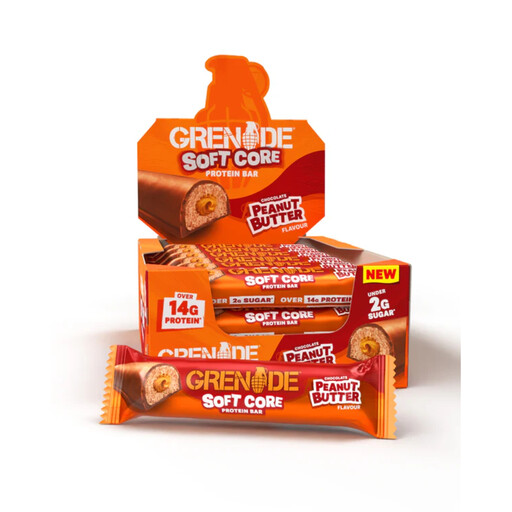
Grenade Soft Core Protein Bar Peanut Butter, 12 x 50g
A peanut-butter-flavoured bar format for a snack that needs no preparation. Compare fat and carbohydrate per 50g bar, and check the ingredients and allergen advice before eating it close to training.
View on Joybuy
 No image available
Nature Valley Protein Peanut & Chocolate Bars, 4 x 40g
A ready-to-eat peanut and chocolate bar option. Check fat and carbohydrate per 40g bar against the snack you intend to eat before exercise, and read the current allergen label.
View on Joybuy
Questions about pre-workout peanut snacks
Are whole peanuts a reduced-fat pre-workout option?
Not if reducing fat is the aim: Sainsbury’s lists KP Unsalted Peanuts at 15g fat per 30g serving. For a snack 60–90 minutes before exercise, University College London Hospitals NHS Foundation Trust advises carbohydrate, protein and minimal fat, so compare a peanut powder or reduced-fat spread alongside a carbohydrate food.
What can I eat with peanut powder before exercise?
Mix or serve it with a carbohydrate-containing food, such as porridge or toast, rather than treating the powder as the whole snack. The British Dietetic Association identifies carbohydrate as a fuel source for exercising muscles; Ocado lists 9g protein per 16g serving of PBfit Pure Peanut Powder.
Does reduced-fat peanut butter contain little fat?
Not necessarily. Tesco Groceries says its Reduced Fat Smooth Peanut Butter has 30% less fat than Tesco smooth peanut butter, while listing 35.1g fat per 100g. Check both the stated comparison and the amount in your serving.
Can I choose unsalted peanuts instead?
Yes, if lower salt rather than lower fat is your priority. Sainsbury’s lists less than 0.01g salt and 15g fat per 30g serving of KP Unsalted Peanuts, so they are not a reduced-fat substitute.
Are peanut powder and peanut butter suitable for someone with a peanut allergy?
No: products made from peanuts contain peanuts. Check the current pack’s ingredients and allergy advice for the exact product, including any precautionary warnings relevant to you.


