Hosts making peanut-flavoured party food
Pressed peanut powder can go into a dip, sauce or baked snack when reducing fat matters more than putting out a bowl of nuts. It needs preparation and still contains peanuts.


For a New Year’s Eve dip, sauce or baked snack where reducing fat matters, peanut powder is the more relevant format: Ocado lists PBfit Pure Peanut Powder at 13g fat per 100g, but it needs mixing into food. A reduced-fat peanut butter suits a spread instead; if guests want a ready-to-serve bowl, unsalted whole peanuts provide that format without meeting a reduced-fat goal—Tesco lists KP Unsalted Peanuts at 51g fat per 100g.
Pressed peanut powder can go into a dip, sauce or baked snack when reducing fat matters more than putting out a bowl of nuts. It needs preparation and still contains peanuts.
Unsalted roasted peanuts are ready to serve when crunch and less salt are the priorities. Check the fat value separately: Tesco lists 51g fat per 100g for KP Unsalted Peanuts.
Check the current pack’s allergen information before serving any peanut format. The NHS says whole nuts should not be given to children under five because they can choke on them.
Decide whether you need an ingredient, a spread or a ready-to-serve snack before comparing nutrition panels.
Choose when: You are making a dip, sauce or baked snack and reducing fat is the priority.
Trade-off: It must be mixed into food and will not provide a bowl of whole, crunchy peanuts.
Choose when: You need a spread or an ingredient for a peanut-butter-based recipe.
Trade-off: “Reduced fat” compares a spread with a reference product; check its actual fat value and ingredients.
Choose when: A ready-to-serve, crunchy bowl matters more than reducing fat.
Trade-off: Less salt does not mean less fat, and whole nuts must be kept away from children under five.
| Priority | What to check | Your needs |
|---|---|---|
| Fat content | Compare fat per 100g on the same basis, then check the amount you plan to use. Ocado lists PBfit Pure Peanut Powder at 13g per 100g; Tesco lists KP Unsalted Peanuts at 51g per 100g. | I’m making party food with peanut flavour and want to compare its fat content with a whole-nut snack. |
| Serving format | Check whether the product needs mixing, works as a spread or can go straight into a bowl. Follow the preparation directions for powder. | A sharing bowl needs something ready to serve; for a dip or canapé, I can prepare an ingredient beforehand. |
| Saturates and salt | Read both values on the current nutrition panel rather than treating “unsalted” or “reduced fat” as a summary of the whole product. The Food Standards Agency advises comparing saturated-fat values when reducing saturated-fat intake is the aim. | I want to compare like-for-like labels without confusing a lower-salt choice with a lower-fat one. |
| Guest safety | Check the current ingredient and allergen statements. Follow NHS guidance not to give whole nuts to children under five because of choking risk. | If guests have allergies or young children are attending, I need to decide what can be served safely before setting food out. |
Salt and fat are separate label values. Tesco lists KP Unsalted Peanuts at 51g fat per 100g despite their very low listed salt content.
Compare fat per 100g if fat reduction is your aim; choose unsalted whole peanuts for a lower-salt bowl, not as a reduced-fat substitute.
PBfit Pure Peanut Powder is an ingredient for mixing into food, not whole roasted peanuts that can be poured into a serving bowl.
Plan a prepared dip, sauce or baked snack if choosing powder. If you need immediate crunch, check the nutrition panel of a whole-nut option instead.
Tesco lists PBfit Pure Peanut Powder as peanut flour, while its own Reduced Fat Smooth Peanut Butter contains ingredients in addition to roasted peanuts. Their formats and nutrition panels differ.
Choose by the recipe’s required texture, then compare ingredients, fat and saturates on the products you are considering.
Powder, spread and whole peanuts all contain peanuts. The NHS warns that children under five can choke on whole nuts.
Check each current pack’s allergen statement and ask guests about relevant allergies. Do not give whole nuts to children under five.
These examples illustrate different peanut formats; a brand name alone does not establish that every product in its range has the same nutrition values.
PBfit Pure Peanut Powder is an ingredient for prepared food rather than a ready-to-eat nut bowl.
Tesco’s Reduced Fat Smooth Peanut Butter is a spread or recipe ingredient, not whole nuts.
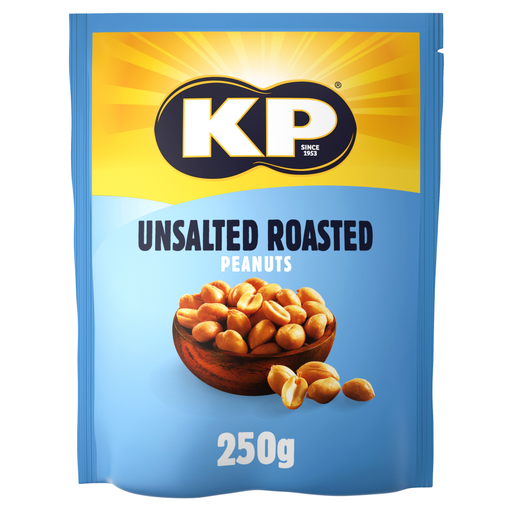
KP Unsalted Peanuts are a whole-nut option for a crunchy party bowl.
M&S Eat Well Roasted Peanuts offer another whole-peanut format for a sharing bowl.
This unsalted whole-peanut option is for a ready-to-serve party bowl when crunch and less salt matter more than reducing fat.
 No image available
These whole peanuts suit a ready-to-serve bowl, not a reduced-fat recipe. Tesco lists KP Unsalted Peanuts at 51g fat per 100g and less than 0.01g salt per 30g serving. They contain peanuts; the NHS says whole nuts should not be given to children under five.
No: “unsalted” describes salt, not fat. Tesco lists KP Unsalted Peanuts at 51g fat per 100g, while M&S lists 49.6g per 100g for its Eat Well Roasted Peanuts. Check the fat value if that is your reason for choosing a different snack.
Use it as an ingredient in a prepared dip, sauce or baked snack, following the product’s directions. Ocado lists PBfit Pure Peanut Powder at 13g fat per 100g and 2g per 16g serving; it does not replace the texture of a bowl of whole peanuts.
Not necessarily. Tesco says its Reduced Fat Smooth Peanut Butter has 30% less fat than Tesco smooth peanut butter, but lists 35.1g fat per 100g for the reduced-fat product. Read the full nutrition panel rather than relying on the comparative claim alone.
Check the current pack’s ingredients and allergen statement before serving any peanut powder, spread or whole peanuts. A lower-fat format still contains peanuts; M&S also advises checking the product label because food information can change.
Do not give whole nuts to children under five: the NHS says they can choke on them. For food prepared for young children, the NHS advises adding crushed or ground nuts to food rather than offering whole nuts, and says not to give nut butter on its own.