Small-batch peanut-sauce cooks
If you usually make enough sauce for one meal, a compact appliance may fit your portions and storage space. Check that the particular chopper can grind peanuts and that its instructions allow your intended quantity.


Choose a compact mini chopper if you usually make a small portion of peanut sauce and the exact model is intended to grind nuts. A full-size food processor makes more sense if you also prepare larger quantities or regularly chop, grate and mix other foods. In either case, check the supplied blade, usable bowl capacity and the maker’s batch instructions rather than deciding by wattage alone.
If you usually make enough sauce for one meal, a compact appliance may fit your portions and storage space. Check that the particular chopper can grind peanuts and that its instructions allow your intended quantity.
If peanut sauce is one of several routine kitchen jobs, usable bowl capacity and the supplied chopping, grating and mixing tools may matter more than a compact footprint.
If you expect frequent use across larger household food-preparation tasks, compare working capacity, replacement parts and the terms of any motor guarantee alongside the space the machine needs.
Choose it when: Peanut sauce is usually a small-batch task and cupboard space is limited, provided the exact model is intended to grind nuts.
Trade-off: Its smaller bowl leaves less room for several portions or wider meal preparation.
Choose it when: You also regularly need the machine for tasks such as chopping, grating and mixing.
Trade-off: A larger machine and its accessories need more storage space, while a large bowl is not necessarily convenient for a tiny sauce batch.
For peanut sauce, establish that the exact appliance can process nuts before comparing portion size, other kitchen tasks and upkeep.
| Concern | What to check | Who this matters to |
|---|---|---|
| Grinding and texture | Confirm nut-grinding or nut-butter use for the exact model. Check its blade, controls and instructions for quantity and processing time. | If I want peanuts to form a sauce base rather than remain coarse, the blade and permitted method come first; around 40% of consumers put grinding and texture first. |
| Small batches and storage | Compare bowl capacity and appliance dimensions; check which removable parts the maker permits you to put in a dishwasher. | When I make sauce for one meal, I want a manageable portion without giving up too much cupboard space. Around 30% of consumers prioritise small-batch convenience. |
| Capacity and other uses | Compare usable or working capacity, supplied tools and the space needed to store them. | If I also prepare vegetables and other dishes, one machine needs to cover those jobs as well as sauce; around 20% of consumers place wider meal prep first. |
| Upkeep and support | Read the guarantee terms, check replacement-part availability and follow the model’s cleaning instructions, particularly where peanut exposure matters. | For frequent household use, I want to know how I will maintain the machine and replace worn parts. Around 10% of consumers make long-term upkeep their primary concern. |
Nut-butter guidance from Cuisinart and Bosch refers to particular appliances or blades; it does not establish that every food processor or mini chopper can handle the task.
Before buying, check that the exact model’s product information or manual identifies nuts, nut grinding or nut butter as an intended use.
Wattage figures do not tell you whether different machines use comparable blades, bowls or processing methods for peanuts.
Check the supplied tool, stated nut capability, controls and batch instructions before using the power rating to narrow your choice.
Total bowl size and working capacity can differ. Magimix, for example, lists a 3L total bowl but a 1.3L working capacity for its 4200XL; neither figure alone establishes how it handles a small amount of peanuts.
Start with the portion you normally make, then check the model’s permitted quantities and whether its other functions justify the space it takes.
Peanut residue matters when someone with an allergy may use the same equipment. The Food Standards Agency has examined allergen removal from surfaces and equipment, but routine washing should not be treated as a guarantee for every processor design.
Follow the appliance’s cleaning instructions and seek appropriate professional advice before relying on shared equipment for a person with a peanut allergy.
A compact-format reference if you mainly want to make small portions. Cuisinart UK names its Pixie Chopper in its homemade nut-butter guidance.
A reference for general-purpose processors if sauce is one of several food-preparation jobs.
A larger multipurpose reference for households planning regular use beyond peanut sauce.
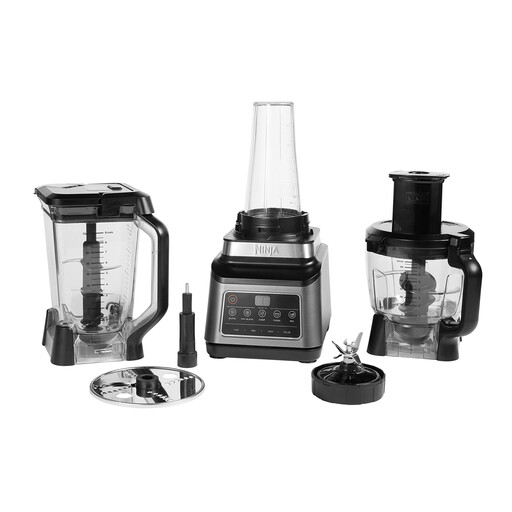
This multipurpose processor combines a food-processor bowl with separate blending attachments. Consider it if you want broader food-preparation functions alongside peanut sauce, and check the instructions for the attachment you intend to use with peanuts.
 No image available
Consider this model if you want a processor for several kitchen tasks as well as an attachment for blending nuts.
The listed configuration has a 1.8L processor bowl, 2.1L jug and 700ml cup, with five automatic programmes and dishwasher-safe parts.
Nut blending is described for the cup attachment; do not assume the processor bowl handles peanuts in the same way. Check the instructions for your intended attachment, peanut quantity, processing time and how to add sauce liquid.
Yes, if the exact mini chopper is intended to grind nuts and its permitted batch size suits your sauce. Cuisinart UK names the Pixie Chopper in its homemade nut-butter guidance, but that does not establish the same capability for other choppers.
Use a model and blade intended for peanuts, and follow its recipe or manual for processing and adding liquid. Cuisinart’s nut-butter method describes nuts becoming crumb-like before further processing, with pauses to scrape down the sides; the result will also depend on the recipe and batch size.
No. A larger bowl may serve wider meal preparation, but check whether the maker permits and explains your usual peanut quantity. Bosch UK lists a 2.3L usable bowl for the MCM3501MGB, while Magimix UK distinguishes the 4200XL’s 3L total bowl from its 1.3L working capacity; those figures do not measure small-batch sauce performance.
Do not assume washing alone makes a shared processor safe for someone with a peanut allergy. Follow the appliance’s cleaning instructions and seek appropriate professional advice about shared use; the Food Standards Agency’s work on allergen cleaning does not establish a guarantee for every processor design.
Follow the maker’s instructions for use and cleaning, keep the processor away from the sink and potential spills, and unplug it when it is not in use. These precautions reflect Electrical Safety First’s advice for food processors.