
24/7 Customer Support

Free returns

Same-day & Next-day Delivery

Quality Guaranteed

Unlock Your Welcome Offers: FREE Delivery | Up to 80% OFF | Free 30-day JoyPlus trial
Download the APP
Choosing Peckish wild bird food and feeders is not simply a matter of picking the most attractive packaging. UK gardens need feeding equipment that can cope with rain, regular cleaning and visits from different bird species. The food also needs to suit the feeder, season and space available.
A few common buying traps can lead to wasted money:
A bird seed feeder is suitable for loose mixes, while a suet cage or compatible hanging holder is needed for suet cakes for birds. Suet balls for birds should be placed in a dedicated feeder rather than left in plastic netting, which can create avoidable risks for wildlife.
Peanuts require a sturdy mesh design. A peanut bird feeder should allow birds to grip the surface while keeping the pieces contained. Check whether the product is intended for whole or suitable-sized peanuts before filling it.
For year-round use, look for:
A recyclable plastic feeder can be practical for balconies and smaller gardens, while metal mesh is useful where birds need to cling to reach peanuts.
Bird feeders should be cleaned regularly, with old food removed before refilling. Use a mild disinfectant where appropriate, rinse thoroughly and allow the feeder to dry fully. Do not place food directly beside dense cover where cats could hide.
A feeder should be stable and positioned where it can be monitored. Keep it away from windows where possible, unless it is specifically a window bird feeder designed for close-up viewing. Always provide clean water separately and wash hands after handling bird food or cleaning equipment.
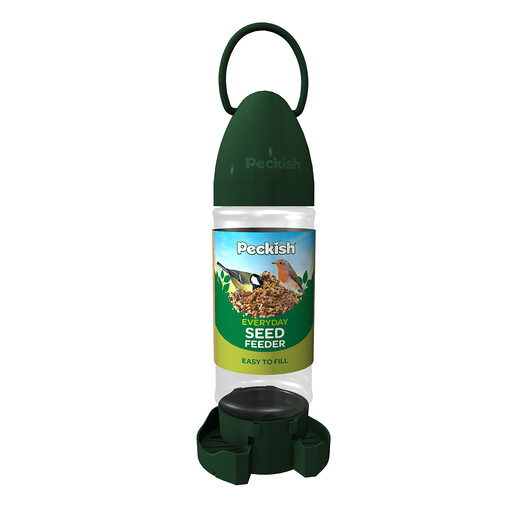
Why This Fits Their Persona: A straightforward option for first-time bird keepers, flats with balconies and smaller UK gardens. It can be filled with seed mixes, suet pellets or mealworms.
The screw-top lid gives direct access for refilling and cleaning, helping avoid designs that are difficult to maintain.
Recyclable plastic construction; 26cm height and 8.4cm depth; suitable for several food types.
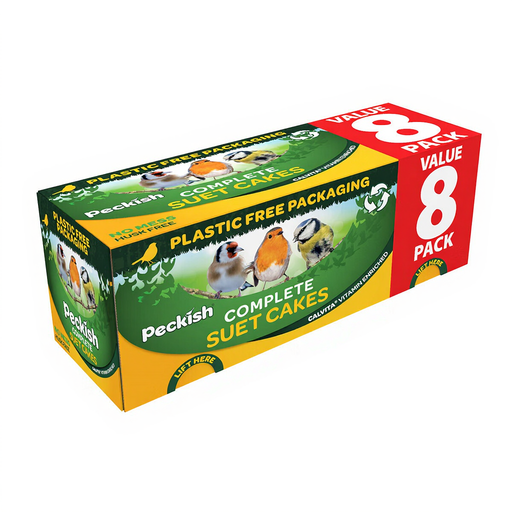
Why This Fits Their Persona: Suits households wanting a convenient, year-round source of high-energy food without preparing individual ingredients.
The husk-free formula is described as a no-mess option, while the closable plastic-free box supports tidy storage.
Eight suet cakes; beef tallow and CalVita Vitamin Mix; plastic-free closable packaging.
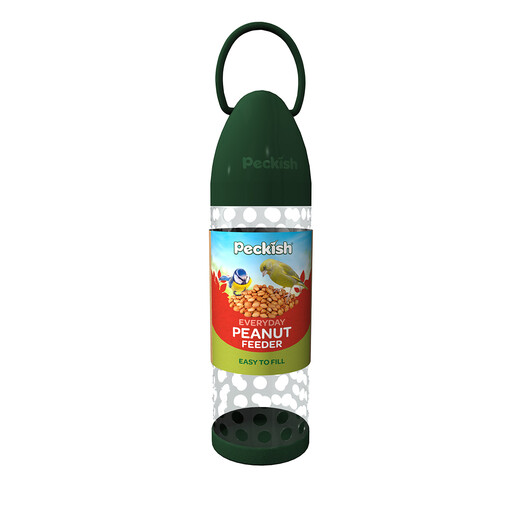
Why This Fits Their Persona: A practical match for established feeding stations and gardens that regularly receive tits, nuthatches or woodpeckers.
The all-metal wire mesh and solid top and base provide a contained feeding point rather than an exposed pile of peanuts.
Metal construction; secure hanging loop; clinging design; specified placement height of at least 1.5 metres.
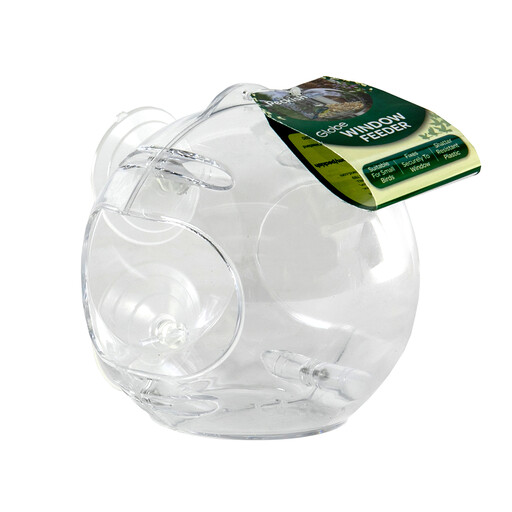
Why This Fits Their Persona: Designed for households that want to watch smaller birds from a kitchen, lounge or home office window.
Two suction pads are supplied, and the small entrance is intended to favour smaller birds rather than larger visitors.
Close viewing position; high-quality plastic construction; suction-pad attachment system.
For a flexible feeding routine, consider combining different food types rather than filling every feeder with one mix:
The Peckish Extra Goodness Balls 6pk contains wheat flour, peanuts, black sunflower seeds and beef tallow. The 420g pack can be used with compatible feeders, a bird table or a ground-feeding area. Place food in a location that is easy to clean and avoid putting out more than visiting birds can consume promptly.
We have compiled a complete, real-time list of products that fully satisfy these strict selection criteria and UK safety regulations.
The suitable height depends on the feeder and location, but it should be stable, easy to reach for cleaning and positioned away from hiding places used by cats. The Peckish Everyday Peanut Feeder specifies placement at least 1.5 metres above ground. Check each product’s installation guidance before hanging it.
Clean feeders regularly and remove damp or old food before adding a fresh supply. A mild disinfectant, thorough rinsing and complete drying can help maintain a hygienic feeding point. Cleaning frequency may need to increase during wet weather or when the feeder receives heavy use.
There is no single food that suits every garden. A combination of seed, suet and peanuts can provide different feeding options, provided each is used with the correct feeder. Monitor consumption, refill little and often, and store unopened or unused food in a cool, dry place.