
24/7 Customer Support

Free returns

Same-day & Next-day Delivery

Quality Guaranteed

Unlock Your Welcome Offers: FREE Delivery | Up to 80% OFF | Free 30-day JoyPlus trial
Download the APP
A pedal bin can make everyday waste disposal cleaner and more convenient, but the wrong model may quickly become awkward to use. A bin that looks spacious in product photos may have a narrow opening, a lid that hits the wall or an inner bucket that is difficult to remove when full.
Before buying, watch for three common pitfalls:
A well-matched pedal bin should suit the room, the amount of waste produced and the way your household disposes of rubbish or recycling.
Capacity is usually stated in litres, but the outside dimensions determine whether a bin will actually fit beside your kitchen units, under a desk or in a bathroom corner.
Measure the available floor area and leave clearance behind the bin. Some lids require additional space when open. For example, the 30-litre steel models listed here measure 34.8 x 29.7 x 63.3cm, with a lid-open height of 85.5cm.
A stainless steel bin or coated steel pedal bin can provide a structured exterior that is easy to wipe. However, “steel” does not mean every surface has the same resistance to marks, moisture or fingerprints. Check whether the product has a coated or satin finish and follow the care instructions.
For kitchens and utility rooms, look for:
Plastic can be more suitable for smaller rooms and under-desk use because it is lightweight and does not rust. It may also be easier to position in a compact bathroom or bedroom.
A soft-close bin reduces the noise of the lid returning to its closed position. This can be useful in open-plan kitchens, flats and homes where the bin is used early in the morning or late at night. An odour-sealing or tight-close lid may help contain smells, but it is not a substitute for regular emptying and cleaning.
A hands-free bin should have a pedal that is wide enough to use comfortably and a base that remains stable. A stay-open function is useful when preparing food or cleaning the fridge, while a manual opening mode can help when continuous access is needed.
A rubbish bin with removable inner bucket is generally simpler to empty. Look for bag-fixing holes, handles or ventilation holes, as these details can reduce slipping and make liner changes less frustrating.
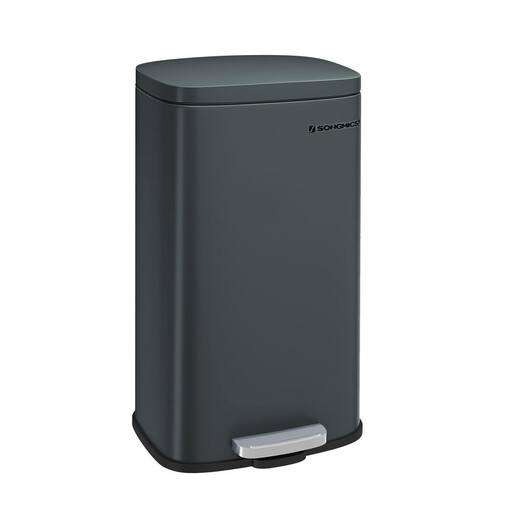
Why This Fits Their Persona: Its 30-litre capacity and 34.8 x 29.7cm footprint suit smaller kitchens, flats and households wanting a practical everyday kitchen bin without excessive floor space.
The dimensions and capacity are clearly stated, while the removable PP inner bucket supports easier liner changes and cleaning.
Rust-resistant steel exterior, foot-pedal opening, manual stay-open mode and slow-closing lid.
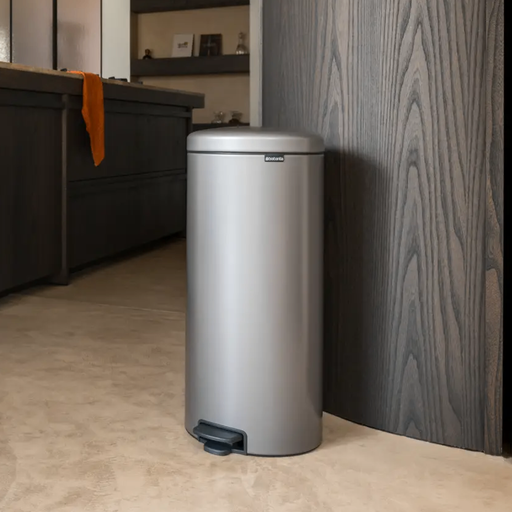
Why This Fits Their Persona: A considered choice for kitchens and workspaces where quiet closing, stability and a coordinated appearance matter.
Its removable inner bucket, ventilation holes and stated 73.5 x 35.5 x 33cm dimensions address common liner-change and space-planning issues.
Soft-closing lid, tight-close odour-control design, non-slip base and anti-tilt block.

Why This Fits Their Persona: Households separating general waste and recycling can use the two 20-litre compartments without needing two separate bins.
The split capacity is specified as two removable 20-litre compartments, making the recycling arrangement clear before purchase.
Two foot pedals, two removable compartments and a satin-coated stainless steel appearance.
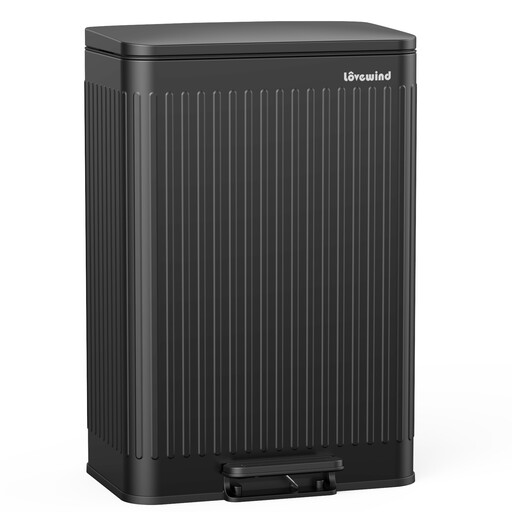
Why This Fits Their Persona: The larger capacity suits families of three to six people and users who prefer fewer liner changes, provided there is enough room in the kitchen or office.
The listing identifies the 60-litre capacity, removable inner buckets and bag fixers, rather than relying only on broad “large bin” wording.
Soft-close lid with 90-degree stay-open function, fingerprint-resistant coating and removable buckets with handles.
We have compiled a complete, real-time list of products that fully satisfy these strict selection criteria and UK safety regulations.
Before placing a pedal bin, check that the pedal can be reached without blocking a cupboard, dishwasher or walkway. Keep the rear of the bin clear where the manufacturer specifies wall clearance. Use a stable, flat surface to reduce tipping.
For cleaner operation:
A pedal bin has no electrical running cost, so the main ongoing expenses are replacement liners and cleaning supplies. Choosing the correct liner size and using the inner bucket’s fixing points can reduce slipping, bunching and unnecessary waste.
Yes. A kitchen pedal bin is useful when hands-free opening is important during food preparation. Choose 30 litres for a smaller household, 50 litres for higher daily use or 60 litres when a larger household produces substantial general waste. Always check the width, depth and lid clearance first.
Service life depends on frequency of use, cleaning and how the pedal and lid are handled. Avoid standing on the pedal, placing heavy items on the lid or closing it forcefully. A steel pedal bin with a removable inner bucket can be maintained by keeping the mechanism clear and cleaning spills promptly.
No bin can remove odours completely. A tight or odour-sealing lid can help contain smells between openings, while soft-close operation reduces noise. Regular emptying, leak-resistant liners and cleaning the inner bucket remain important, particularly for food waste.