
24/7 Customer Support

Free returns

Same-day & Next-day Delivery

Quality Guaranteed

Unlock Your Welcome Offers: FREE Delivery | Up to 80% OFF | Free 30-day JoyPlus trial
Download the APP
A pedal bin can look like a straightforward household purchase, yet the wrong choice may lead to overflowing waste, difficult liner changes or a lid that becomes noisy and unreliable. UK homes, offices, schools and catering areas all have different disposal demands, so capacity and construction should be considered before appearance.
This guide explains the practical details that matter when comparing pedal bins, recycling bins and commercial waste containers.
A compact bin may suit a bathroom but become inconvenient in a busy kitchen. Conversely, a large kitchen bin can take up valuable floor space and may be difficult to move when full. Consider how many people use the area, how often waste is collected and whether food packaging or bulky items will be placed inside.
For reference:
Stainless steel can provide a durable outer casing, but the surface treatment affects everyday maintenance. Highly polished finishes may show fingerprints, while a coated or brushed stainless steel bin can be easier to keep presentable.
Check whether the product has a fingerprint-proof or smudge-resistant coating, and follow the cleaning instructions. Abrasive cloths, steel wool and harsh cleaners may mark or weaken the finish.
A soft-close bin can reduce noise, particularly in open-plan kitchens, offices or late-night household use. However, the lid mechanism is only part of the ownership experience. A removable inner bucket, secure bag fixers and carry handles can make liner changes substantially easier.
Also check whether the lid can stay open when needed. This can be useful while preparing meals or handling a large amount of waste.
Measure the intended position, including clearance for the pedal and lid. A slim pedal bin may fit beside a vanity unit or beneath a desk, while a wider kitchen model may need a dedicated corner.
Do not compare litre figures alone. Look at the external dimensions and shape, as two bins with similar capacity may occupy very different amounts of floor space.
A stainless steel pedal bin is often selected for kitchens and professional-looking office interiors. Brushed stainless steel can provide a muted appearance, while a black pedal bin may suit modern kitchens and utility areas. Plastic commercial bins are generally lightweight and can be practical where frequent repositioning and wipe-clean maintenance are priorities.
For food waste areas, choose a design with smooth surfaces and avoid placing hot materials or hazardous substances inside unless the product instructions specifically allow it.
A strong pedal mechanism should operate smoothly without requiring excessive force. Product listings may provide a stated cycle figure, but this should be treated as a specification rather than a guarantee of service life in every environment.
Useful features include:
For recycling stations, an open-top bin may be more convenient than a pedal design because users can dispose of items quickly without touching a lid. Clear positioning and suitable labels remain important for encouraging correct waste separation.
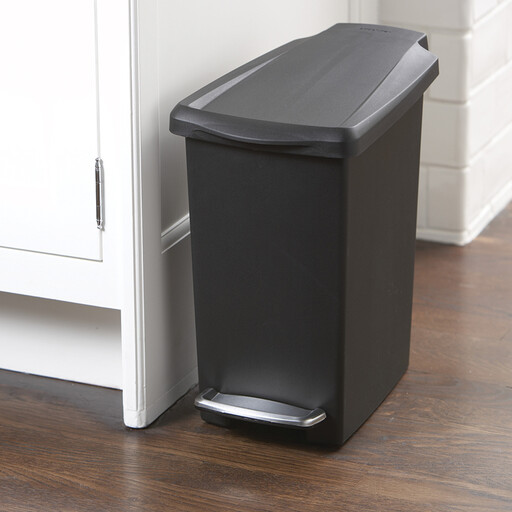
Why This Fits Their Persona: Its 10-litre capacity and slim profile are suited to bathrooms, home offices and under-desk spaces where a full-sized kitchen bin would be unnecessary.
The listed dimensions are H34.3 x W32.5 x L19.6cm, making it easier to assess fit before purchase rather than relying on product photography.
Black plastic construction; steel pedal; compact shape for limited floor space.

Why This Fits Their Persona: The brushed stainless steel finish suits bathrooms, offices and compact kitchens where appearance and controlled lid movement are priorities.
It includes a removable inner bucket, helping address the common problem of awkward liner changes and difficult internal cleaning.
Brushed stainless steel body; silent-close lid; non-skid base and rubber floor pads.
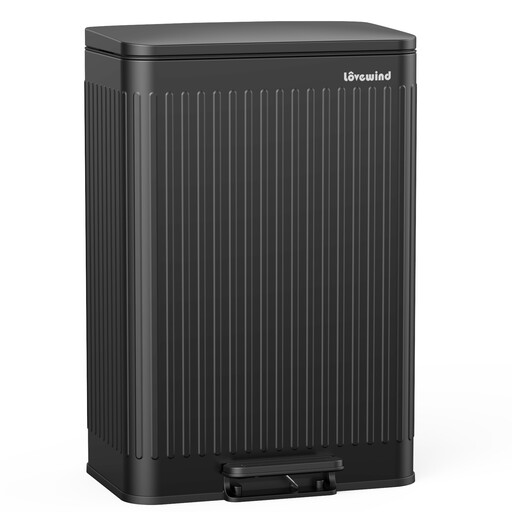
Why This Fits Their Persona: Its 60-litre format is designed for larger kitchens, households of approximately three to six people and workplaces that need substantial internal capacity.
The listing specifies two removable inner buckets with handles and bag fixers, plus a 90-degree stay-open function for larger disposal tasks.
Fingerprint-proof coated stainless steel; soft-close lid; reinforced stainless steel pedal and removable buckets.
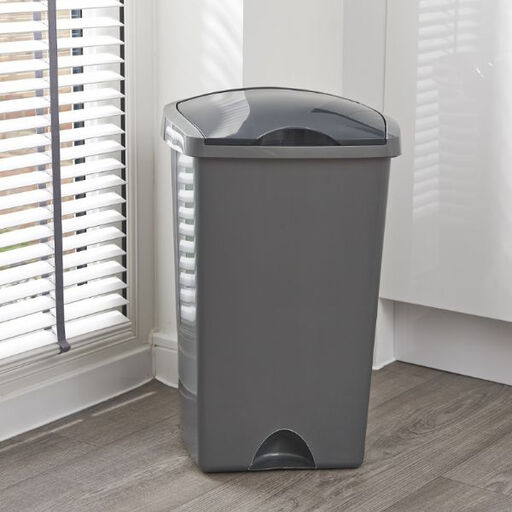
Why This Fits Their Persona: The open-top format is convenient for offices, schools, catering areas and other busy locations where people need to dispose of items quickly.
Its 40-litre capacity and wipe-clean polypropylene construction are stated clearly, helping facilities managers assess maintenance and emptying needs.
Open-top access; metallic grey finish; listed dimensions of 560mm x 380mm x 382mm.
We have compiled a complete, real-time list of products that fully satisfy these strict selection criteria and UK safety regulations.
Yes, provided the capacity, liner access and cleaning requirements match the household. A 10L pedal bin is generally more suitable for a small kitchen or secondary waste point, while a 60L kitchen bin may be more practical for a larger household or frequent cooking.
Service life depends on construction, frequency of use, cleaning and how the pedal is operated. Some listings provide stated mechanism figures, such as 150,000 or 200,000 cycles. These are product specifications, not a guarantee for every installation. Keeping the pedal and lid free from obstructions can help maintain normal operation.
Not always. An open-top bin can support quick disposal in busy offices, schools and catering areas. A lidded recycling bin may be preferable where odour control, appearance or restricted access is more important. Check your local council or workplace waste policy before selecting compartments or colour coding.