
24/7 Customer Support

Free returns

Same-day & Next-day Delivery

Quality Guaranteed

Unlock Your Welcome Offers: FREE Delivery | Up to 80% OFF | Free 30-day JoyPlus trial
Download the APP
Peel and stick backsplash tiles can refresh a kitchen, bathroom or utility room without grout, specialist tools or the disruption of traditional tiling. They are particularly useful for renters, first-time DIY projects and homeowners who want a reversible easy wall makeover.
However, attractive images and phrases such as “waterproof”, “luxury finish” or “easy fit” do not tell you everything you need to know. The wrong product may be difficult to align, unsuitable near heat or unable to adhere properly to your wall. Use the checks below before choosing a self adhesive backsplash or peel and stick splashback.
Many removable backsplash tiles are intended for decorative indoor use. That does not automatically make them suitable directly behind a hob, sink or shower. Resin and vinyl finishes may be wipe-clean, but heat exposure and persistent moisture can affect adhesion and appearance.
Always read the product warnings. Some products specify a minimum distance above a cooker without a backing. For example, several options in this guide require at least 15 inches, or 38 cm, above a range where there is no backing. Do not install a decorative panel where it may be exposed to direct flame, excessive heat or constant water.
A pack of four panels may sound generous until you calculate the actual wall area. Check the dimensions of each panel, the assembled coverage and the amount required for trimming. Rolls can be simpler for long, uninterrupted runs, while smaller panels may suit compact areas or patterned layouts.
Allow extra material for mistakes, corners and matching the design. This is especially important with herringbone backsplash tiles, hexagon backsplash tiles and other repeating patterns.
Peel and stick backsplash tiles generally adhere most reliably to clean, smooth and dry surfaces. Uneven plaster, heavily textured paint, damp walls, dusty surfaces and loose wallpaper can prevent proper contact.
A removable backsplash may pull up more cleanly than permanent adhesive, but wall condition, paint quality and installation method still influence the result. Test a small, discreet area first, particularly in a rented property.
Vinyl backsplash products are lightweight and available in roll formats, including faux marble backsplash, faux stone backsplash and subway tile backsplash designs. Resin panels often provide a more dimensional or high-shine appearance, such as glass-effect, herringbone or hexagon designs.
For a kitchen or bathroom backsplash, check that the product is described for indoor decorative use and can be wiped with a damp cloth. This is different from a statement that it is suitable for immersion, shower interiors or direct cooker heat.
Many rolled products in this selection measure 18 inches wide by 9 feet long, equivalent to approximately 46 cm wide by 2.74 m long. Measure the width and height of your intended splashback, then calculate how many rolls or packs are needed.
Panel formats can have different assembled dimensions. A four-panel pack may cover a compact section, but the visible area can vary according to how the panels are arranged and trimmed. Mark the wall and plan socket cut-outs before removing any backing paper.
Clean the wall using a suitable product and allow it to dry fully. Remove grease, dust and loose paint. Avoid applying tiles to damp, uneven or heavily textured surfaces. When fitting, peel back the liner gradually rather than exposing the entire adhesive surface at once. Press firmly from one edge to the other to reduce bubbles and misalignment.
For removal, lift a corner slowly instead of pulling sharply. Product descriptions may state that the tiles can be pulled up without sticky residue, but the final result depends on the wall finish and how long the product has been installed.
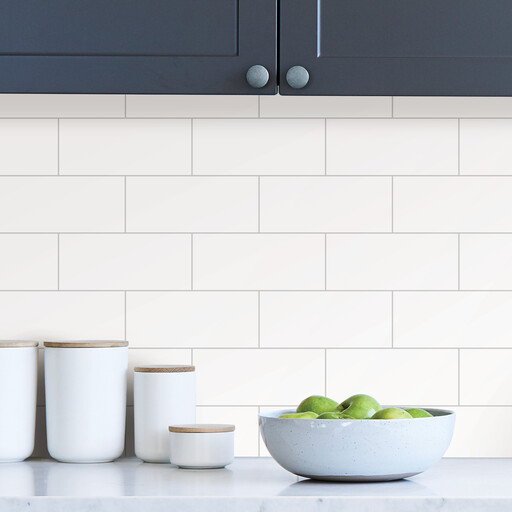
Why This Fits Their Persona: The white faux subway tile pattern offers a straightforward way to update a small kitchen, utility room or minimalist bathroom using one 18-inch-wide, 9-foot roll.
The roll dimensions are stated clearly, helping you calculate coverage before ordering rather than relying on the appearance of a single image.
Vinyl construction; peel and stick application; wipe-clean decorative finish.
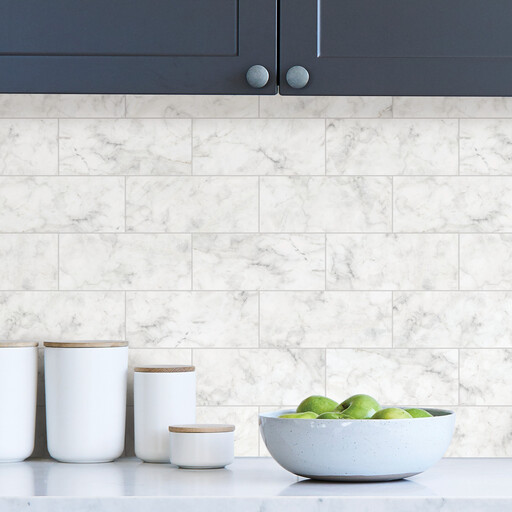
Why This Fits Their Persona: The faux white marble finish suits shoppers wanting a brighter, more polished look in a kitchen or bathroom without committing to permanent tilework.
The listing identifies the vinyl material, roll size and clean, smooth, dry surface requirement, so the decorative finish is not mistaken for natural stone.
White marble appearance; one 18-inch-wide, 9-foot roll; no grout or special tools required.
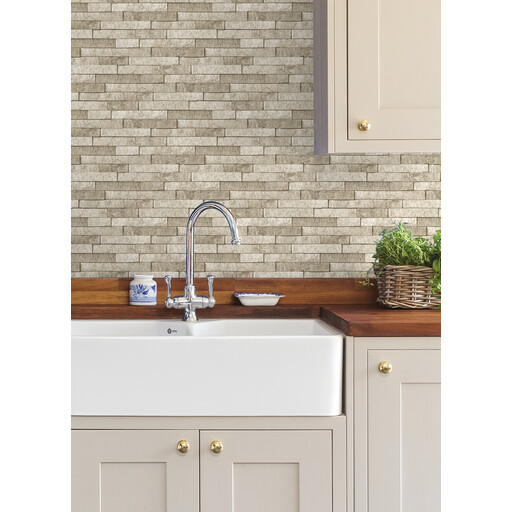
Why This Fits Their Persona: A long roll is practical for covering extended runs across a kitchen, utility room or other indoor wall with fewer joins than small tile panels.
The product warning makes the heat limitation clear, helping frequent kitchen users avoid placing it too close to an unbacked cooker.
Taupe faux stone appearance; 18-inch-wide, 9-foot vinyl roll; wipe-clean with a damp cloth.
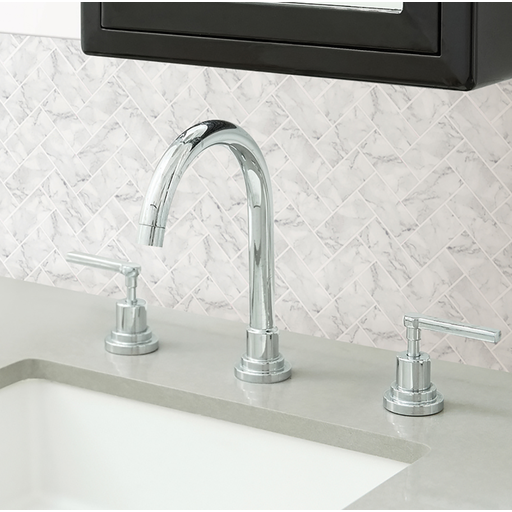
Why This Fits Their Persona: The herringbone layout adds visual direction to a compact splashback, making it suitable for homeowners and renters planning a more distinctive DIY kitchen backsplash.
The listing gives both panel and individual tile measurements, helping you plan alignment and account for pattern trimming.
Four resin panels; high-shine finish; herringbone Carrara-style pattern without grout.
We have compiled a complete, real-time list of products that fully satisfy these strict selection criteria and UK safety regulations.
Products such as sea glass, smoked glass, hexagon marble and timber-look panels can also work for feature areas, bookshelves or staircases where a decorative finish is wanted. Select the format that matches your wall size and the amount of pattern matching you are prepared to do.
They can be suitable for decorative bathroom walls when the surface is clean, smooth and dry. They should not be treated as a substitute for waterproof tile backing in a shower enclosure or an area exposed to continuous moisture. Check the specific warnings before installation.
Lifespan varies with wall preparation, humidity, temperature, cleaning and everyday contact. Proper application to a smooth, dry wall can support better adhesion. Avoid abrasive cleaners, standing water and direct heat, and inspect edges periodically for lifting.
Only if the existing tiles create a smooth, clean and dry surface and the grout lines do not leave deep recesses. Heavy texture, loose tiles or uneven grout can prevent full contact. Where the surface is unsuitable, repair or cover it appropriately before applying a self adhesive backsplash.