
24/7 Customer Support

Free returns

Same-day & Next-day Delivery

Quality Guaranteed

Unlock Your Welcome Offers: FREE Delivery | Up to 80% OFF | Free 30-day JoyPlus trial
Download the APP
Tired of looking at a dated kitchen or a lacklustre bathroom wall? Whether you are renting and can't make permanent changes, or you're a homeowner looking for a quick and affordable update, the thought of a full-scale tiling project can be daunting. The mess, the cost and the time involved are enough to put anyone off.
This is where a peel and stick backsplash offers a brilliant solution. It provides the aesthetic of real tiles without the need for grout, specialised tools or a professional tiler. As a Joybuy Product Recommendation Officer, my role is to help you navigate the options. This guide will offer practical advice for choosing the right product and showcase a few of our top recommendations to help you transform your space with confidence.
Before you add anything to your basket, a little preparation goes a long way. Keep these points in mind to ensure your DIY backsplash project is a success from the start.
Most peel and stick backsplash options are made from vinyl, a durable and practical material for kitchens and bathrooms. A vinyl backsplash roll is generally water-resistant, easy to wipe clean and resilient enough to handle the daily wear and tear of a busy home. The finish is just as important. From a classic metro tile splashback to a sophisticated marble effect backsplash or rustic wood effect wall panels, the right design can completely redefine your room's character.
The "stick" in "peel and stick" is only as good as the surface it is applied to. For a professional, long-lasting finish, your wall must be clean, dry and smooth. Take the time to wash away any grease or grime, especially in the kitchen. If you have textured walls, you may need to sand them down or apply a primer first. Applying a self adhesive splashback to a poorly prepared surface is the most common reason for peeling or bubbling.
Avoid waste and frustration by measuring your space carefully. Draw a simple diagram and calculate how many rolls or panels you will need. It is always wise to order slightly more than you think you need to account for any mistakes or tricky cuts around sockets and corners. This planning stage is crucial for achieving a seamless look, particularly with patterned stick on kitchen tiles.
Here are a few standout options that deliver on style, convenience and quality.
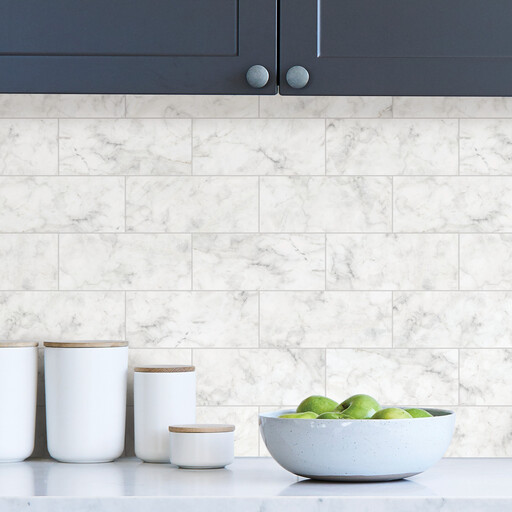
Why It Stands Out: This backsplash combines the timeless elegance of white marble with the clean, geometric lines of a metro tile. It offers a high-end look that can brighten and modernise a space without the expense and upkeep of real marble.
Pros:
Who is it for?: Perfect for those wanting to create a bright, sophisticated focal point in their kitchen or bathroom. Its neutral palette complements a wide range of décor styles, from minimalist to contemporary.
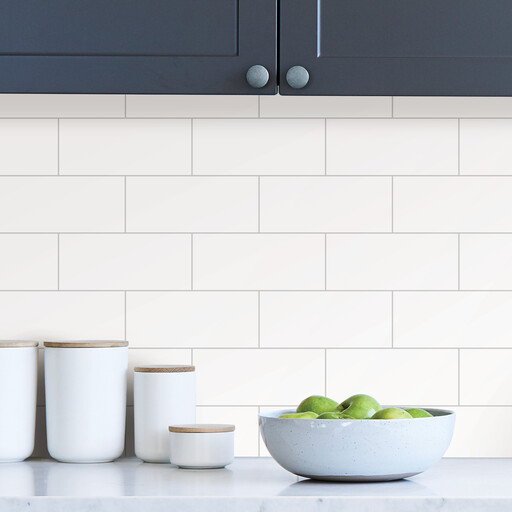
Why It Stands Out: The classic white metro tile splashback is a design staple that never goes out of style. This product captures that crisp, clean aesthetic perfectly, offering a versatile backdrop for modern farmhouse, industrial or minimalist interiors.
Pros:
Who is it for?: An excellent choice for anyone seeking a timeless and versatile look. It works equally well in kitchens, utility rooms and as bathroom splashback panels, providing a clean and uniform appearance.
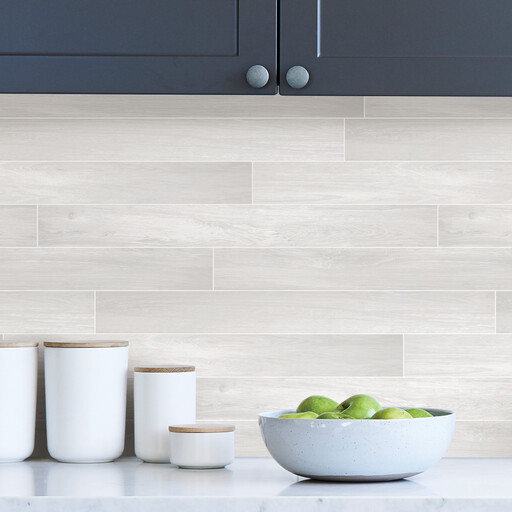
Why It Stands Out: Offering a unique blend of rustic charm and modern design, these wood effect wall panels bring warmth and texture to a room. The array of neutral hues mimics the look of natural timber, creating a cosy yet sleek feature wall.
Pros:
Who is it for?: Ideal for those looking to add character and warmth to their space. It’s a fantastic alternative to traditional tiles for creating a feature wall behind a sink or in a utility room, adding a touch of organic texture.
If a peel and stick solution isn't quite what you're looking for, or if you're a homeowner ready to tackle a more permanent tiling project, having the right equipment is essential.
For those ready to take the next step in their DIY journey, explore our range of tiling aids and accessories.
Explore Our Ceramic Tools for Your Next DIY Project
In many cases, yes. You can apply stick on kitchen tiles over existing ceramic or porcelain tiles, provided the surface is flat and clean. If your current tiles have deep grout lines, you may need to fill them with a suitable filler to create a smooth surface for the new backsplash to adhere to properly.
Most vinyl-based peel and stick products are water-resistant, not fully waterproof. This makes them perfectly suitable for use as a backsplash behind a kitchen or bathroom sink where they might get splashed. However, they are not recommended for installation inside a shower enclosure or in areas with constant, heavy water exposure. Always check the manufacturer's specific guidelines.
The lifespan of a peel and stick backsplash depends on several factors: the quality of the product, the preparation of the wall surface and the environment it's in. When installed correctly in a suitable area, a good quality backsplash can last for several years, making it a durable and reliable choice for a semi-permanent design update.