
24/7 Customer Support

Free returns

Same-day & Next-day Delivery

Quality Guaranteed

Unlock Your Welcome Offers: FREE Delivery | Up to 80% OFF | Free 30-day JoyPlus trial
Download the APP
Refreshing a kitchen, bathroom, utility room or hallway does not always require grout, specialist tools or a lengthy building project. Peel and stick tiles can provide a lower-mess way to update an indoor surface, but choosing the wrong type may lead to lifting edges, visible joins or a finish that does not suit the room.
The key is to look beyond the pattern shown in the product photograph. Before buying peel and stick backsplash tiles or peel and stick floor tiles, check the material, dimensions, adhesive type and recommended application area.
Most self-adhesive tiles require a clean, smooth and dry surface. They are not designed to correct cracked plaster, deep grout lines, textured wallpaper or uneven flooring. Dust, grease and moisture can prevent the adhesive from bonding properly.
A bathroom wall may appear dry but still experience regular condensation. Similarly, a kitchen backsplash positioned directly behind a hob may be exposed to more heat than a decorative vinyl product is designed to tolerate. Always check the product warnings and leave the stated clearance around cooking appliances.
Product dimensions vary considerably. A roll measuring 108 inches by 18 inches covers a different area from a pack containing four 10-inch panels or ten 30.48cm floor tiles.
Measure the length and height of the area in metres, calculate the surface area, then add a reasonable allowance for trimming and pattern matching. Herringbone backsplash tiles, hexagon backsplash tiles and Moroccan floor tiles can create more offcuts than straightforward rectangular designs.
Some vinyl backsplash tiles and floor tiles are described as water resistant or washable. This generally relates to normal household cleaning and occasional splashes, not permanent immersion or water passing behind the product.
For bathroom peel and stick tiles, use them only in suitable indoor decorative locations and follow the installation instructions. Sealants, adhesive compatibility and ventilation may also affect performance. Do not use peel and stick products as a replacement for a properly tanked or waterproofed wet-room system.
Vinyl is commonly used for rolled backsplash sheets and floor tiles because it is lightweight and can be wiped clean. Resin panels may offer a higher-shine appearance, such as marble effect tiles with a polished decorative finish.
For floors, check whether the product is specifically labelled for floor use. Wall tiles are not automatically suitable for foot traffic. A low-lustre or textured finish may also be more forgiving of everyday marks than a highly reflective surface.
“Peel and stick” describes the application method, not necessarily how easily the product can be removed. Some wall products are designed to pull up without sticky residue, while floor products may use a permanent adhesive.
Renters should prioritise products that explicitly state their removal characteristics and should test a small concealed area first. Even a removable wall tile can affect paint, wallpaper or poorly bonded surfaces.
Larger panels can cover a backsplash quickly, while smaller designs may provide more visual detail but require careful alignment. Measure around sockets, corners, taps and cabinet edges before ordering.
For a neat DIY installation:
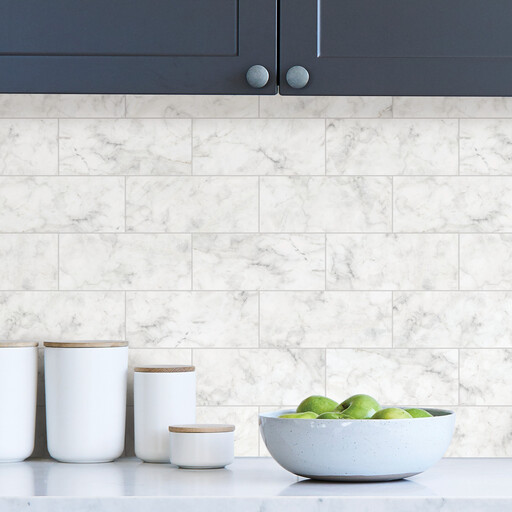
Why This Fits Their Persona: A single roll can provide a straightforward way to refresh a modest kitchen, utility room or bathroom wall without buying multiple small panels.
The listed roll size is clear: 18 inches wide by 9 feet long. It is intended for clean, smooth, dry indoor surfaces and is described as removable without sticky residue.
Vinyl construction, white marble appearance, wipe-clean maintenance and no grout or specialist tools required.
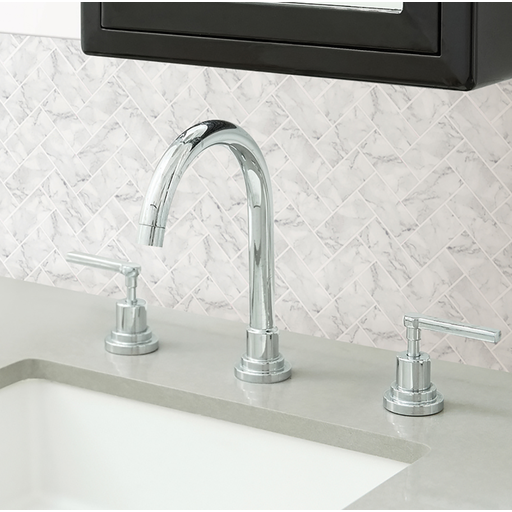
Why This Fits Their Persona: The herringbone layout and high-shine finish suit buyers seeking a more detailed decorative feature behind a worktop or sink.
The listing specifies four 10-inch panels, an assembled size of 21.7 by 9.8 inches and resin construction, helping buyers calculate coverage before purchasing.
Carrara-style marble design, herringbone print and self-adhesive installation without grout or special tools.
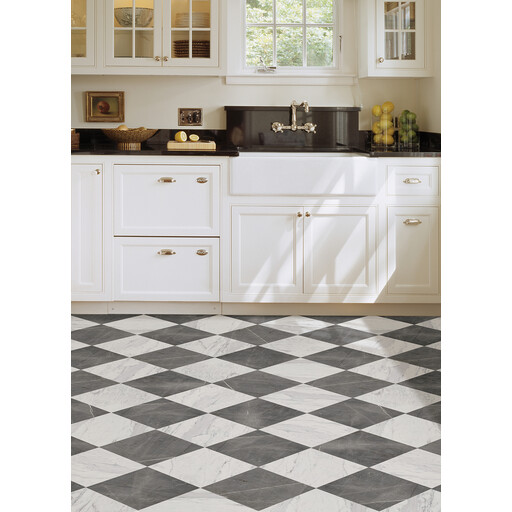
Why This Fits Their Persona: Designed for indoor floors, these tiles suit households updating a kitchen, bathroom, utility room or hallway where washable everyday flooring is a priority.
Unlike wall-only products, the listing identifies these as floor tiles and specifies water-resistant, washable virgin vinyl with permanent adhesive. They still require a smooth, dry base.
Grey and white marble-inspired checkerboard design, approximately 30.48cm square tiles and a pack of 10 sheets.
We have compiled a complete, real-time list of products that fully satisfy these strict selection criteria and UK safety regulations.
For a bright, neutral kitchen, marble effect tiles can reflect light and work with white, grey or timber cabinetry. A stone effect backsplash introduces more visual texture, while a plain subway-inspired pattern may be easier to align around sockets.
For a feature wall, herringbone and hexagon designs create stronger pattern definition. In a hallway or utility room, Moroccan floor tiles can add colour, but order enough material to keep the layout consistent across the visible floor.
The In Home Grey Stone Peel & Stick Backsplash and In Home Stone Natural Peel & Stick Rolled Backsplash are further options for buyers seeking slate or taupe stone-style finishes. Both are vinyl wall products intended for decorative indoor use and require a clean, smooth, dry surface.
They can be suitable for selected decorative wall areas if the surface is smooth, dry and properly prepared. They are not a substitute for waterproofing in showers or wet rooms. Check the manufacturer’s warnings, keep the room ventilated and avoid areas exposed to continuous water or excessive heat.
Lifespan depends on surface preparation, humidity, temperature, cleaning and foot traffic. Floor tiles with permanent adhesive may be more appropriate for everyday use than removable wall tiles, but no product should be expected to perform well on damp, uneven or heavily textured surfaces.
The initial installation can involve fewer materials because there is no grout or specialist tiling equipment. However, compare coverage per pack, waste from trimming, surface preparation and whether the product is suitable for the intended location. A lower purchase price may not represent good value if unsuitable tiles need replacing.