
24/7 Customer Support

Free returns

Same-day & Next-day Delivery

Quality Guaranteed

Unlock Your Welcome Offers: FREE Delivery | Up to 80% OFF | Free 30-day JoyPlus trial
Download the APP
A pegboard organiser can turn an overcrowded desk, craft corner or home office wall into a more practical storage area. However, the wrong design may create new problems: loose accessories, wasted wall space or a board that cannot support your everyday items.
Before choosing a desk pegboard organiser or wall-mounted pegboard organiser, look beyond appearance and promotional language. The most useful option depends on where it will sit, what you need to store and how often you expect to change the layout.
Product photos can make a storage board look larger or smaller than it is. A 30 × 30cm board may suit a compact desk or study nook, while a 40 × 60cm board requires more wall or shelf space.
Measure the intended area before ordering, including clearance around the board for hooks, cups and shelves. If it is going above a desk, check that it will not interfere with shelves, monitors, lamps or cupboard doors.
Pegboards use different hole patterns, spacing and attachment systems. A hook or shelf designed for one board may not fit another securely. Check whether the product includes accessories and whether the layout can accommodate the items you want to store.
A modular storage board is useful when you need to reposition components, but modularity only helps if the included parts match your intended use. Count the number of hooks, cups and shelves rather than assuming they are supplied.
A wooden pegboard organiser may add warmth to a room, while a plastic or metal desktop organiser may be easier to wipe clean. Neither material automatically makes a product suitable for every purpose.
Consider the weight of your stationery, tools or craft supplies. Small hooks may be suitable for cables and scissors, but heavier items may require a wider support point or a board designed for wall installation. For any wall-mounted arrangement, follow the supplied fixing instructions and check that the surface and fixings are suitable.
For a compact workspace, a small board or desktop organiser can keep pens, sticky notes and paperclips within reach without taking over the desk. Larger boards offer more flexibility for tools, craft materials and home office storage, but require careful positioning.
Check:
A no-drill pegboard organiser can be convenient for rented accommodation or temporary study areas, but buyers should still check the attachment method, maximum load information and surface compatibility.
Look for clear information about the number and size of components. Useful accessories may include:
A good stationery organiser should make frequently used items easy to see and reach. Avoid placing small accessories in deep compartments where they become difficult to retrieve.
Wood can provide a natural appearance and a firm base, while plastic or metal may offer a lighter, wipe-clean surface. Smooth edges are helpful in a busy study or office environment, especially where the organiser will be handled regularly.
For a desktop organiser, check whether it has a stable footprint and whether the compartments are suitable for the accessories you use. For a wall-mounted pegboard organiser, focus on secure installation, appropriate fixings and the load placed on each hook or shelf.
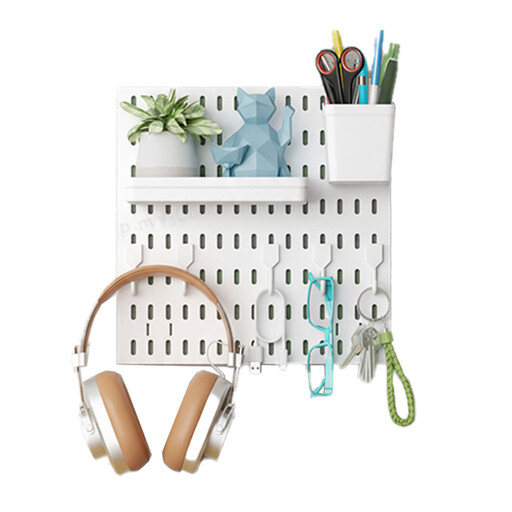
Why This Fits Their Persona: A compact option for students, renters and home-office users who want a straightforward setup without drilling into a wall.
The set states that it uses a no-drill design and supplies the board and accessories together, reducing uncertainty about basic compatibility.
Includes one 30 × 30cm board, one storage cup, one middle shelf and five 5.8cm hooks.
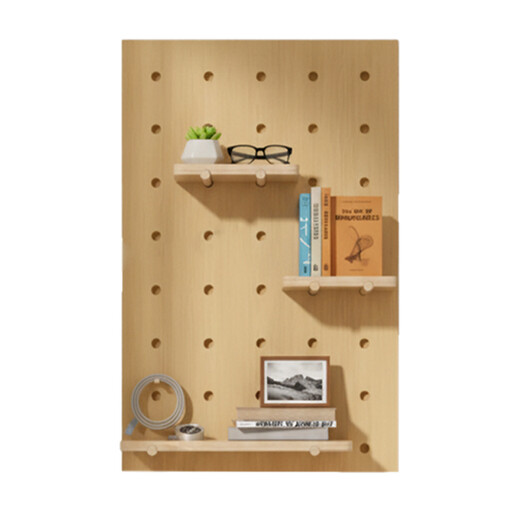
Why This Fits Their Persona: Suitable for users who want a larger storage surface and a natural wood appearance in a study, office or craft room.
Its stated 40 × 60cm format makes the storage footprint clear, helping buyers plan wall space rather than rely on product photography.
Solid wood construction and a natural wood colour provide a larger, visually warm board for organised storage.
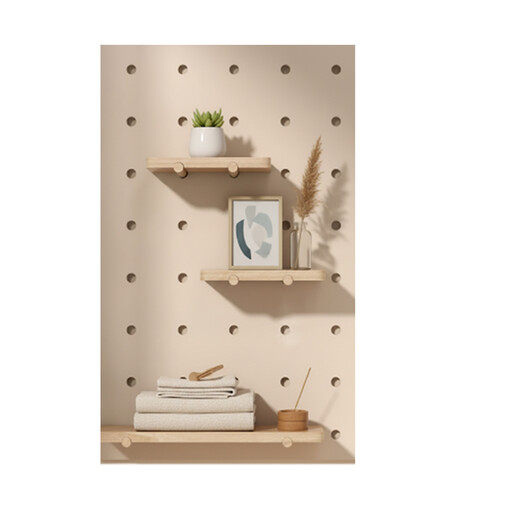
Why This Fits Their Persona: A larger board can suit crafters, tool users and professionals who need frequently used items visible and separated.
The 40 × 60cm size provides more usable board area than a compact desktop format, while still requiring buyers to confirm wall capacity.
Solid wood format and cream colour; the larger dimensions allow broader workspace organisation.
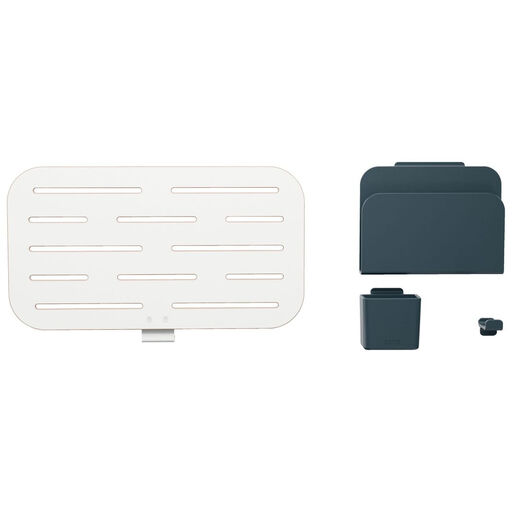
Why This Fits Their Persona: Designed for desks, workstations or shelves, it suits students and office users who prefer compartments rather than wall installation.
Its multiple compartments make the storage format clear, avoiding the assumption that a pegboard must be mounted or configured with separate accessories.
Multiple compartments, a desktop format and materials listed as durable plastic or metal depending on the model.
We have compiled a complete, real-time list of products that fully satisfy these strict selection criteria and UK safety regulations.
Start by placing the items you use most often at hand level. Keep heavier objects lower where possible and avoid overloading a single hook or shelf. Group similar accessories together: writing tools in one cup, cables on hooks and small craft supplies in a dedicated compartment.
For a wall-mounted pegboard organiser, mark the intended position before fixing it. Check that the board is level and that doors, windows and lighting remain unobstructed. For a desktop organiser, leave enough clearance to remove drawers, open notebooks or move your keyboard.
Clean the surface according to the material. A lightly damp cloth is generally suitable for many office organisers, but avoid excess moisture on wood and check the product instructions before using cleaning products.
A no-drill pegboard organiser may be suitable where permanent drilling is not preferred, but the attachment method and surface compatibility should be checked carefully. Do not exceed the stated load guidance and remove it according to the supplied instructions.
Lifespan depends on material, installation, humidity, frequency of use and the weight placed on it. A board used for lightweight stationery may experience less stress than one holding tools. Inspect hooks, fixings and shelves periodically and replace damaged components promptly.
Most pegboard organisers do not use electricity, so there is no regular energy cost. Ongoing expenses may include replacement hooks, cups, shelves or compatible accessories if your storage needs change. A set with several included components can reduce the need for immediate add-ons.