Laptop-based students with limited desk space
You want to draw directly on a screen, then move or put away the display when you need the desk for other work. Check that there is room for both the display and your laptop keyboard.


For album artwork made on a laptop at a small desk, a compact 13.3-inch pen display is a sensible starting format if your computer supports its required connection. Check colour specifications against how you will deliver the artwork, and choose shortcut keys or touch according to how you navigate your canvas. A standalone Android tablet is a different option: check that your drawing software runs on it before choosing one instead.
You want to draw directly on a screen, then move or put away the display when you need the desk for other work. Check that there is room for both the display and your laptop keyboard.
You prepare artwork for sharing or printing and need to consider colour-space and calibration information alongside the way your software and recipients handle colour.
You repeatedly zoom, undo or adjust brushes while drawing and want to decide whether controls on the display would be more useful than reaching for your keyboard.
For album art made in a student room, check desk fit and laptop connections before comparing colour features and drawing controls. The priorities below describe consumers according to the need that would chiefly decide their choice.
| Concern | What to check | Who this matters to |
|---|---|---|
| Desk space and portability | Check the display and stand dimensions, weight and cable position against the space beside your laptop. | If I need the same desk for studying and drawing, I want a screen I can set up and put away without crowding my keyboard. Around 36% of consumers put desk fit and portability first. |
| Colour confidence | Compare stated colour-space coverage and calibration with the requirements of your software, collaborators or printer. | When I send cover art for review or print, I care about how its colours will be handled beyond my own screen. For around 29% of consumers, colour confidence is the primary concern. |
| Drawing controls | Decide whether assignable keys, touch gestures or keyboard shortcuts suit the commands you use most. | I regularly zoom and change brushes while drawing, so I want controls that fit those repeated actions. Drawing workflow comes first for around 21% of consumers. |
| Connection and setup | Check the exact laptop port requirements and the cables, power connections and accessories included with your chosen variant. | If a display needs to share my laptop's limited ports, I need to know how the complete setup connects before buying. Around 14% of consumers chiefly prioritise connection certainty. |
A USB-C-shaped socket does not establish whether a laptop supports a pen display's one-cable connection.
For the Huion connection described by Huion Support, check the host and cable for USB 3.1 Gen 1 data and DisplayPort 1.2 Alt Mode support.
A stand, suitable cable or power adapter may differ between variants. XPPen's Artist 13 (2nd Gen) manual says its USB-C cable is sold separately and notes possible additional power requirements.
Check the included-items list for the exact variant and plan where its cables and power connection will sit on your desk.
A manufacturer's colour-coverage or calibration specification does not, by itself, establish how artwork will appear on a collaborator's display or in print.
Check the required file colour space and profiles with the recipient, and request a proof or test output when print colour matters.
Touch differs between compact models: Wacom specifies it for the Wacom One 13 touch, while Huion Support says the Kamvas 13 (Gen 3) does not support multi-touch.
Decide whether you will actually pan and zoom by touch, or would rather use display keys and your keyboard.
The Kamvas 13 (Gen 3) is a compact, laptop-connected option for students considering documented colour specifications.
The Artist 13 (2nd Gen) is relevant if you want physical controls for repeated drawing commands.
The Wacom One 13 touch and Movink 13 address different priorities: gesture navigation and broader stated colour coverage, respectively.
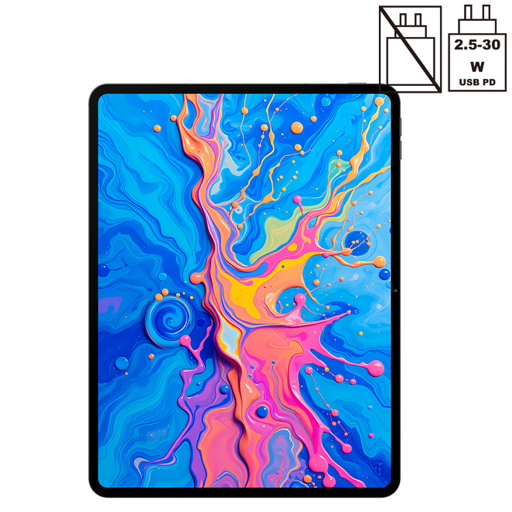
This Android tablet offers drawing directly on its own screen rather than acting as a pen display connected to your laptop. Consider it if that standalone setup suits your album-art software and file workflow.
 No image available
For drawing on one device rather than connecting a display to a laptop, this tablet is worth considering if your intended album-art apps run on Android.
The listed 12.7-inch 2K screen supports T-Pen drawing with 4096 pressure levels, and the tablet runs Android 15. Check the pen and other included items for the exact variant.
If colour-sensitive delivery or regular carrying matters, confirm the colour and calibration specifications, physical size and weight before choosing it.
Do not assume that a pen display works independently. The Huion, XPPen and Wacom pen displays discussed here are designed to connect to compatible host hardware; a standalone Android drawing tablet is a different type of device, so check its app compatibility if you want to work without a laptop.
Not necessarily. Huion Support specifies USB 3.1 Gen 1 data and DisplayPort 1.2 Alt Mode support for the relevant Huion USB-C display connection. Check your laptop's port specifications and the intended cable rather than relying on the connector's shape.
That depends on the exact model and bundle. Huion lists stand options for the Kamvas 13 (Gen 3), while XPPen's Artist 13 (2nd Gen) manual says its USB-C cable is sold separately and notes possible additional power needs. Check the included-items list before settling on a setup.
For a qualifying online purchase, GOV.UK says consumers can cancel up to 14 days after delivery without giving a reason. Check whether an exception applies and how to notify the seller; a change-of-mind cancellation is distinct from remedies for faulty or misdescribed goods.