Direct-on-screen landscape painters
If you want the pen tip to meet the image while painting terrain, foliage and skies, a pen display gives you that drawing position. Allow room for the display, its cables and a workable angle.


Choose a pen display if you want to paint directly on the image and can give its screen, cables and working angle space on your home-office desk. Choose a screenless pen tablet if you prefer using your existing monitor and keyboard with less screen hardware at the drawing position. A standalone Android tablet is a separate option, but check your painting apps and pen setup before treating it as a substitute for either computer-based route.
If you want the pen tip to meet the image while painting terrain, foliage and skies, a pen display gives you that drawing position. Allow room for the display, its cables and a workable angle.
If you already use a monitor and keyboard at a crowded desk, a screenless pen tablet avoids adding a drawing display. You will draw on the tablet while looking at your monitor, which is a different hand-to-screen interaction.
If inspecting fine landscape texture and choosing display colour modes matter to you, compare the exact pen-display model and your wider colour workflow. Manufacturer calibration information does not, by itself, establish how an image will look on another screen or in print.
Choose it when: You want to place landscape strokes directly on a screen and have room for a connected drawing display.
Accept that: A pen display needs a compatible host connection and a desk arrangement for its screen, cables and drawing angle.
Choose it when: You prefer your existing monitor and a keyboard-led painting workflow without another screen at the drawing position.
Accept that: Your hand moves on the tablet while your eyes follow the cursor on a separate display.
For home-office landscape painting, identify your primary need, then check the exact model against your computer, desk and drawing workflow.
| Concern | What to check | Who this matters to |
|---|---|---|
| Direct drawing and detail | Compare the exact pen display’s resolution, anti-glare surface and drawing angle; 16-inch models do not all have the same panel specifications. | If I am painting fine foliage or soft cloud edges, I want to see each stroke where my pen touches the image. Around 25% of consumers put direct drawing feedback first. |
| Desk fit and connections | Check available desk depth, a suitable working angle and the host’s required display connection and power arrangement. | When a display would crowd my desk, I need a position I can work at and a connection my computer can use. Roughly 33% of consumers prioritise desk fit and connectivity. |
| Keyboard workflow and portability | Compare shortcut controls, active drawing area and wired or wireless options on the exact model. | If I already paint using my monitor and keyboard, I would rather keep a second screen off the desk. About 25% of consumers put keyboard-led workflow and portability first. |
| Purchase and ownership checks | Confirm the included accessories, app compatibility, seller’s cancellation instructions and return-carriage terms. | Before committing to a setup, I want to know what comes with it and how to resolve a mismatch. Approximately 17% of consumers put purchase and ownership checks first. |
Huion describes the Kamvas 16 (2021) as a drawing monitor that needs a connection to a computer, laptop or Android device. A screenless pen tablet, a connected pen display and a standalone tablet are different purchases.
Decide which type you need before comparing screens or pressure levels, then check the chosen model’s host and power requirements.
A connected setup may also call for a compatible host, cable, adapter or power supply.
For USB-C display use with the Kamvas 16 (2021), Huion specifies USB 3.1 Gen 1 data transfer and DisplayPort 1.2 support on the host connection. A USB-C socket alone does not establish those capabilities.
Check your computer manufacturer’s port specification and confirm which cable arrangement the exact tablet bundle supports.
Pressure figures are model-specific specifications, not a measure of the whole landscape-painting experience. They do not tell you whether the display, shortcuts, driver, desk angle or host connection will suit your workflow.
Compare pressure and tilt alongside the exact model’s screen, controls, connection method and working position.
A connection or desk-fit problem is easier to assess when you have the product listing and included-accessory details to hand. GOV.UK also sets out rules for online cancellation information and for the recovery and recycling of electrical equipment.
Keep the listing and order confirmation, check the seller’s return instructions and arrange an appropriate electrical-equipment recycling route when the tablet reaches the end of its use.
Wacom’s Intuos Pro is a screenless, keyboard-oriented option; its Cintiq 16 is a pen display for drawing on a connected screen.
Huion’s Kamvas 16 (2021) and Kamvas 16 (Gen 3) are connected pen displays with different panel specifications.
The Artist Pro 16 (Gen 2) is a connected pen display for buyers comparing a 16:10 drawing workspace.
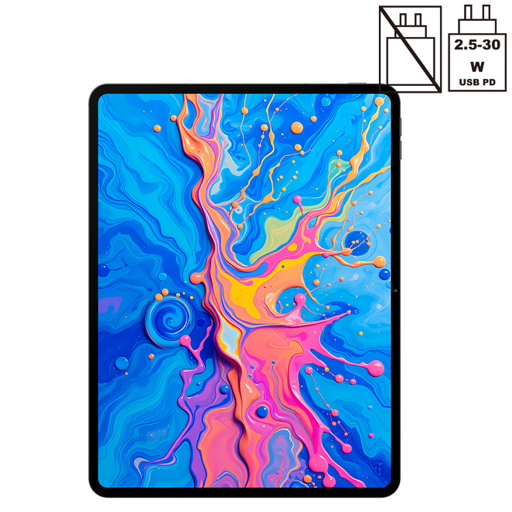
This standalone Android tablet is an option to consider if you want to draw directly on a screen without setting up a computer-connected pen display. Check that your preferred painting apps and pen arrangement meet your needs before choosing it for landscape work.
 No image available
Consider this model if you want a self-contained screen for drawing and your preferred painting apps work with its Android 15 setup.
Its product name specifies a 12.7-inch 2K display, T-Pen drawing support, 4,096-level pressure sensitivity and 256GB storage. Confirm compatible apps and pen accessories, the display characteristics you need for colour work, and whether the available working angle suits your desk.
Do not assume a pen display works on its own. Huion says its Kamvas 12/13/16 (2021) drawing monitors need a connection to a computer, laptop or Android device; check the exact model if you need a standalone tablet instead.
No: for USB-C display use with the Kamvas 16 (2021), Huion requires a host port supporting USB 3.1 Gen 1 data transfer and DisplayPort 1.2. Check both your computer’s port and the tablet’s cable requirements before ordering.
Pressure-level counts alone cannot settle that choice. Wacom specifies 8,192 levels for the Intuos Pro, while XPPen specifies up to 16,384 for the Artist Pro 16 (Gen 2); these are different products and drawing setups, so compare the screen, pen behaviour, controls and compatibility that matter to you as well.
For qualifying online purchases from a trader, GOV.UK says customers must be told they can cancel up to 14 days after delivery, subject to applicable conditions and exceptions. Check the seller’s cancellation method and return-carriage terms; remedies for faulty, damaged or misdescribed goods are a separate matter.
Use an appropriate electrical-equipment recycling route rather than treating the tablet as general waste. GOV.UK explains that waste electrical and electronic equipment rules support recovery, reuse and recycling; check the available collection or recycling arrangements when you are ready to dispose of it.