Direct-on-screen still-life painters
If you want your pen tip on the displayed image while comparing it with physical objects, consider an anti-glare pen display. Check that its drawing angle works alongside your main monitor and still-life setup.


Choose a pen display if drawing directly on the image matters most and your standing desk has room to position both it and your reference objects. A medium screenless tablet makes more sense if you already have a well-positioned monitor and want to keep the desk clearer, but you will draw while looking at a separate screen. Check the drawing angle and your device connections before choosing either setup.
If you want your pen tip on the displayed image while comparing it with physical objects, consider an anti-glare pen display. Check that its drawing angle works alongside your main monitor and still-life setup.
If you already use a monitor and need desk space for reference objects or a keyboard, a medium screenless tablet keeps the input surface separate. Some models offer wireless positioning, though you must be comfortable drawing while looking at the monitor.
If you plan to connect a laptop, desktop or Android device, check the exact tablet, host port, cable and power requirements. A USB-C socket alone does not establish that it can carry the video signal a pen display needs.
Choose it when: You want to paint on the displayed image and can position the drawing surface beside your physical still life.
Allow for: Another screen on the desk, with its drawing angle and connections to manage.
Choose it when: Your existing monitor is suitably positioned and keeping the work surface clear matters more than drawing directly on the image.
Allow for: Drawing on the tablet while watching the cursor on a separate screen.
| Concern | What to check | Who this matters to |
|---|---|---|
| Drawing on the image | For a pen display, compare screen size and anti-glare treatment; check whether its drawing angle suits your setup. | I want to move between a physical still life and my digital canvas without looking away from my pen tip. Around 42% of consumers put direct-on-screen drawing first. |
| Desk position and space | Measure desk depth and check how the tablet, main monitor and reference objects can be positioned together. | My desk needs room for reference objects, and I need a drawing position I can maintain while standing. For around 33% of consumers, workstation fit is the primary concern. |
| Device connections | Confirm the host device, video-capable ports, supplied cables and any separate power requirement for the exact model. | I need the tablet to work with my existing device without an unexpected change of connection method. Compatibility comes first for around 25% of consumers. |
Huion specifies that the USB-C-to-USB-C connection for Kamvas 16 (2021) needs a host supporting USB 3.1 Gen 1 data transfer and DisplayPort 1.2. Some connections also need additional power.
Check your host port, the connection method for the exact display and which cables and power accessories come with it.
A different connection method can mean routing additional cables or using a separate power supply.
A pen display needs a stable drawing position that works with the main monitor and physical still life. The Health and Safety Executive advises considering the whole workstation, including screen height and forearm position.
Measure the available space and check whether the included feet, a compatible stand or a suitable mount provides the angle you need.
An optional stand or mount may be needed to achieve the intended setup.
Pressure and tilt specifications describe pen-input capabilities; they do not establish how well a display will match the colours of physical objects. XPPen notes that some of its performance figures come from laboratory simulation and may vary with the operating environment.
Decide whether you need direct-on-screen drawing first, then check pen features alongside glare, screen placement and device compatibility.
Wacom offers both Cintiq pen displays and Intuos Pro screenless tablets for these different workflows.
Huion offers direct-on-screen Kamvas displays alongside screenless Inspiroy tablets.
XPPen offers the Artist pen-display line and the screenless Deco Pro line.
These TECLAST ArtPad Pro listings are 12.7-inch Android tablets for drawing on their own screens, rather than the 15–16-inch connected pen displays or screenless tablets discussed above. Compare the stated bundles carefully, and check your drawing apps, pen arrangements and standing-desk positioning before choosing a listing.
 No image available
Consider this listing if you want to draw directly on an Android tablet and want a stylus in the stated bundle.
Its product name specifies a 12.7-inch 2K display, T-Pen drawing support, 4096 pressure levels and Android 15.
Check that your drawing apps work on the device and that its screen surface and available positioning suit your standing desk.
 No image available
Consider this bundle if you want to draw on the tablet screen and also want the stated case and keyboard.
Its product name specifies a 12.7-inch 2K display and Android 15, with a stylus, case and keyboard in the bundle.
Check drawing-app compatibility and whether the screen surface and available drawing angle work at your desk.
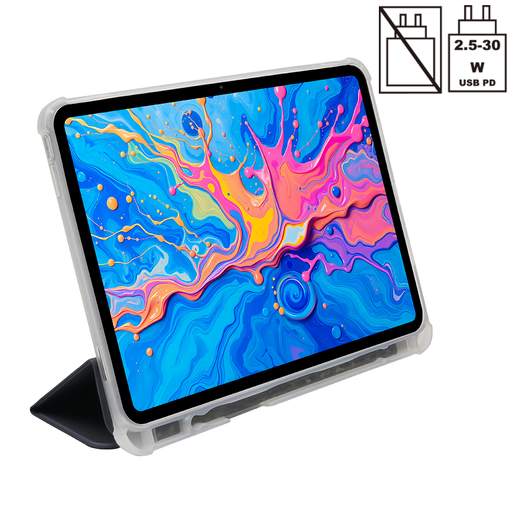 No image available
Consider this listing for drawing on the tablet screen if you have, or plan to obtain, a compatible pen.
Its product name specifies a 12.7-inch 2K display, T-Pen compatibility, 4096 pressure levels and an included case.
Confirm whether a pen comes with this particular bundle, whether your drawing apps work on the device and how you would position it at the desk.
The Huion Kamvas 16 (2021) needs a connected computer, laptop or compatible Android device; it is not a standalone drawing tablet. Huion specifies USB 3.1 Gen 1 data and DisplayPort 1.2 support for its USB-C-to-USB-C connection, so check your host port and the exact connection method before buying.
Position the tablet as part of the whole workstation, so its drawing angle works with your main screen and physical still life. The Health and Safety Executive advises approximately horizontal forearms and eyes at the height of the top of the screen; check desk depth and the available feet or compatible mount before choosing a pen display.
An anti-glare surface is worth considering if lamps or windows cause reflections where you draw. Wacom lists anti-glare treatment for Cintiq 16, Huion for Kamvas 16 (2021), and XPPen for Artist 16 (2nd Gen); the surface feature does not guarantee a colour match between the screen and physical objects.