Small-desk motif makers
If your desk also holds a keyboard and materials, a small screenless pen tablet lets you draw while viewing the artwork on a separate screen. Check its active area as well as its outer dimensions.


Choose a small screenless pen tablet if keeping desk space clear matters more than drawing directly on the motif. Choose a compact pen display if you prefer to place strokes on the visible artwork and have room for its cables and host computer. For either option, check the working area, connections and compatibility before buying.
If your desk also holds a keyboard and materials, a small screenless pen tablet lets you draw while viewing the artwork on a separate screen. Check its active area as well as its outer dimensions.
If placing curves and decorative details directly on the visible motif matters more to you, consider a compact pen display. Allow space for the display, its connection and any stand you intend to use.
If you already have a computer or compatible Android device, check that the drawing device works with its operating system and ports. A pen display may also need a suitable video signal and power arrangement.
Start with the way you want to draw: on a separate tablet while watching a monitor, or directly on a display. Then measure your available space and check the connection and software requirements for the exact device.
| Concern | What to check | Who this matters to |
|---|---|---|
| Desk space and drawing area | Compare outer dimensions with the available desk area, then check the pen tablet’s active area or the display’s workspace. | If I need room for my computer and materials, I want a drawing surface that leaves the rest of the desk usable. Around 33% of consumers put space and drawing area first. |
| Drawing on the visible motif | Decide whether a screenless surface or a pen display fits your drawing method; check any shortcut controls you intend to use. | When I place curves and small decorative elements, I may prefer to put the pen directly on the image. For around 27% of consumers, that direct drawing method is the main concern. |
| Colour and fine detail | Check the exact display model’s resolution and stated colour specifications; assess fabric colour through your separate print-proofing workflow. | If I review small repeats and colour choices on screen, I need to judge what the display can show without assuming the fabric will match it. Around 20% of consumers prioritise this review. |
| Computer and connections | Check operating-system support, host-port capabilities, cable contents and any separate power or driver requirements. | Before I draw, I need the device to work with the computer and ports I already have. Avoiding a connection or setup mismatch comes first for around 20% of consumers. |
A USB-C connector does not establish that a laptop can carry the video and data needed for Huion’s Kamvas 13 USB-C-to-USB-C connection.
For that connection, check your computer’s port specification against Huion’s requirements of USB 3.1 Gen 1 data transfer and DisplayPort 1.2.
Huion lists the ST300 stand as optional for the Kamvas 13, and its connection arrangements can require more than a single cable.
Check the exact box contents, viewing angle, cable route and power arrangement against your desk layout.
Depending on the connection and viewing position you choose, you may need to arrange a stand or additional cabling and power.
A built-in screen does not necessarily mean the drawing device runs on its own. XPPen says the Artist 12 3rd needs a connected computer or laptop.
If you need to draw without a host computer, check that the device you choose can run your required drawing software independently.
A manufacturer’s stated display colour coverage describes that display, not how inks and fabric will reproduce the finished motif.
Compare screen specifications for the exact models under consideration, and assess colour-critical output through your printing and proofing workflow.
Wacom provides examples of both a small screenless pen tablet and a compact pen display within its Wacom One range.
Huion publishes measurements that make the Kamvas 13 pen display practical to assess against a particular desk.
XPPen’s Artist 12 3rd is an 11.9-inch pen display with physical controls for a screen-based drawing setup.
These TECLAST ArtPad Pro variants offer a different route from a computer-connected pen display: drawing on an Android tablet’s own screen. If that appeals for your desk, check your required drawing apps, the tablet’s physical dimensions and the accessories supplied with the exact variant.
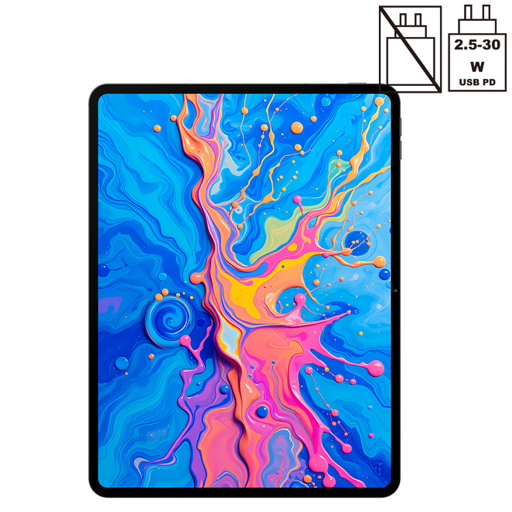 No image available
Consider this Android tablet if you want to sketch motifs on its screen rather than on a separate computer-connected display.
The listed variant supports T-Pen drawing with 4096 pressure levels and runs Android 15. Check that your drawing apps work with it, that its outer dimensions fit your desk and whether the pen is in the exact bundle.
 No image available
This is a screen-based option to consider if the included stylus suits the way you plan to sketch motifs.
The title lists a 12.7-inch 2K display, T-Pen drawing support with 4096 pressure levels, an included stylus and Android 15. Check app compatibility and the tablet’s outer dimensions before choosing it for a small desk.
 No image available
Consider this bundle if you want to draw on the tablet and also have a keyboard for other desk tasks.
The title lists Android 15 and a stylus, case and keyboard. Check how the tablet and keyboard will fit together on your desk, as well as compatibility with the drawing apps you need.
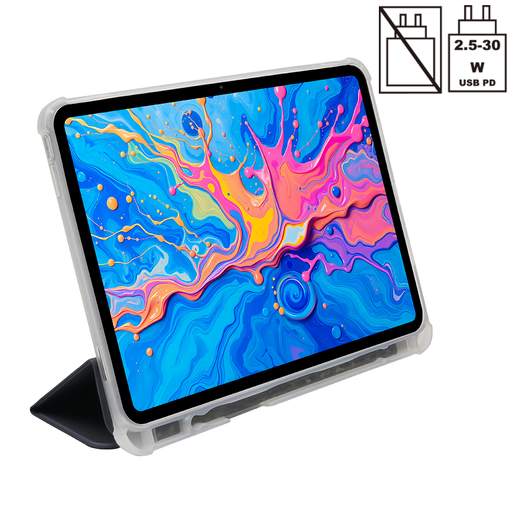 No image available
This variant is worth considering for on-screen motif drawing if you can obtain the compatible pen you intend to use.
The title states T-Pen compatibility, 4096 pressure levels and an included case. Confirm pen compatibility and the exact box contents before ordering; also check app support and the tablet’s outer dimensions.
A small screenless pen tablet is the more space-conscious route if you are comfortable drawing while looking at a separate monitor. A compact pen display puts the motif beneath the pen, but you need to allow for the display, cables and host computer; compare the exact devices’ outer dimensions before deciding.
No: for the Kamvas 13 USB-C-to-USB-C connection, Huion specifies a host port supporting at least USB 3.1 Gen 1 data transfer and DisplayPort 1.2. Check your laptop’s port specification and the connection options supplied with the exact display.
No. XPPen states that the Artist 12 3rd needs a connected computer or laptop to run. If independent drawing is essential, check the app and stylus support of a device that runs its own operating system instead.