Shared-desk sketchers
If your laptop, costume references and another person all need room, start by assessing compact pen tablets that you can move aside between sessions. You will draw on the tablet while viewing the image on your computer screen.


Choose a compact, screenless pen tablet if you need to clear the shared desk quickly and are comfortable drawing while looking at a separate screen. Choose a pen display if placing costume outlines directly beneath the pen matters more than saving desk space. For either route, check the exact device connection, physical footprint and included accessories before buying.
If your laptop, costume references and another person all need room, start by assessing compact pen tablets that you can move aside between sessions. You will draw on the tablet while viewing the image on your computer screen.
If you want to place outlines, seams and colour blocks beneath the pen tip, assess a compact pen display. Allow room for the display, its connection cables and any stand you plan to use.
If you switch between computers or intend to use a compatible mobile device, check support for each exact device and connection method before weighing display or shortcut features.
Choose it when: You need to move the drawing surface aside regularly and can sketch while watching your computer display.
Trade-off: Your hand and the image are on separate surfaces, and wireless support depends on the exact tablet and computer.
Choose it when: Seeing costume lines appear beneath the pen is worth giving the drawing screen desk space.
Trade-off: The display and its cables need room, and its video connection must match your computer.
| Concern | What to check | Who this matters to |
|---|---|---|
| Keeping the desk clear | Compare actual dimensions and where the tablet and cables will sit alongside your keyboard and references. | I need to put my sketching setup away so the desk remains usable by someone else; around 40% of consumers put a clear, flexible work surface first. |
| Drawing on the image | Check the display’s size, surface treatment and whether a stand is included. | When I place a seam or adjust a silhouette, I want to see the mark beneath my pen; roughly 40% of consumers prioritise drawing directly on the image. |
| Connection and setup | Match the exact tablet to your computer, operating system and ports; check any required driver. | I move between devices and need my chosen connection to work before I start sketching; about 20% of consumers make compatibility their primary concern. |
A matching connector shape does not establish video support. For Huion’s cited USB-C-to-USB-C display connection, the device and cable need USB 3.1 Gen 1 data transfer and DisplayPort 1.2 Alt Mode support.
Check your computer’s port specification and the connection instructions for the exact display before ordering.
A different cable or connection arrangement may be needed if the intended USB-C setup cannot carry the required signals.
Huion lists the Kamvas 13 at 366.5 × 217.4 × 11.8 mm and its ST300 stand as optional. A shared desk also needs space for the computer, references and cables.
Measure the usable work surface with your other equipment in place, then check the listing for the stand and required cables.
If you need the optional stand, it is another item to arrange.
Wacom, Huion and XPPen list models with 8,192 pressure levels, but that figure does not settle whether you need a screenless drawing surface or an on-screen one.
Decide where you want the image to appear, then compare the exact models’ dimensions, connections, controls and device compatibility.
The Intuos Pro line is relevant if you want a screenless pen tablet that can be moved around a shared workspace.
The Kamvas 13 is relevant if you want to sketch directly on a compact pen display.
The Deco Pro SW/MW and Artist 13 (2nd Gen) represent screenless and on-screen routes respectively.
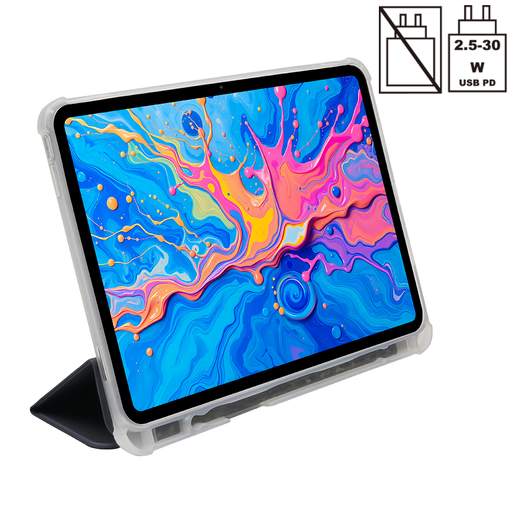
This selection covers a T-Pen-compatible tablet for drawing on its own screen. It is a different setup from a screenless pen tablet or a computer-connected pen display, so check the pen and drawing-app requirements against the way you intend to sketch.
 No image available
Consider this for sketching directly on a tablet screen rather than using a separate computer-connected pen display.
The product name specifies T-Pen compatibility and 4,096 pressure levels, 20GB (8GB + 12GB virtual) RAM, 5G WiFi, a 10000mAh battery and an included case.
Before choosing it, check whether the T-Pen is included, whether your intended drawing apps support its pressure input and whether its dimensions leave enough space on the shared desk.
No. For Huion’s cited USB-C-to-USB-C display connection, both the device and cable need USB 3.1 Gen 1 data transfer and DisplayPort 1.2 Alt Mode support. Check your computer’s port specification and the exact display’s connection instructions.
Choose the manufacturer’s driver for your exact model and operating system. Huion warns that multiple installed tablet drivers can conflict, so follow the relevant installation instructions if you already use another tablet.
Check the exact package rather than assuming it does. Huion identifies the Kamvas 13 ST300 stand as optional, while the cables you need depend on the display’s connection method and your computer’s ports.