Card makers who want to draw on the visible artwork
If you want to see each stroke beneath your pen, consider a pen display. Allow room for the display and check how it will connect to your computer.


Choose a screenless pen tablet if you already use a monitor and want a device you can put away between card projects. Choose a pen display if placing strokes directly on the visible artwork matters more than keeping your desk clear; check its connections and space requirements before buying. With either route, confirm support for your operating system and lettering app rather than choosing by the advertised pressure-level figure alone.
If you want to see each stroke beneath your pen, consider a pen display. Allow room for the display and check how it will connect to your computer.
If you already work comfortably from a monitor, a screenless tablet offers a drawing surface you can put away between card projects. You will need to coordinate your pen movement with the cursor on the separate screen.
Start with the operating system and app you intend to use, then check driver setup and pressure controls. Clip Studio Paint, for example, provides settings for adjusting pen-pressure response.
Choose it when: You have a monitor you like using and want to clear the drawing surface from your desk after lettering.
Trade-off: You draw on the tablet while looking at a separate screen, which can take practice.
Choose it when: You would rather place letters and flourishes directly on the visible digital canvas.
Trade-off: It needs desk space and a connection arrangement that works with your computer; check the selected model’s cables and stand.
| Concern | What to check | Who this matters to |
|---|---|---|
| Direct visual control | For a pen display, check the drawing area, screen construction and how you would position it on your desk. | If I want to place closely spaced letters while looking at the card artwork, drawing on the visible canvas comes first; around 40% of consumers put direct visual control first. |
| Desk space and storage | Compare the tablet’s active area with your available desk space, and check its dimensions and connection needs. | When my desk also holds other work, I want to put the drawing surface away after finishing a card; roughly 30% of consumers prioritise a compact workflow. |
| Stroke control and setup | Confirm operating-system and app support, then check whether your chosen brush uses pressure and offers adjustment controls. | If I use pressure-sensitive brush lettering, I need strokes I can adjust in the app rather than a headline pen specification alone; around 30% of consumers make stroke control and compatibility their primary concern. |
Huion lists USB-C connection options for the Kamvas 13 and describes its stand as optional. The setup you need depends on your computer’s ports and the selected package.
Check the exact cable bundle against your computer’s video and data ports, and decide whether you need a stand for your preferred writing angle.
Depending on the package and computer, a compatible cable or stand may be an additional item to arrange.
A pen’s pressure specification does not determine how a particular brush responds. The driver, lettering app and brush settings also matter; Clip Studio Paint provides pen-pressure adjustment controls.
Check support for your chosen app, then adjust and try its pressure settings with the brush you intend to use.
A screenless tablet uses your existing monitor for the artwork. That arrangement can keep the drawing device easy to store, although looking at a separate screen while drawing may take practice.
Decide whether clearing desk space or drawing directly on the visible card matters more to you before choosing between the two setups.
Creating your own lettering does not by itself settle whether you may use a third-party font, illustration or template in a card you sell.
Check the commercial terms for each asset you did not create, and keep a record of the licences you rely on.
Wacom positions its screenless Intuos tablets for people starting digital creation. Consider this line if you want a pen-based setup beside an existing monitor.
Huion’s Kamvas 13 is a pen display for drawing on the visible canvas at a desk.
The screenless Deco 01 V2 is worth considering if you want a stated 10 × 6.25-inch active area without adding another display.
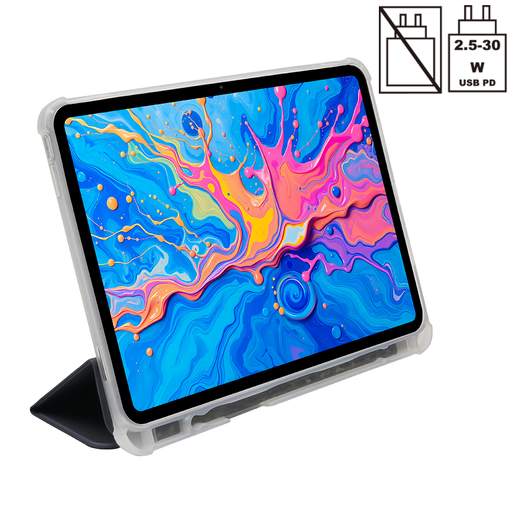
This integrated-screen TECLAST tablet is a separate option for lettering on an Android device, rather than a screenless computer peripheral or a pen display connected to a computer. Check your lettering app and stylus requirements before choosing that workflow.
 No image available
Consider this integrated-screen tablet if you want to letter on the device itself and your intended Android app supports your chosen stylus workflow.
The listing states a 12.7-inch 2K display, T-Pen compatibility and 4,096 pressure levels; it also names a case as included. Confirm whether the stylus is included and whether its pressure input works in your lettering app before buying. The pressure-level specification alone does not establish how your strokes will respond.
No. A screenless pen tablet can suit card lettering if you are comfortable drawing on the tablet while looking at your computer monitor. Choose a pen display when seeing strokes directly beneath the pen matters more to you and you have room and suitable connections for it.
Not on their own. Check whether your lettering app and chosen brush respond to pressure, then adjust the settings to suit your hand. Clip Studio Paint, for example, provides pen-pressure adjustment controls.
Check the exact model’s operating-system support, your computer’s ports and the required cables, then confirm support in the lettering app you will use. For an Android workflow, check the model’s stated connection conditions and whether the app supports the pen functions you need.
You can decide how to use work for which you own the copyright, as GOV.UK explains. If a card also uses third-party fonts, illustrations or templates, check that each asset’s licence permits your intended commercial use.