Poster makers with limited desk space
If a laptop, coursework and drawing tools share one desk, a screenless tablet that can be put away between projects is worth considering. Wacom and XPPen offer compact or thin pen-tablet options.


Choose a screenless pen tablet if you need to keep a student-room desk clear and are comfortable drawing while looking at your computer screen. A computer-connected pen display makes more sense when drawing directly on the artwork matters enough to accommodate another screen and its cables. If the poster will be printed, the printer’s artwork requirements matter more to the final output than a tablet’s stated display gamut.
If a laptop, coursework and drawing tools share one desk, a screenless tablet that can be put away between projects is worth considering. Wacom and XPPen offer compact or thin pen-tablet options.
If posters involve hand-drawn characters, props, textures or lettering, drawing directly on a pen display may suit the way you work. Check where the connected screen and its cables would sit before choosing one.
If the finished artwork is going to a printer, distinguish what a display can show from how the file will be prepared for output. Adobe’s InDesign guidance explains that process-colour conversion follows the document profile and colour-management settings.
For theatre-poster work at a student-room desk, start with the space available and whether you want to draw on the image itself; then check the print workflow and the equipment needed to use your chosen device.
| Concern | What to check | Who this matters to |
|---|---|---|
| Desk space and storage | Measure the clear area beside your laptop and where the tablet will go between projects. Huion lists the Kamvas 13 body as 366.5 × 217.4 × 11.8 mm, while XPPen lists the Deco 01 V3 as 8 mm thick. | I need to clear my desk after drawing, rather than leave another screen set up. Roughly 36% of consumers put space and storage first. |
| Drawing directly on the artwork | Decide whether looking at a separate computer screen feels workable for illustration and lettering. For a pen display, check its computer connection and where its controls sit. | If I draw characters or hand-rendered lettering, I want the pen tip over the image. Around 29% of consumers make direct drawing their primary concern. |
| Colour and print preparation | Ask the print supplier for its artwork and colour-profile requirements. Adobe explains that InDesign’s process-colour output depends on colour-management settings and the document profile, not on display gamut alone. | I want the theatre poster file prepared for the printer, not just colours that look pleasing on my screen. Approximately 21% of consumers prioritise the print workflow. |
| Complete first setup | Check computer ports, the required cables and whether a stand is included. Huion identifies the Kamvas 13 stand as optional. | I want to be able to position and connect the device when I start a project. Roughly 14% of consumers put setup essentials first. |
The Huion Kamvas 13 and XPPen Artist 13.3 Pro V2 are computer-connected drawing displays. Their direct-on-screen drawing experience still requires a suitable connection and room for the display beside your computer.
Check your computer’s available ports, the display’s connection requirements and a comfortable position for both screens before ordering.
Huion and XPPen state colour-gamut specifications for their displays, but those figures do not determine the colour of a finished poster. Adobe describes how InDesign’s process-colour output follows document profiles and colour-management settings.
Follow your print supplier’s artwork specification and request a proof when the project calls for one.
Huion identifies the Kamvas 13 stand as optional. A display that fits on paper may also need space for a stable drawing position and its cable route.
Check the contents of the exact product listing against your computer ports and intended desk layout.
Finding a workable position may also take more desk space than the display alone occupies.
For eligible online orders from UK traders, GOV.UK says customers can notify the trader that they want to cancel within 14 days of receiving the item. A change-of-mind cancellation is a different issue from a tablet that is faulty, damaged or misdescribed.
Keep your order details, check the trader’s return instructions and describe the problem clearly when contacting them.
Its Intuos S and Intuos Pro Small illustrate two screenless pen-tablet options for working alongside a computer.
The Kamvas 13 is a 13.3-inch, computer-connected pen display for drawing on the image.
The Deco 01 V3 offers a screenless drawing surface; the Artist 13.3 Pro V2 is a connected pen-display option.
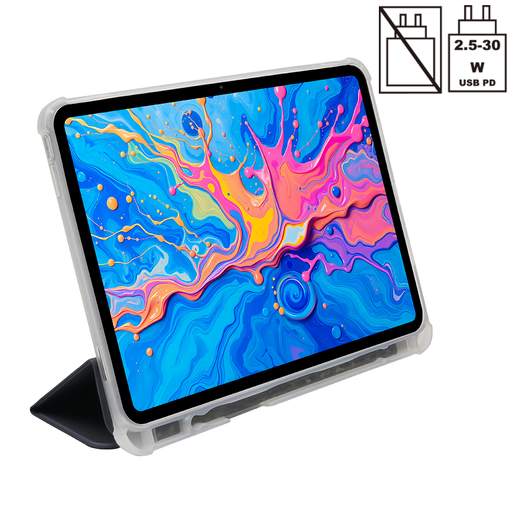
This selection covers a screen-equipped tablet with T-Pen compatibility for considering direct drawing. Before choosing it for theatre posters, confirm that the drawing apps and artwork-export options you need work with the device.
 No image available
Consider this screen-equipped tablet for drawing poster artwork if your intended apps support the workflow and can export the files you need.
The product title states a 12.7-inch 2K display, T-Pen compatibility and 4,096-level pressure. It lists a case as included but does not establish that a T-Pen is included; check the exact package contents.
For printed posters, follow the print supplier’s colour and file requirements. Check the tablet’s physical dimensions against your available desk space.
Use a screenless pen tablet if you can draw while looking at your computer screen and need a setup that is easier to put away. Choose a computer-connected pen display if drawing directly on the artwork matters more and you have room for its screen and cables; Huion also identifies the Kamvas 13 stand as optional.
No display-gamut specification alone guarantees a match with a printed poster. Adobe explains that InDesign’s process-colour output follows colour-management settings and the document profile, so use your print supplier’s file requirements and consider a proof when colour is important to the project.
For eligible distance purchases, GOV.UK says customers can tell the trader they want to cancel within 14 days of receiving the item. Check the instructions and applicable conditions for your order; cancellation for a change of mind should not be confused with seeking a remedy for faulty, damaged or misdescribed goods.
Look for an appropriate electrical-waste collection or take-back route rather than putting it in ordinary household waste. GOV.UK describes the UK waste electrical and electronic equipment framework as encouraging recovery, reuse and recycling; ask your local council or the retailer which route is available to you.