What matters when choosing?
Start with where the lamp can sit and whether its light can be directed across your usual paper size. Then compare light controls and bulb arrangements for the kind of drawing you do.
| Concern |
What to check |
Who this matters to |
| Light positioning |
Check the arm or shade adjustment and measure the mounting edge if choosing a clamp. |
If my drawing hand shades the pencil marks, I need to redirect the light as I work; around 31% of consumers put positioning first. |
| Light control |
Check dimming and the chosen model’s colour-rendering and colour-temperature specifications, particularly for coloured media. |
When I switch between graphite and coloured materials, I want control over the light while judging tones and colours; roughly 31% of consumers make light control their primary concern. |
| Coverage and space |
Match the stated coverage and measurement distance to your work area, then allow for the base, clamp or floor stand. |
For larger sheets or a desk shared with tools, I need light across the working area without using space I need for drawing; about 23% of consumers prioritise coverage and space. |
| Bulb replacement |
Check whether the light source is integrated or replaceable; for a replaceable bulb, confirm its fitting and permitted rating. |
If replacing the bulb matters to me, I want to know which compatible lamp and bulb arrangement I am choosing; around 15% of consumers put this ownership concern first. |
Relevant brands for reference
These examples illustrate different lamp formats; the details apply to the named models, not every lamp from each brand.
Daylight Company
The Techne 2 is a clamp-mounted drawing lamp, while the Artist Studio Lamp 2 takes a floor-standing approach to lighting a larger work area.
- Daylight Company specifies dimming, directional adjustment and 95+ CRI for the cited artist-lamp models.
- The formats need different space: the Techne 2 has a stated 55 mm maximum clamp opening, while the Artist Studio Lamp 2 has a 1.9 m stand and weighs 3.8 kg.
Anglepoise
The Type 75 offers an adjustable-lamp route for sketchers who value arm reach and a replaceable bulb rather than an integrated artist-light design.
- Anglepoise states a maximum 90 cm reach, constant-tension springs and a replaceable E27 LED bulb for the cited Type 75.
- The cited supplied bulb is listed at 470 lumens and 2700 K. Check the colour-rendering specification of the bulb you intend to use if you also work with coloured media.
BenQ
The ScreenBar Halo is a monitor-mounted option for a drawing desk organised around a screen.
- BenQ specifies Ra≥95 and 800 lux at 45 cm for the ScreenBar Halo.
- It requires a compatible monitor and cannot be positioned independently over a drawing board like a movable lamp.
Joybuy lamps for desk-based sketching
These two desk-lamp formats suit different work surfaces: a clamp lamp for an edge-mounted setup and a folding lamp for a desk where flexible placement matters. Check the light’s reach over your paper and the exact listing details before choosing.
 No image available
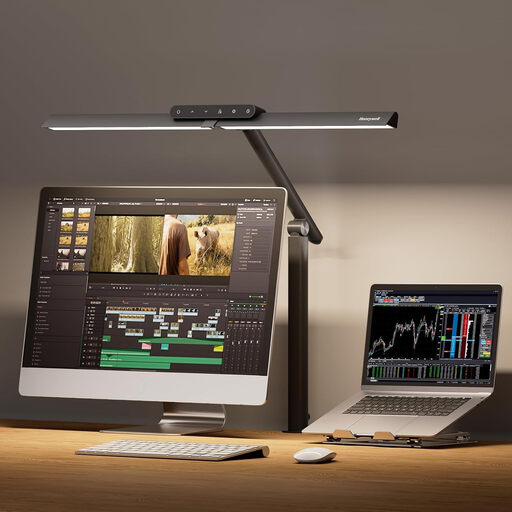
Honeywell HJ1 Sunturalux clamp desk lamp, black
Consider this clamp format if you want to keep the drawing surface clear and have a suitable desk or board edge. The product name specifies 1200 lm, four colour modes and stepless dimming; check where the lamp can mount and how far its light will reach across your paper.
View on Joybuy
 No image available
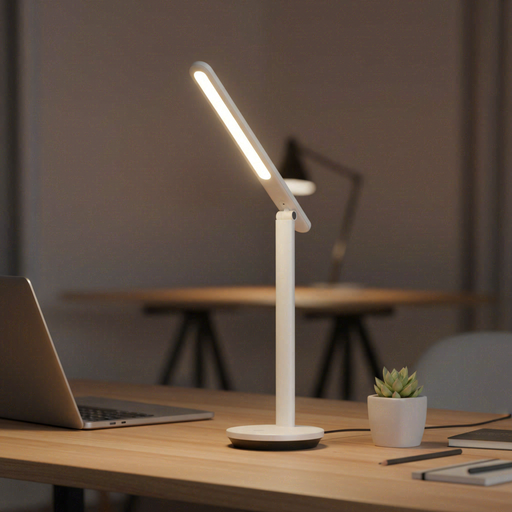
Yeelight Z1 Pro folding desk lamp, white
Consider this folding desk format if you move or put away your lamp between drawing sessions. Its product name identifies a rechargeable design and adjustable brightness; check that its placement and light coverage suit your usual paper size.
View on Joybuy
Common questions
Do graphite pencil sketches require a 95+ CRI lamp?
Not necessarily for graphite-only tonal work. A published colour-rendering figure becomes more useful if you also judge coloured pencils, paint or colour references. Daylight Company and BenQ state 95+ CRI or Ra≥95 for the cited models; these are manufacturer specifications, not independent test results.
How can I tell whether a clamp lamp will fit my desk?
Measure the unobstructed edge where you plan to attach it, including clearance beneath the surface. Daylight Company specifies a 55 mm maximum clamp opening for the Techne 2; use the limit for your chosen model rather than applying that figure to every clamp lamp.
Can I replace the bulb in an Anglepoise Type 75?
The cited Type 75 information lists a replaceable E27 LED bulb with a maximum rating of 10 W LED E27. Anglepoise also states that dimming requires additional electrical hardware, so check the bulb and dimming arrangement for the version you choose.
Which product marking should I check on an electrical lamp?
For electrical equipment placed on the Great Britain market, a GOV.UK Department for Business and Trade table dated 31 March 2026 lists UKCA or CE marking. For Northern Ireland, it lists CE, or CE together with UKNI where applicable. Check the documentation for the exact lamp and its intended market; a marking alone does not establish that an individual listing meets every requirement.


