
24/7 Customer Support

Free returns

Same-day & Next-day Delivery

Quality Guaranteed

Unlock Your Welcome Offers: FREE Delivery | Up to 80% OFF | Free 30-day JoyPlus trial
Download the APP
The annual shop for back to school supplies or a simple office restock can feel straightforward, but it often leads to frustration. Pencils that snap constantly, sharpeners that chew up wood instead of creating a point and colouring sets that promise the world but deliver pale, uninspired results are common let-downs. Choosing the right tools from the start saves money and ensures they are fit for purpose, whether for a child's homework or an important office project.
Before you buy, be aware of these common purchasing pitfalls:
Choosing the right pencil goes beyond simply picking a colour. The physical design and lead type are critical for both function and comfort.
The shape of a pencil barrel directly impacts grip and control. While the traditional hexagonal shape prevents rolling, a triangular barrel is often recommended for young learners as it naturally encourages the 'tripod grip'—the efficient and comfortable way to hold a pencil.
For users who need extra support, especially children, look for pencils with moulded grip zones. These provide tactile cues for correct finger placement. It is also worth noting that dedicated left-handed pencils and ergonomic colouring pencils are not a gimmick; their grip zones are mirrored to provide left-handed writers with the same level of comfort and control as their right-handed counterparts.
For most daily tasks, an HB graphite pencil is the standard. The 'HB' designation refers to a lead that is a balance of hardness (H) and blackness (B). It produces a clear, dark line that erases cleanly, making it ideal for general office writing supplies and pencils for school. For more specialised art pencils and sharpeners, you will find a wider range of grades, from hard (H grades) for fine, light lines to soft (B grades) for rich, dark shading.
A good pencil is only as effective as the sharpener that maintains its point. The choice between manual and electric models depends entirely on your needs.
Manual sharpeners with a container are excellent for portability. They are a staple of any pencil case, offering a reliable way to sharpen on the go. Look for models with a securely fitting lid to prevent mess. For higher volume needs, such as in a classroom or a busy office, electric pencil sharpeners offer speed and consistency. When choosing an electric model, consider the power source. Battery-operated units offer portability, while AC-powered sharpeners provide more consistent power for heavy-duty use.
The sharpening mechanism is the most important feature. Many basic sharpeners use a simple, flat blade that can dull quickly and lead to uneven sharpening. A helical blade, typically found in higher-quality electric and desktop manual models, uses a rotating cylindrical cutter to shave the wood evenly from all sides. This results in a much sharper, more uniform point and significantly extends the life of the sharpener.
To help you navigate the options, we have matched several products to specific user needs, focusing on designs that solve common problems.
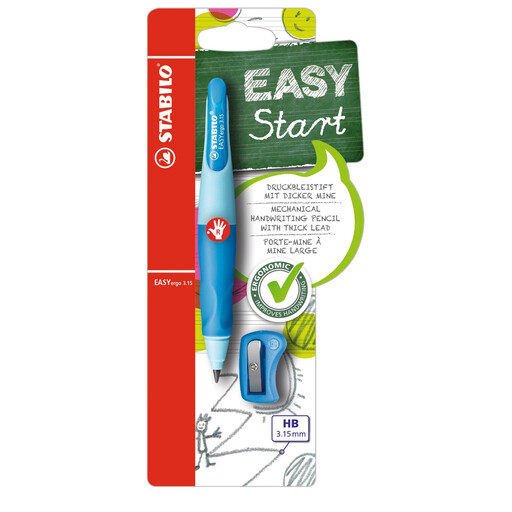
Why This Fits Their Persona: This mechanical pencil is designed specifically for children who are learning to write. Its shape and grip are intended to make the process more comfortable and to help establish good habits from the start.
It moves beyond a vague 'ergonomic' label. The non-slip, moulded grip zone provides tangible, physical guidance for fingers, directly encouraging the recommended tripod grip.
The extra-thick 3.15mm lead is break-resistant, reducing frustration for heavy-handed writers. It is also refillable, making it a long-lasting tool.
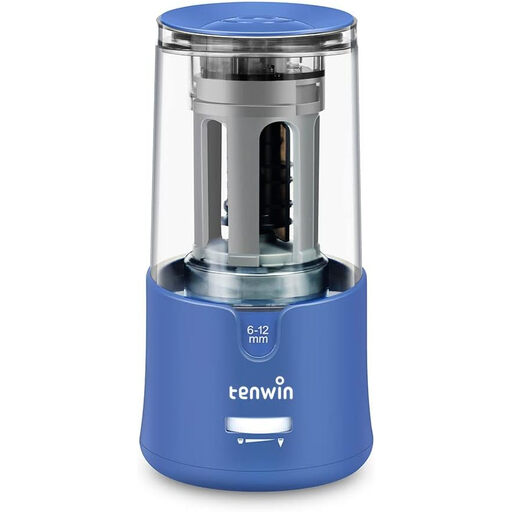
Why This Fits Their Persona: A classroom or office needs a workhorse that can sharpen dozens of pencils quickly and consistently without constant battery changes or motor burnout.
It bypasses the weak motors and short lifespan of cheap battery models. The AC-powered helical blade is built for frequent use, providing consistent power that won't fade.
It features three adjustable sharpness points (sharp, medium and blunt) and an auto-stop safety function, making it versatile and safe for a busy environment.
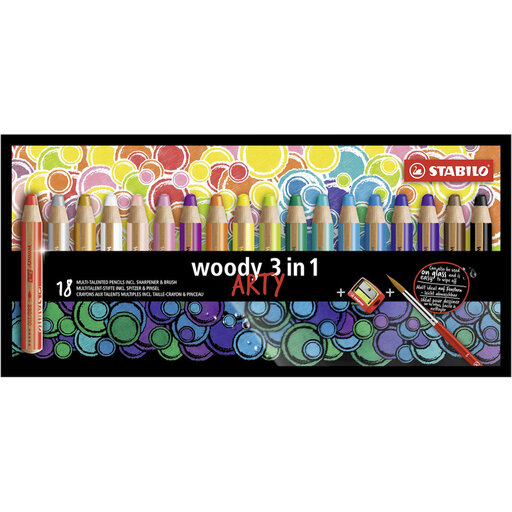
Why This Fits Their Persona: This tool is ideal for those who love to experiment with different art forms without the expense and clutter of buying three separate sets of materials.
Unlike many "multi-purpose" tools, this pencil delivers on its promise. The extra-thick, highly pigmented lead provides vibrant colour on paper, glass and dark surfaces, and genuinely works as a watercolour with a wet brush.
It functions as a coloured pencil, watercolour and wax crayon in one. The XXL lead has a colour yield equivalent to eight standard pencils, making it great for covering large areas.
We have compiled a complete, real-time list of products that fully satisfy these strict selection criteria and UK safety regulations.
Your choice should be based on use case. For personal, portable use (like in a pencil case), a good quality manual sharpener with a container is ideal. For high-volume environments like a classroom, artist's studio or office where many pencils need to be sharpened quickly and consistently, an electric pencil sharpener is a more efficient investment.
A truly ergonomic design goes beyond a simple soft-touch finish. It refers to a shape that is specifically crafted to fit the user's hand and promote a healthy, low-strain grip. For pencils, this often means a triangular barrel or moulded grip zones that guide fingers into the correct tripod position. This is particularly beneficial for young children developing their handwriting skills.
HB is the designation for a medium-grade graphite lead, representing a balance between Hardness (H) and Blackness (B). It is the most common type of pencil lead and is considered the standard for everyday writing and drawing. It creates a clear, legible line that is dark enough to be easily read but firm enough to resist smudging, making it perfect for everything from school notes to office memos.