
24/7 Customer Support

Free returns

Same-day & Next-day Delivery

Quality Guaranteed

Unlock Your Welcome Offers: FREE Delivery | Up to 80% OFF | Free 30-day JoyPlus trial
Download the APP
Buying pencils can seem straightforward until you are faced with different grades, lead sizes, shapes, pack quantities and specialist designs. A pencil for school is not necessarily suitable for technical drawing, while coloured pencils for children may not provide the tonal range required by an illustrator.
The main risks are usually not dramatic failures. They are small design compromises that become frustrating after regular use: leads that break easily, barrels that roll off a desk, colours that do not match the intended project or refills that are difficult to find. This guide explains what to check before buying, followed by practical product matches for different users.
The letters and numbers on graphite pencils describe hardness and softness. H grades create lighter, firmer marks, while B grades produce darker, softer lines. HB pencils sit around the middle and are commonly used for general writing, schoolwork and light sketching.
A soft pencil can be useful for shading but may smudge more readily. A very hard pencil may feel scratchy on ordinary paper. For everyday notes, forms and basic drawing, HB is a sensible starting point. Artists and illustrators may prefer a set ranging from HB to darker B grades.
Round barrels can roll from a sloping desk and may require more effort to control during long writing sessions. Hexagonal pencils resist rolling and offer defined grip points. Triangular designs can guide finger placement, which may be useful for younger writers or anyone seeking a more structured hold.
For trade work, carpenter’s pencils use a flat, rectangular profile. This helps prevent rolling and allows the broad side or narrow edge to create different marks.
A low-cost pencil can become inconvenient if it needs a specialist sharpener or if compatible refills are unavailable. Before buying, check whether the product uses a standard sharpener, a carpenter’s pencil sharpener or replacement mechanical leads.
Mechanical pencils avoid repeated sharpening, but they still require compatible refills. Common sizes include 0.5 mm for fine, controlled writing and 0.7 mm for slightly stronger everyday lines. Thicker leads, such as 3.15 mm, are designed for robust marking and are less dependent on frequent sharpening.
For general school, office and home use, HB graphite pencils offer a balanced mark. B-grade pencils are softer and darker, making them suitable for sketching and shading. A drawing pencil set with several grades gives artists more control over line weight and tonal variation.
When buying graphite pencils, also look at the lead-bonding or construction details. A break-resistant lead can reduce interruptions, although pressure, sharpening technique and paper texture still affect performance.
Mechanical pencils are often selected by lead size:
Thin leads need a controlled touch. Applying excessive pressure can cause breakage, particularly when the tip is extended too far.
Wooden pencils are simple and easy to use, but they need sharpening. Look for a cleanly finished casing and a shape that suits your grip. Ergonomic pencils may feature triangular or moulded grip zones, while metal mechanical pencils can offer a more balanced feel for technical work.
For children, check age guidance, small-part warnings and supervision requirements. UK shoppers should also follow the safety information supplied with the product, especially when a sharpener with a metal blade is included. Pencil shavings should not be ingested and sharpened points should be handled carefully.
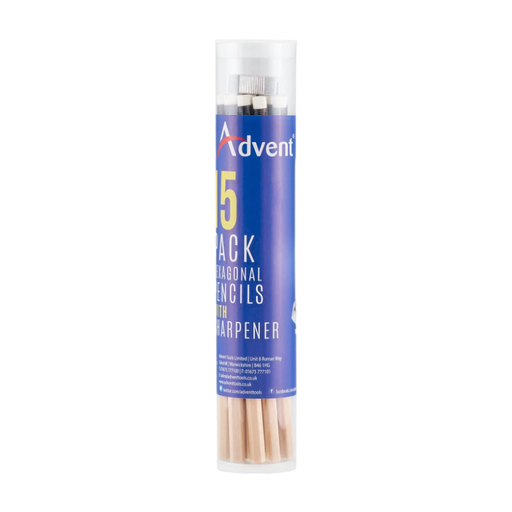
Why This Fits Their Persona: A practical option for school bags, home study areas and shared family stationery drawers, with 15 pencils supplied in one pack.
The hexagonal barrel helps prevent rolling, while the included sharpener avoids the need to buy a compatible accessory immediately.
HB lead, wooden construction, hexagonal shape and a 15-pencil pack with sharpener.
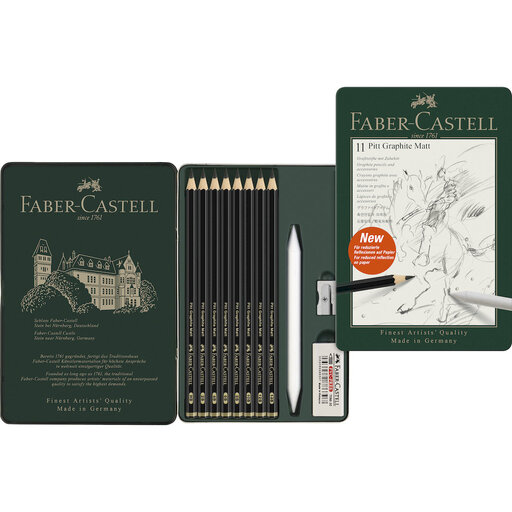
Why This Fits Their Persona: Suitable for artists and illustrators who want several graphite grades and accessories organised in a portable tin.
The set states its range from HB to 14B, so buyers can choose grades for fine lines, darker shading and tonal transitions instead of relying on one pencil.
Includes graphite pencils, wiper, eraser and sharpener in a protective tin.
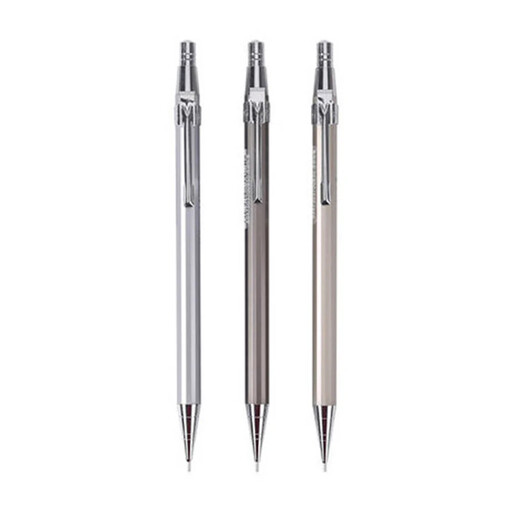
Why This Fits Their Persona: A useful match for office workers, students and users who regularly write, sketch or complete detailed tasks without wanting to sharpen wooden pencils.
The specified 0.5 mm lead and push-button advance provide a defined refill format and continuous lead feeding.
Metal barrel, 0.5 mm black lead and a three-colour pack with black, white and gold finishes.
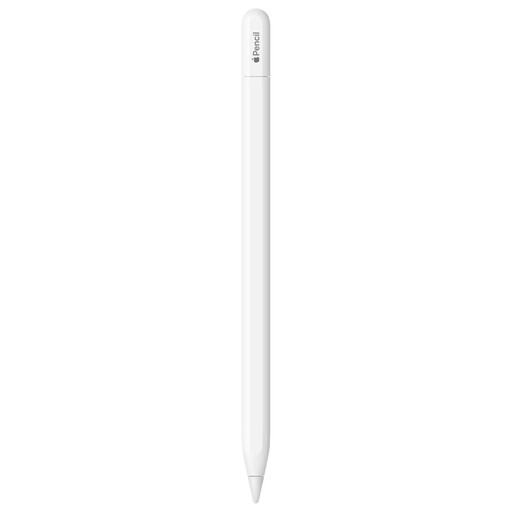
Why This Fits Their Persona: Designed for compatible iPad users who want a digital tool for notes, sketches, document mark-up and journalling.
Compatibility is model-specific, so buyers should check their iPad model and iPadOS requirement before ordering rather than assuming every iPad supports it.
USB-C pairing and charging, magnetic attachment, tilt sensitivity and low-latency digital input.
For children’s colouring, thick triangular pencils can provide a more substantial grip. The STABILO Trio pack contains 24 assorted colours and uses a 4.2 mm lead. For a larger colour range, Deli Finenolo coloured pencils come in a 72-colour metal tin, which is convenient for home, school or studio storage.
DIY users should compare carpenter’s pencils by lead grade and shape. A medium-grade Faithful FSC pack is intended for balanced marking on wood and metal, while the soft-grade three-pack creates clearer, bolder marks. Beauty shoppers should look for a brow pencil with a tip shape and colour suited to their desired finish and follow external-use and eye-contact warnings.
We have compiled a complete, real-time list of products that fully satisfy these strict selection criteria and UK safety regulations.
HB pencils are commonly suitable for everyday school writing, worksheets and basic drawing. However, check the school’s stationery list, as some settings may specify a particular pencil type or mechanical pencil.
The initial purchase may be higher or lower depending on the model and pack size. Ongoing cost depends on how often you write and the price of compatible refills. A mechanical pencil avoids buying a pencil sharpener and produces a consistent point, but you should confirm the required lead diameter before purchasing refills.
Keep wooden, coloured and graphite pencils in a dry place away from excessive heat and moisture. Store mechanical pencils with the tip retracted where possible. Keep sharpeners and small accessories away from very young children and replace any damaged pencil rather than continuing to use it.