
24/7 Customer Support

Free returns

Same-day & Next-day Delivery

Quality Guaranteed

Unlock Your Welcome Offers: FREE Delivery | Up to 80% OFF | Free 30-day JoyPlus trial
Download the APP
Buying pencils can seem straightforward until you compare lead grades, core sizes, barrel shapes and pack contents. A pencil for GCSE notes is not automatically suitable for technical drawing, while coloured pencils designed for children may not provide the tonal range an artist needs.
As the Joybuy Product Recommendation Officer, I focus on practical details rather than packaging claims. This guide explains the main buying pitfalls, the specifications worth checking and suitable options for different UK households and creative routines.
An HB pencil is a useful everyday option, but it is not ideal for every task. Harder grades produce lighter, sharper marks, while softer grades create darker lines and are useful for shading. Buying a mixed set without understanding the grades can leave you with pencils that feel unsuitable for your preferred style.
For general writing, schoolwork and light sketching, HB pencils are a sensible starting point. Artists may need a broader range, such as HB to 14B, for both fine outlines and deep tonal work.
A 72-colour set offers more colour choices than a 12-colour set, but quantity alone does not determine suitability. Check whether the cores are described as blendable, water-soluble, metallic or highly pigmented. A smaller set may be easier for beginners, children or users with limited storage space.
Also consider the case. A metal tin can help keep coloured pencils organised at home, in a classroom or in a studio, whereas loose pencils in a bag may become damaged or difficult to identify.
A comfortable grip affects control during long writing or drawing sessions. Hexagonal and triangular barrels can reduce rolling and may feel more stable than round designs. Mechanical pencils avoid repeated sharpening, but they require compatible refills and may be less suitable for users who prefer broad, expressive marks.
For DIY work, standard graphite pencils are not a substitute for carpenter pencils. Carpenter pencils have a flat, rectangular profile and a medium-grade lead designed for marking materials such as wood and metal.
Graphite grades are commonly expressed using H, B and HB:
A set of drawing pencils with several grades is more versatile for artwork than a single HB pencil. For school pencil cases, however, a 12- or 15-pack of HB pencils may provide better everyday value.
Core diameter affects line width, durability and control. A 0.5 mm mechanical pencil is suited to neat writing, drafting and detailed sketching, but applying excessive pressure can break the lead. A 0.7 mm lead gives a slightly broader mark and may feel more forgiving for everyday notes.
Children’s ergonomic mechanical pencils may use a much thicker 3.15 mm lead. This can be easier to control during early handwriting practice, while thick 4.2 mm coloured-pencil leads are designed for bold colouring rather than fine detail.
Look for details such as:
For artwork intended for display, check whether the listing specifies lightfastness. This describes resistance to colour fading under light, but it should not be treated as a guarantee for every storage or display condition.
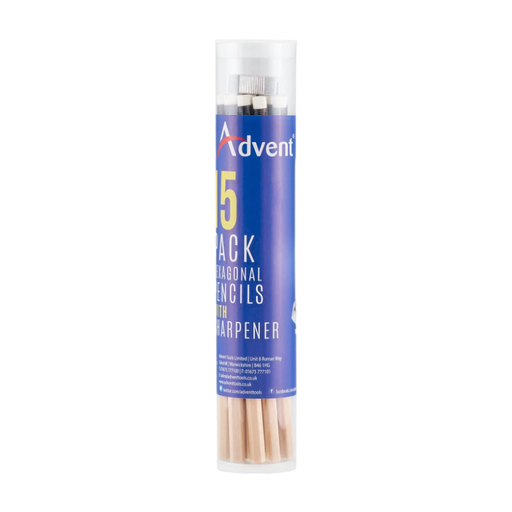
Why This Fits Their Persona: A practical option for students, home offices and families wanting everyday writing and sketching pencils with a sharpener included.
The HB grade avoids the uncertainty of an unlabelled graphite core, while the hexagonal barrel helps prevent rolling off desks.
15 pencils and an included sharpener provide a straightforward starter supply for writing, drawing and sketching.
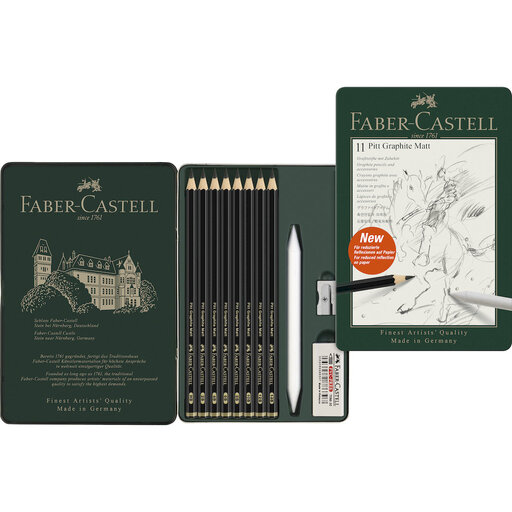
Why This Fits Their Persona: Designed for artists and serious hobbyists who want several graphite grades and supporting accessories in one portable case.
The stated HB-to-14B range makes the hardness selection clear, rather than relying on vague descriptions such as “professional pencil”.
Ultra-matt graphite laydown is specified, and the set includes a wiper, eraser, sharpener and storage tin.
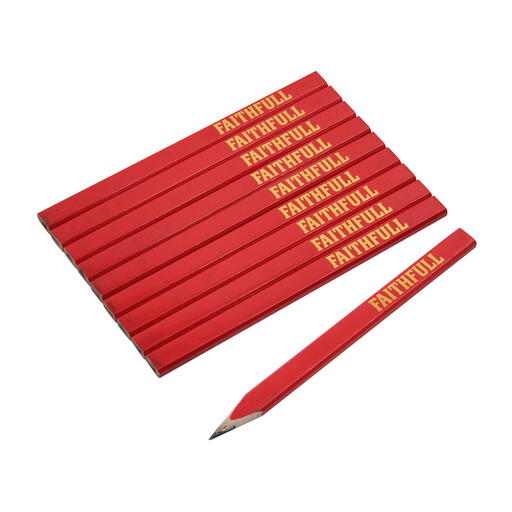
Why This Fits Their Persona: Suitable for tradespeople, DIY users and workshops that need a supply of flat marking pencils for regular jobs.
The rectangular profile is purpose-built for marking and is less likely to roll, unlike a conventional round writing pencil.
The medium-grade lead is specified for marking wood and metal, and the pack contains 10 FSC-certified wood pencils.
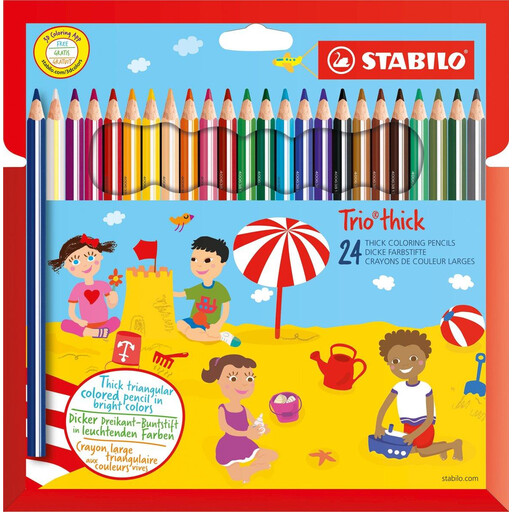
Why This Fits Their Persona: A thick triangular design and 24 assorted colours make this suitable for children’s colouring, classroom activities and creative play.
The 4.2 mm lead and triangular barrel are clearly specified, helping parents distinguish it from slim adult colouring pencils.
The pack contains 24 colours, with a shape intended to support grip and control for young users.
We have compiled a complete, real-time list of products that fully satisfy these strict selection criteria and UK safety regulations.
For most school tasks, HB pencils are a practical choice because they produce clear, moderate-dark lines and work for writing, diagrams and basic sketching. A pack with a sharpener or eraser can reduce the number of separate items in a pencil case. Mechanical pencils may also suit students who prefer consistent line width and do not want to sharpen frequently.
The initial cost can be higher than a basic wooden pencil, but mechanical pencils can be refilled rather than replaced. Running cost depends on lead refills, erasers and how often parts are lost. Check the lead diameter before buying refills: a 0.5 mm lead cannot be used in a 0.7 mm mechanism.
Artists should check the available hardness range, lead bonding and storage. A set covering HB through softer B grades supports outlines, shading and darker tonal areas. For coloured work, consider pigment description, lightfastness information, water resistance and whether the pencils are designed for dry or water-based techniques. Store all drawing pencils in a dry place and sharpen them with a suitable sharpener to reduce breakage.