
24/7 Customer Support

Free returns

Same-day & Next-day Delivery

Quality Guaranteed

Unlock Your Welcome Offers: FREE Delivery | Up to 80% OFF | Free 30-day JoyPlus trial
Download the APP
Buying pencils can seem straightforward until the first lead snaps, the colours look weak on paper or a child struggles to hold the pencil comfortably. The right choice depends on the intended use, lead specification, hand size and the accessories included.
This guide explains the main buying pitfalls and compares suitable options for schoolwork, office use, sketching and creative projects.
A large set of coloured pencils may appear good value, but the number of shades does not indicate pigment quality, lead strength or ease of blending. A smaller set with practical colours can be more useful for school, while artists may benefit from a broader palette for layering and tonal work.
Also check whether the pencils are standard colouring pencils, watercolour pencils or pastel pencils. These formats produce notably different results and are not interchangeable for every technique.
Thin leads can produce precise marks but may break under heavy pressure. Thicker leads are generally more suitable for younger children, broad colouring and large areas.
For graphite pencils, the HB grade offers a balanced option for everyday writing and basic sketching. Softer grades such as B, 2B or 4B create darker marks, while harder grades are more suited to fine, light lines. Mechanical pencils require a compatible lead diameter, such as 0.5 mm, 0.7 mm or 3.15 mm.
A decorative barrel does not necessarily make a pencil comfortable during long writing or colouring sessions. Triangular barrels and moulded grip zones can help guide finger placement, particularly for younger pupils or users who prefer ergonomic pencils.
Check whether the pack includes a sharpener, eraser or storage tin. These additions can reduce extra purchases, but specialist pencils may require a particular sharpener or replacement lead.
A 2.8 mm or 3.3 mm coloured pencil core can offer a useful balance between detail and durability. Chunkier formats, such as an XXL core, are practical for broad strokes and young users.
For mechanical pencils, 0.5 mm is useful for detailed writing and drawing, whereas 0.7 mm can feel more forgiving for everyday note-taking. Extra-thick 3.15 mm leads are designed for a different style of handwriting pencil and need the appropriate sharpener or refill.
Hexagonal barrels help prevent pencils from rolling across a desk. Triangular barrels can offer additional grip guidance. Wooden pencils should be stored away from damp conditions to reduce warping, while mechanical pencils should be kept with their tips protected where possible.
For UK households and classrooms, follow the product’s supplied warnings, particularly where sharpeners, small parts or pigment dust are involved. Products labelled with PEFC-certified wood indicate timber sourced through a certified forest-management system, but this should not be confused with a general safety certification.
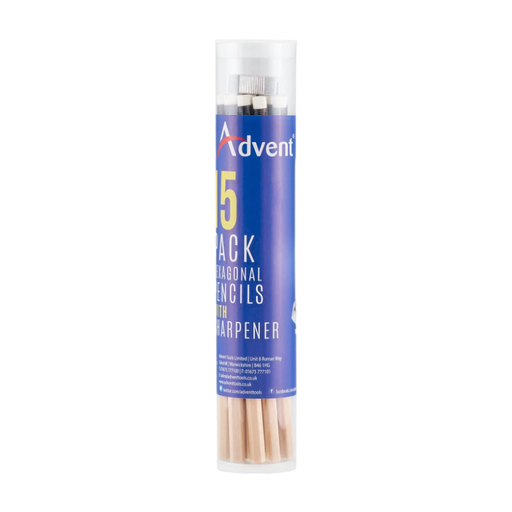
Why This Fits Their Persona: A practical choice for pupils, home study and general household use where several pencils and a sharpener are needed in one pack.
The HB grade avoids an unsuitable specialist hardness for everyday writing, while the hexagonal barrel helps prevent rolling and the included sharpener supports continued use.
15 pencils, HB graphite, hexagonal design and one sharpener provide straightforward everyday functionality.
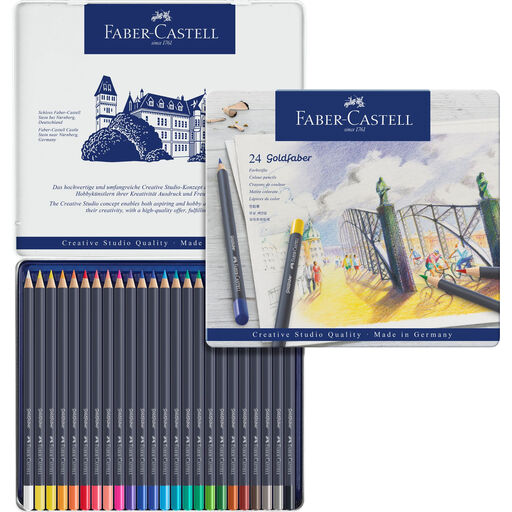
Why This Fits Their Persona: Suits hobby artists, students and creative adults who want a compact tin for drawing, layering and detailed colouring.
The 3.3 mm lead specification and supplied tin provide clearer information than a colour-count-only purchase, with storage that helps keep the set organised.
24 colours, a 3.3 mm lead and stated smudge-resistant and water-resistant characteristics support varied drawing techniques.
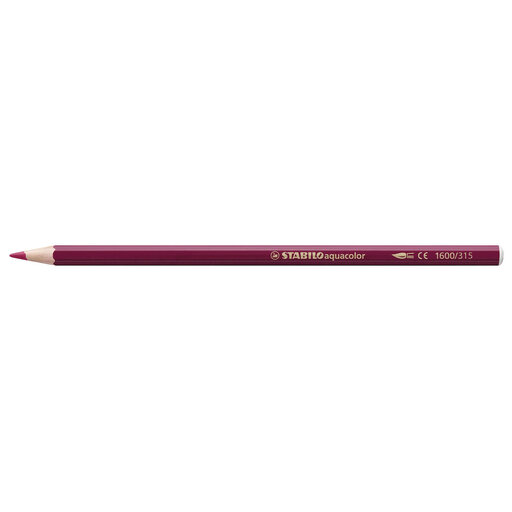
Why This Fits Their Persona: Designed for artists and hobbyists who want one set for dry colouring, damp-paper work and brush-led watercolour effects.
The water-soluble format is clearly specified, so buyers are less likely to mistake standard colouring pencils for materials capable of producing watercolour effects.
The 36-colour set uses 2.8 mm water-soluble leads and can be used dry or with water on dry or damp paper.
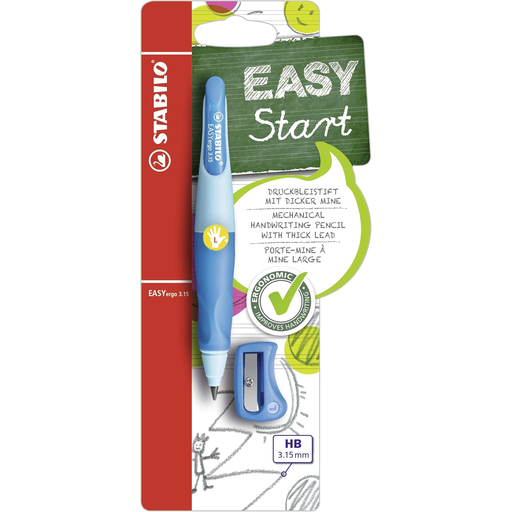
Why This Fits Their Persona: A left-handed writing option for children beginning handwriting practice at home or school.
The left-handed configuration is stated clearly, while the 3.15 mm refillable HB lead avoids repeated sharpening of a narrow wooden core.
It includes an ergonomic grip zone, cushioned tip, 3.15 mm HB lead and a compatible sharpener.
We have compiled a complete, real-time list of products that fully satisfy these strict selection criteria and UK safety regulations.
For everyday schoolwork, HB graphite pencils, coloured pencils and pencils with a practical sharpener are usually suitable. Younger children may find triangular or thick-barrel pencils easier to control. Always check school supply lists, age guidance and whether a left- or right-handed design is required.
The initial cost can be higher or lower depending on the pack, but mechanical pencils need compatible lead refills. They avoid standard sharpening and can provide consistent line width. Wooden pencils require replacement packs but can be used with widely available sharpeners. Compare the included leads, refill cost and frequency of use before deciding.
Keep wooden pencils and coloured pencil sets in a dry place away from direct sunlight. Use a suitable sharpener and avoid applying excessive pressure, which can break the core. Store mechanical pencils with the tip retracted and keep spare leads in a dry container. Pastel pencils should be handled carefully because their cores can produce dust during use.