Who each setup suits

Direct-on-screen concept sketchers

If you draw furniture silhouettes, perspective lines and annotated variations over a visible image, a pen display puts the drawing surface and image together. Wacom and Huion describe bonded or laminated displays designed to reduce the visible gap between pen tip and line; check the connection your computer needs.

Desk-based digital sketchers

If you already use a monitor and do not mind drawing on a separate surface, a screenless tablet avoids adding another display to your desk. Compare its active area and programmable controls with the way you make repeated revisions.

Portable design students and hobbyists

A compact device may suit concept work away from a fixed desk, but portability alone does not establish that it will work with your computer or drawing app. Check operating-system support, cables and the chosen package before ordering.

What matters when choosing

Computer-connected pen display

Choose it when: You want to place furniture contours and notes directly on the visible sketch.

Trade-off: It adds a screen to your setup and may require a particular video-capable port, cable or accessory.

Screenless pen tablet

Choose it when: You are happy to sketch on a separate surface while viewing the result on your existing monitor.

Trade-off: Indirect hand-to-screen coordination may take some adjustment if you are used to drawing on the image.

ConcernWhat to checkWho this matters to
Direct line placement For a pen display, compare screen size and bonded or laminated construction; check anti-glare treatment if reflections matter in your workspace. I want to judge where furniture edges and dimension notes land as I draw them. Around 36% of consumers put direct placement first.
Desk space and portability Compare a screenless tablet’s active area with the space available beside your monitor, and check its dimensions for carrying or storage. A separate monitor already works for me, so I would rather keep the drawing surface easy to move or put away. Around 29% of consumers prioritise this kind of setup.
Computer compatibility Check the exact model’s operating-system support and whether a pen display needs video-capable USB-C, another cable arrangement or a converter. My computer’s ports are uncertain, and I need the drawing setup to connect before I can use it. For around 21% of consumers, compatibility is the primary concern.
Repeated revisions Check available keys or dials and whether the driver and drawing app let you assign the commands you use. I make several versions of a furniture idea and want quick access to undo, zoom or tool changes. Around 14% of consumers put shortcut access first.

Buying pitfalls

  • Assuming every USB-C port supports a one-cable display

    Wacom specifies Thunderbolt 3 or later or DisplayPort Alt Mode for the Wacom One 14 single-cable connection; a PC without DisplayPort Alt Mode needs its separately sold Converter Kit. Other pen displays have their own connection requirements.

    Check your computer manufacturer’s port specification for video output, then compare it with the manual and package contents for the exact display.

    Depending on the computer and model, the setup may also need a converter, cable or power equipment.

  • Choosing a screenless tablet when you need to draw on the image

    A screenless tablet places your hand on one surface and the furniture sketch on a separate monitor. That distinction matters if you want to follow visible contours with the pen tip.

    If possible, try indirect drawing before choosing it. If direct placement is essential, assess pen-display size and construction alongside computer compatibility.

  • Focusing on pressure levels instead of the working setup

    Pressure sensitivity does not tell you whether the screen, controls, cables and included accessories will suit repeated sketch revisions. Huion lists a stand and USB-C-to-USB-C cable as optional accessories for the Kamvas 13.

    Check the selected package for the pen, cables and stand you need, then confirm driver support for your computer and drawing app.

    An optional stand or cable may need to be obtained separately.

Brands to consider

Wacom

The Wacom One 14 pen display and screenless Intuos represent different ways to sketch with a computer.

  • Wacom specifies a 14-inch bonded, anti-glare display and battery-free pen for the Wacom One 14.
  • Its single-cable connection needs a compatible video-capable port; Wacom sells the stand separately and specifies a converter kit for PCs without DisplayPort Alt Mode.

Huion

The Kamvas 13 is a compact computer-connected display for drawing on the visible image.

  • Huion lists a Full HD IPS display with full lamination, anti-glare film, a battery-free pen and tilt support for the Kamvas 13.
  • Check the selected package: Huion’s UK listing shows a stand and USB-C-to-USB-C cable among optional accessories.

XPPen

The Artist 13.3 Pro V2 pen display and Deco 01 V3 screenless tablet offer two distinct drawing surfaces.

  • XPPen specifies a 13.3-inch laminated, anti-glare display with a dial and eight shortcut keys for the Artist 13.3 Pro V2; the Deco 01 V3 has a 10 × 6.25-inch active area and eight keys.
  • Check the exact host connection for the Artist display and operating-system and driver support for the model you choose.

Joybuy tablets for direct sketching

These TECLAST ArtPad Pro options are Android tablets with built-in screens, rather than the computer-connected pen displays or screenless tablets compared above. For furniture sketches, check that your intended Android drawing app works on the selected tablet and that its bundle supplies the pen you need.

TECLAST ArtPad Pro 12.7-inch 2K tablet, 2025 edition with stylus

TECLAST ArtPad Pro 12.7-inch 2K, 2025 edition with stylus

For drawing furniture outlines on a built-in screen, this variant lists T-Pen drawing support, 4,096 pressure levels and Android 15. Confirm that your drawing app works on the tablet and that the selected bundle includes the stylus described in the product name.

View on Joybuy
TECLAST ArtPad Pro 12.7-inch 2K tablet, T-Pen compatible with case

TECLAST ArtPad Pro 12.7-inch 2K, T-Pen compatible with case

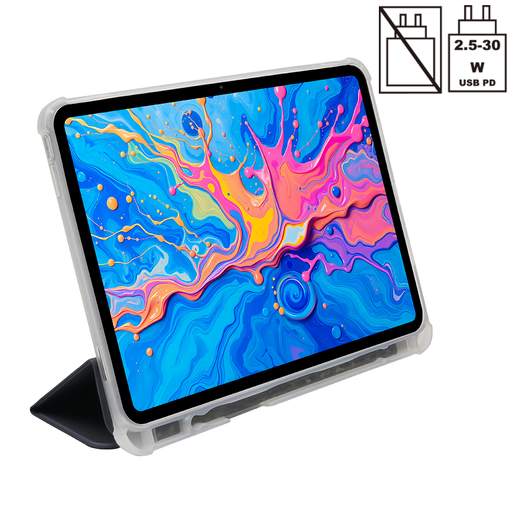
Consider this built-in-screen variant if you want a protective case and plan to sketch with a compatible T-Pen. The title lists a 12.7-inch 2K display, 4,096 pressure levels and an included case; confirm whether the selected bundle also includes a pen and supports your intended drawing app.

View on Joybuy

TECLAST ArtPad Pro 12.7-inch 2K tablet, 2025 edition with stylus, case and keyboard

TECLAST ArtPad Pro 12.7-inch 2K, 2025 edition with stylus, case and keyboard

This built-in-screen option is listed with a stylus, case and keyboard, which may suit sketching alongside typed furniture notes. Its title specifies a 12.7-inch 2K display and Android 15; check the selected bundle and your drawing app’s compatibility before buying.

View on Joybuy

Frequently asked questions

Is a pen display automatically better for furniture sketches?

No. A computer-connected pen display lets you draw on the visible image, while a screenless tablet can suit you if you already use a monitor and are comfortable drawing on a separate surface. Choose according to line-placement preference, desk setup and computer compatibility rather than treating either format as a quality ranking.

What connection should I check before buying a pen display?

Check whether the exact computer port supports the video output required by your chosen model; the presence of USB-C alone is not enough. Wacom specifies Thunderbolt 3 or later or DisplayPort Alt Mode for the Wacom One 14 single-cable setup and a separately sold Converter Kit for PCs without DisplayPort Alt Mode. Check other models’ manuals and selected cables individually.

Will more pen pressure levels make furniture sketches more accurate?

A pressure-level figure alone cannot establish how accurately you will place furniture lines. Compare the drawing surface, active or display area, pen features relevant to your software, and whether the controls and connection suit repeated revisions.

How should I dispose of an old drawing tablet?

Use an appropriate electrical-equipment reuse or recycling route and check your local collection arrangements. UK government guidance describes waste electrical and electronic equipment measures intended to encourage recovery, reuse and recycling; Coventry City Council, for example, advises taking electrical goods to its Household Recycling and Reuse Centre rather than putting them in household bins.