
24/7 全天候客户支持

免费退货

当日/次日达

品质保障

开启新人专享福利: 全场免邮 | 低至 2 折 | 免费试用 30 天 JoyPlus 会员
下载 Joybuy
Buying pens and markers in multipacks can reduce the cost per item, but only if the set matches the way you plan to use it. A student may need fine lines and colour-coding, while a teacher may prioritise red ink pens and whiteboard markers. An office worker may value retractable pens that can be carried without losing a cap, whereas a crafter needs ink that suits glass, card, wood or other surfaces.
The product label does not always tell the whole story. Before adding a multipack to your basket, check the ink type, tip size, surface compatibility and storage requirements.
A large assortment may look like good value, but decorative shades will not replace dependable black, blue or red ink for everyday writing. Check the actual colour breakdown. For example, a pack with three black pens and one each of several other colours may be more practical for office stationery than a set containing only bright shades.
Felt tip pens, fineliners and gel pens are generally intended for paper. Whiteboard markers use dry-wipe ink for non-porous board surfaces, while chalk markers and paint markers have different removal and ventilation considerations. Using a wet-erase chalk marker on a porous wall or untreated wood may leave marks that are difficult to remove.
Ink performance depends on the pen design and how it is stored. Uncapped fineliners and felt tip pens can dry out. Liquid chalk markers normally need shaking and nib priming before use. Ballpoint and retractable pens avoid loose caps, but their tips should still be retracted when stored. Follow the product instructions rather than relying on broad claims such as “long-lasting”.
Tip size affects both legibility and precision. A 0.4 mm fineliner is suited to detailed writing, rulers and templates. A 0.5 mm gel pen offers a balance between compact handwriting and visible lines. A 1.0 mm ballpoint produces a bolder medium line for forms, meeting notes and general writing. Chisel-tip highlighters are useful for broad highlighting, while bullet tips allow more controlled underlining.
Retractable pens are convenient for desks, pencil cases and shared office supplies because there is no separate cap to misplace. Capped pens can still be a sensible choice for fineliners and markers, provided the cap is replaced promptly. For extended writing, compare grip features such as a rubberised or ribbed barrel.
Also check the quantity of each colour, age warnings and storage advice. Products with small components, including caps, should be kept away from children under three. For paint markers, review the manufacturer’s ventilation and contact warnings before use.
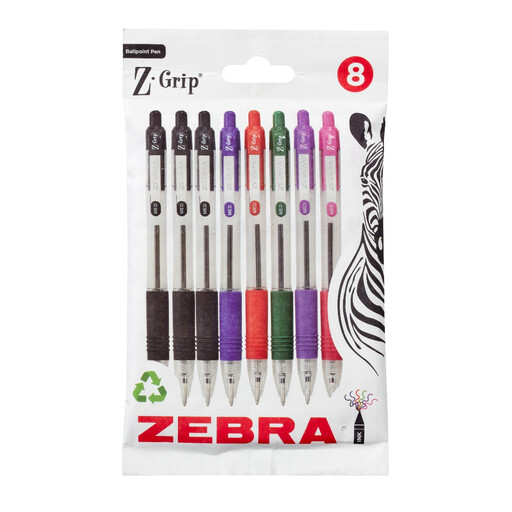
Why This Fits Their Persona: A practical starting point for students, home desks and everyday office writing, with core colours plus additional shades for colour-coding.
The pack lists three black pens, one blue and several additional colours, making the colour mix clear rather than relying only on the appearance of the pack.
Eight retractable 1.0 mm pens, a latex-free rubberised grip and a stainless steel pocket clip.
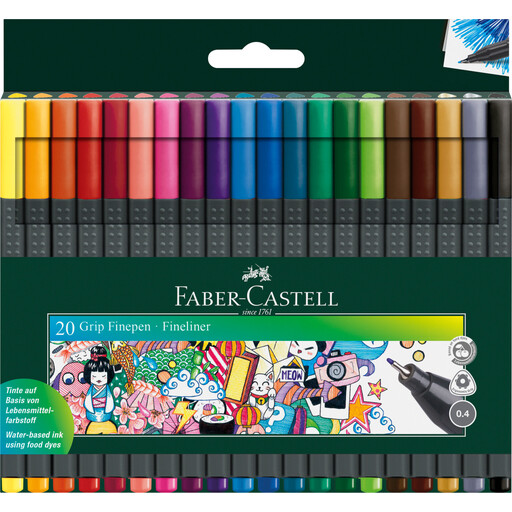
Why This Fits Their Persona: Designed for planners, illustrators, students and detail-focused users who need a broad colour range with controlled line work.
The specified 0.4 mm line width provides a clearer basis for judging precision than choosing a set purely for its colour selection.
Twenty assorted finepens, a triangular grip barrel and a metal-framed tip for use with rulers and templates.
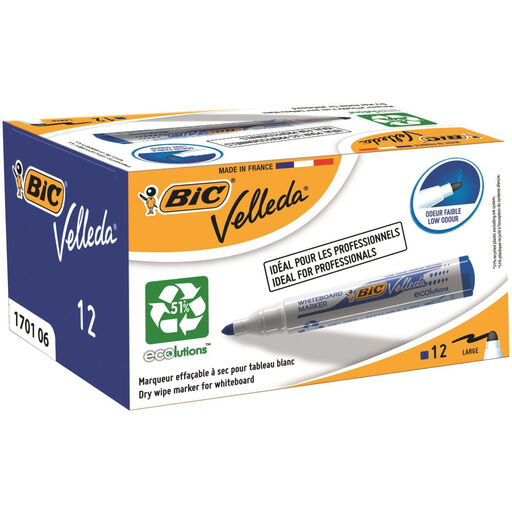
Why This Fits Their Persona: A suitable format for teachers, training rooms, offices and businesses that use dry-wipe boards frequently.
The product is specifically described as dry-wipe, with a 1.5 mm line width and a blocked acrylic tip for board use.
A 12-pack of low-odour blue markers, with a barrel made from 51% recycled materials.
We have compiled a complete, real-time list of products that fully satisfy these strict selection criteria and UK safety regulations.
Ballpoint pens and gel pens are common choices. Select retractable pens for convenient desk and pocket use, or choose 0.5 mm gel pens when finer, smoother lines are more important. For marking work, compare red ink pens by tip size and pack quantity.
Replace the cap immediately after use and store the pens according to the product instructions. Keeping capped pens away from direct sunlight and heat can help maintain ink quality. Store sets horizontally when the manufacturer recommends it.
Some wet-erase chalk markers are specifically listed for non-porous surfaces such as glass, windows, whiteboards and slate. Check the product directions first, avoid porous materials and remove the ink with a damp cloth as instructed.