
24/7 Customer Support

Free returns

Same-day & Next-day Delivery

Quality Guaranteed

Unlock Your Welcome Offers: FREE Delivery | Up to 80% OFF | Free 30-day JoyPlus trial
Download the APP
Choosing pens and pencils can seem straightforward until a new purchase skips, smudges, breaks or proves unsuitable for the task. Parents may find that classroom stationery is too fragile for daily use, office workers may choose ink that marks the opposite page, and artists may discover that a standard colouring pencil cannot create the texture they need.
This guide explains the specifications that matter before buying, along with suitable options for different users and budgets.
Bright barrels, metallic finishes and large colour collections can attract attention, but they do not necessarily indicate writing quality or suitability. Check the lead diameter, graphite grade, tip size, ink type and intended use first.
A 0.5 mm pen may suit neat notes and detailed writing, while a thicker pencil lead may be more comfortable for younger children who are still developing pencil control.
Ink that dries slowly can smudge as the hand moves across the page. If you write left-handed, look for quick-drying ink, particularly in gel pens and fine-point pens. It is also sensible to check whether the pen has a cap or retractable mechanism, as leaving a nib exposed can cause it to dry out.
A low-priced mechanical pencil may require a less common refill size, while a wooden pencil needs a compatible sharpener. Before buying, check whether refills are readily available and whether the sharpener suits the pencil’s shape and diameter. This is especially important for ergonomic pencils, thick colouring pencils and pastel pencils.
For everyday writing, HB pencils offer a balanced level of hardness and darkness. They are suitable for school exercises, forms, note-taking and light sketching.
Mechanical pencils commonly use:
Thinner leads can break if excessive pressure is applied. Thicker leads usually provide greater resistance to breakage but may not be suitable for very fine technical details.
Gel pens generally provide strong colour and a smooth writing feel, but drying time varies. Fine points around 0.5 mm can help produce tidy notes and small lettering. For planners, revision notes and colour coding, multicolour gel pen sets may be more practical than buying individual pens.
Fineliners are useful for underlining, journalling, drawing and ruler work. A 0.4 mm metal-encased tip offers a narrower line than many everyday ballpoint pens, although pressure should still be controlled to protect the tip.
For important documents, test erasable gel pens on spare paper first. Their ink can be convenient for drafts and schoolwork, but heat, friction and paper type may affect how the writing behaves. They may not be appropriate where a permanent record is required.
A triangular or moulded grip can make it easier for children to position their fingers consistently. Left- and right-handed versions may have different grip guidance, so check the orientation before purchasing.
Pack size should match usage. A 12-pack is practical for classrooms, families and shared office stationery, while smaller sets may reduce unused stock for occasional hobbyists. Artists may need to prioritise colour range, pigment behaviour and compatibility with paper over pack quantity.
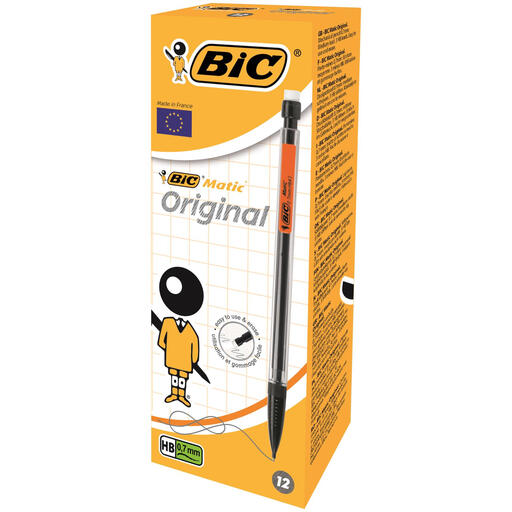
Why This Fits Their Persona: A useful choice for families, pupils and offices needing a supply of everyday writing pencils without regular sharpening.
The 0.7 mm HB lead and integrated eraser make the specification clear, while the mechanical format avoids dependence on a separate sharpener.
Pack of 12; pre-loaded with three 90 mm leads per pencil; suitable for writing, sketching and light drawing.
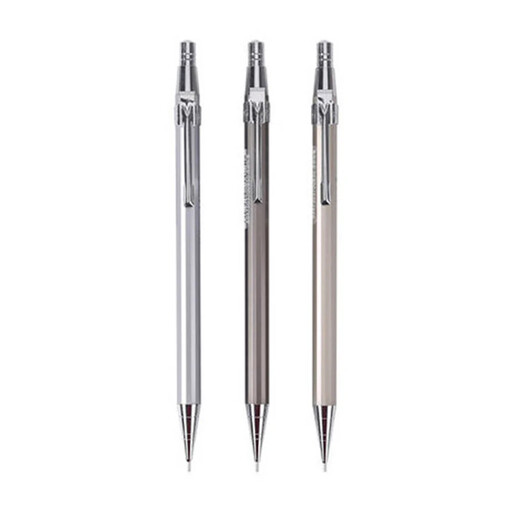
Why This Fits Their Persona: Suits students, office workers and hobbyists who prefer a weighted metal barrel and a fine line for controlled writing or sketching.
The stated 0.5 mm lead size and push-button mechanism help buyers match it to precision work rather than relying on appearance alone.
Solid metal barrel; 0.5 mm black lead; three finishes included: black, white and gold.
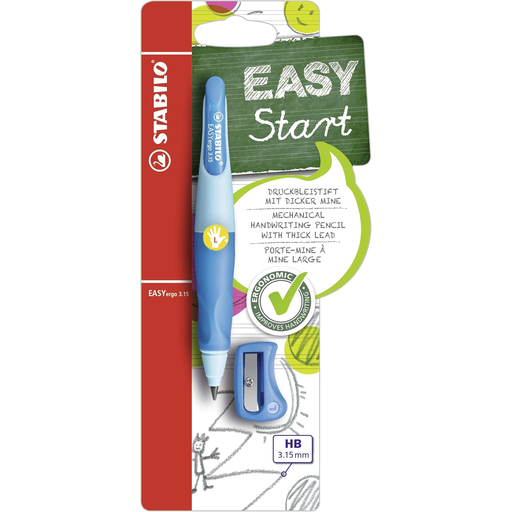
Why This Fits Their Persona: Designed for left-handed children beginning handwriting practice, with a thick lead and shaped grip for school or homework sessions.
The hand orientation is specified, and the 3.15 mm HB lead reduces the need to press hard or sharpen frequently.
Includes a sharpener; refillable format; non-slip grip; extra-thick 3.15 mm HB lead.
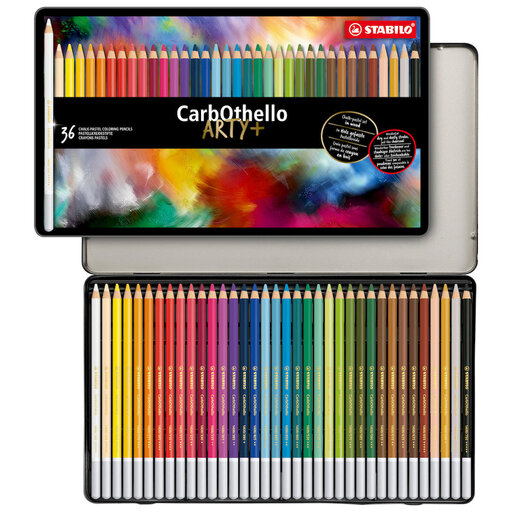
Why This Fits Their Persona: A practical format for artists and hobbyists who want chalk-pastel effects with the control of a sharpenable pencil.
The product format and colour behaviour are clearly defined, so it is not confused with conventional wax-based colouring pencils.
Tin of 36 assorted colours; blendable and partially water-soluble; can be sharpened to a fine point.
We have compiled a complete, real-time list of products that fully satisfy these strict selection criteria and UK safety regulations.
Yes, provided the lead size and school requirements are appropriate. A 0.7 mm HB mechanical pencil can work well for general writing, while a thicker 3.15 mm model may suit younger children who use more pressure. Check whether the school permits mechanical pencils for specific examinations or assignments.
Lifespan depends on writing frequency, pressure, storage and whether refills are available. Mechanical pencils can continue in use after the original lead supply is replaced. Gel pens should be stored with the tip retracted or capped to reduce drying. Wooden pencils usually last until the usable shaft becomes too short, while a sharpener removes a small amount of material each time.
Generally, they are more appropriate for temporary notes, planning and schoolwork. Their ink may be removed or altered by friction or heat, so use a permanent writing instrument when a document needs a lasting, unaltered record.