Direct-on-screen concept sketchers
If you sketch forms, annotate drawings or revise visual concepts by placing the pen tip on the image, start with a compact pen display. It needs room alongside the computer you use for the work.


Choose a pen display if drawing directly on the image matters most and your shared desk can accommodate its screen, connections and positioning. Choose a screenless pen tablet if keeping the desk clear matters more and you are comfortable drawing while looking at a separate monitor. For regular office use, consider the whole workstation as well as the device.
If you sketch forms, annotate drawings or revise visual concepts by placing the pen tip on the image, start with a compact pen display. It needs room alongside the computer you use for the work.
If you move between desks and want to keep space around the main monitor and keyboard, consider a screenless pen tablet. Configurable controls and a wireless connection may suit that arrangement, provided drawing on a separate surface works for you.
If sketching is part of sustained daily computer work, assess the tablet as part of the full desk setup. The UK Health and Safety Executive says employers must assess workstations where workers use display screen equipment daily, as part of normal work, continuously for an hour or more.
Choose it when: Placing the pen directly on a visible concept is important to your sketching process.
Allow for: A second screen to position and connect at each desk.
Choose it when: You want to draw using the main monitor without adding another screen to the desk.
Allow for: Drawing on one surface while watching another, which may take adjustment.
| Concern | What to check | Who this matters to |
|---|---|---|
| Drawing directly on the image | Decide whether a pen display is necessary; check its screen size and how you would position it. | If I need to place quick concept lines and annotations directly on the visible image, a separate drawing surface may interrupt my workflow. Around 42% of consumers put direct visual sketching first. |
| Moving between shared desks | Compare the device footprint and weight, connection method and shortcut controls. | When I change desks, I want a sketching setup I can carry and arrange without taking over the workspace. Roughly 33% of consumers prioritise portability and a clear desk. |
| Sustained workstation use | Consider screen and tablet position, lighting, furniture and whether a stand is needed. | If sketching is part of my regular working day, I need a desk arrangement that remains workable beyond a brief session. Around 25% of consumers place routine workstation setup first. |
A pen display shows the image beneath the pen; a screenless pen tablet requires you to watch the computer monitor while drawing elsewhere. Pressure-sensitivity figures do not resolve that workflow difference.
Decide which drawing arrangement you need before comparing specifications. If possible, try drawing on a screenless tablet before choosing it for daily concept work.
How you position a display matters for sustained desk work, but accessory configurations can differ. The manual for the earlier Huion Kamvas 13 identifies its stand as optional; that does not establish what comes with a Kamvas 13 (Gen 3).
Check the accessories included with the exact model and configuration you select, then consider where the display will sit at your shared desk.
An easy-to-carry device still has to fit the monitor, furniture and lighting at the desk where it is used. The UK Health and Safety Executive says an employer workstation assessment is required for workers using display screen equipment daily as part of normal work, continuously for an hour or more.
For qualifying work, include the tablet in the workstation assessment and consider its position, reflections, desk space and individual needs when changing desks.
Its Intuos Pro Medium is a screenless pen tablet to consider when you want a drawing surface without adding a second display.
Its Kamvas 13 (Gen 3) is a compact pen display for drawing directly on a screen.
Its Artist 13.3 Pro V2 is another compact pen-display option for direct-on-screen concept sketches.
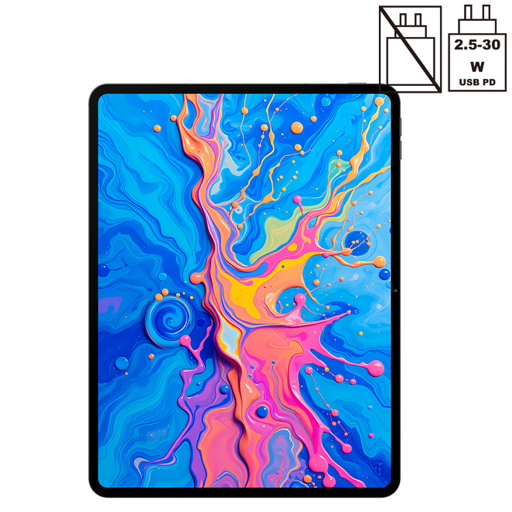
This standalone Android tablet offers drawing on its own screen. If your concept-sketching process depends on computer software or a computer-connected pen display, check that the device supports the workflow you need before choosing it.
 No image available
For sketching on a standalone tablet screen, this model specifies T-Pen drawing support; check compatibility with the Android drawing apps you intend to use.
The product name specifies a 12.7-inch 2K display, 4096-level pressure sensitivity, Android 15 and 256GB storage.
If you will carry it between desks, check its weight and dimensions. Do not assume it can replace a computer-connected pen display in your existing workflow.
Choose a pen display if placing the pen directly on the image matters more than minimising the desk setup. Choose a screenless pen tablet if drawing while watching your main monitor suits you and you would rather not add another screen.
Check how the device connects, which cables and positioning accessories come with the selected configuration, and where it will fit beside the monitor and keyboard. Also consider lighting and reflections; the UK Health and Safety Executive includes workstation arrangement in its guidance on display-screen work.
No; confirm the contents of the exact model and configuration you select. The manual for the earlier Huion Kamvas 13 lists its ST300 stand as optional, so do not assume that statement describes the Kamvas 13 (Gen 3) bundle.
An employer workstation assessment is required when a worker uses display screen equipment daily as part of normal work, continuously for an hour or more, according to the UK Health and Safety Executive. Changing desks does not remove the need to consider the workstation arrangement.