Shared-kitchen panini makers
If you regularly press thicker pepper-and-cheese sandwiches, look for a grill surface and a lid designed to accommodate the bread and filling, rather than assuming triangular toastie pockets will fit.


For a thicker pepper panini, start with grill or panini plates and a floating or adjustable-height lid; cut-and-seal plates are better suited to contained, triangular toasties made with sliced bread. In a shared kitchen, weigh that format choice against cleaning, storage and a suitable plug and socket arrangement. Interchangeable plates offer more cooking formats but also leave more parts to store.
If you regularly press thicker pepper-and-cheese sandwiches, look for a grill surface and a lid designed to accommodate the bread and filling, rather than assuming triangular toastie pockets will fit.
Cheese, oil and pepper residue make the permitted cleaning method worth checking. Removable plates or washable cooking parts may make it easier to leave the appliance ready for the next user.
Check where the appliance and any spare plates will go after use, as well as the plug, socket and lead arrangement at the shared worktop.
Choose it when: Housemates want to make paninis as well as sealed toasties; some models also include waffle plates.
Trade-off: The extra plate sets need somewhere to be kept between uses.
Choose it when: Containing a generous filling in sliced bread matters more than pressing an unsealed panini.
Trade-off: Cut-and-seal pockets are designed for triangular toasties, not the shape of a thick ciabatta-style panini.
Choose it when: Pressing a thicker sandwich is the main use and sealed toastie pockets are not needed.
Trade-off: Check the usable cooking area against your bread; a compact grill need not fit every panini length.
| Concern | What to check | Who this matters to |
|---|---|---|
| Panini fit | Look for grill or panini plates and check the lid design and usable plate size against your bread. | If I make a thick pepper panini, I need the bread and filling to fit without relying on triangular toastie pockets; around 42% of consumers put panini fit first. |
| Cleaning between users | Check which food-contact parts can be removed and exactly how the maker says to wash them. | When several people share the appliance, I want to clear away cheese and pepper residue before handing it over. Cleaning is the main concern for around 33% of consumers. |
| Space and electrical use | Check storage space, plug and socket suitability, and the rating of any extension lead. | With a crowded worktop and shared sockets, I need a practical place to use and store the appliance; around 25% of consumers place these considerations first. |
Deep-fill cut-and-seal plates are made for contained sandwiches in sliced bread. They are a different format from grill plates used to press an unsealed panini.
Check the plates and lid against the bread you plan to use before choosing between a toastie maker and a grill.
Washing instructions can apply to removable plates or, for a particular grill design, cooking parts after a control panel has been removed.
Follow the instructions for the exact model, unplug it before cleaning and wash only the components the manufacturer permits.
Electrical Safety First warns that overloaded extension equipment can overheat and cause a fire.
Check the extension lead’s rating and the combined load, and do not connect one extension lead to another. Keep the appliance on a stable, heat-resistant surface while in use.
Breville says its appliance warranty applies to the original purchaser and does not extend to commercial or communal use.
If housemates will share an appliance, read the warranty for the model you intend to buy rather than assuming the same terms apply across brands.
Breville UK lists both sealed toastie makers and an interchangeable-plate snack maker, making the plate format the important distinction here.
Salter’s EK2143 XL 3-in-1 Snack Maker offers an interchangeable-plate route for paninis and other toasted foods.
Cuisinart UK’s GRSM4U combines grill and sandwich modes rather than concentrating on sealed toasties alone.
The Immersa Small 28300 is a contact-grill option with a floating hinge rather than sealed toastie pockets.
These two options approach a shared-kitchen panini differently: the Philips is a contact grill, while the Drew & Cole toastie maker requires a suitable microwave. Check how each would fit your bread, cleaning routine and kitchen setup.
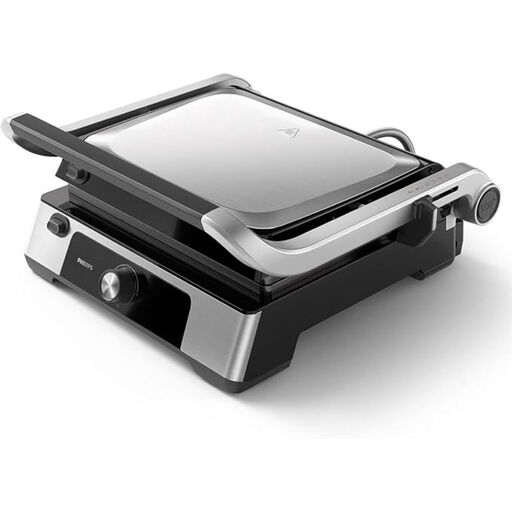 No image available
Consider this contact-grill format if you want to press a panini rather than make a sealed triangular toastie.
Check that its cooking area and lid suit your usual bread. Its removable plates are not dishwasher-safe, so follow the cleaning instructions; confirm the UK plug and socket arrangement before use.
 No image available
This compact, dishwasher-safe toastie maker is a panini option only if you can use a suitable microwave in the shared kitchen.
Check that your panini fits and that the microwave meets the maker’s stated compatibility requirements, including its 1200 W maximum.
Choose a triangular cut-and-seal maker if you want a contained filling in sliced bread, but check grill or panini plates and a floating or adjustable lid for a thicker, unsealed panini. Breville describes the VST101 as a cut-and-seal toastie maker, while its VST098 has dedicated panini plates.
Unplug it, let it cool and follow the instructions for that model’s food-contact parts. A Salter sandwich-toaster manual specifies unplugging before cleaning; removable dishwasher-safe plates and washable grill assemblies have different procedures, so do not assume powered components can be washed with them.
Use one only if its rating and the combined load are suitable for the appliance and anything else connected. Electrical Safety First warns against overloading extension leads, cable reels and adaptors; do not daisy-chain extension leads in a shared kitchen.
Do not assume communal use is covered: terms depend on the manufacturer and product. Breville says its appliance warranty is for the original purchaser and excludes commercial or communal use, so read the applicable terms before buying an appliance for housemates to share.