
24/7 Customer Support

Free returns

Same-day & Next-day Delivery

Quality Guaranteed

Unlock Your Welcome Offers: FREE Delivery | Up to 80% OFF | Free 30-day JoyPlus trial
Download the APP
Buying Pepsi multipack cans can seem straightforward, but pack size, sweetener choice, caffeine content and flavour can all affect whether your purchase suits your household. A large box is not automatically good value if some cans remain untouched, while a smaller multipack may cost more per can.
This guide explains the key checks to make before buying Pepsi cans for home, work, parties or regular meal times.
An 8-pack is easier to store and offers a lower upfront cost, but a 24-pack can reduce the cost per 330ml can when the drinks will be used regularly. Compare the price per can, not just the total pack price.
For example, a multipack containing 24 cans provides 7.92 litres in total, whereas an 8-pack contains 2.64 litres. Larger packs need more cupboard or garage space and are heavier to move, so consider delivery access and storage before ordering bulk soft drinks.
Regular Pepsi contains sugar and caffeine. By contrast, Pepsi Max, Pepsi Zero Sugar and Diet Pepsi are sugar-free varieties, but many still contain caffeine and sweeteners. Pepsi Max Caffeine Free is a separate option for shoppers specifically looking to avoid caffeine.
Check the ingredient list and nutrition panel rather than relying only on phrases such as “light”, “zero” or “maximum taste”. Products containing aspartame provide a source of phenylalanine, which is clearly highlighted in the supplied product information.
Classic Pepsi cola is generally easier to serve at family meals, office gatherings and larger parties because it has a familiar flavour profile. Cherry, tropical, raspberry and cream soda varieties may be more suitable for personal treats, mixers or guests who enjoy flavoured Pepsi soft drinks.
For a mixed gathering, buying several smaller multipacks can reduce the risk of being left with a full case of a flavour that only a few people prefer.
Most options in this selection use 330ml cans, a practical single-serving format for lunches, film nights, office fridges and events. Check whether the listing contains 8, 18, 24 or 48 cans. “2 x 18” and “2 x 24” mean two separate multipacks, not one oversized can.
If you are buying for a workplace or party, estimate consumption first. Divide the expected number of servings by the number of cans in a pack, then add a modest allowance for guests. This is more reliable than choosing the largest box by default.
Regular Pepsi lists 34g of sugar and 135 kcal per 330ml can in the supplied product information. Sugar-free options such as Pepsi Max, Diet Pepsi and Pepsi Max Cherry list zero sugar, with approximately 1–2 kcal per can depending on the product.
“Sugar-free” does not mean sweetener-free. Aspartame, acesulfame K and sucralose appear in several products. Always read the current label, particularly if you need to avoid a particular sweetener or phenylalanine.
Caffeine content varies by product. The caffeine-free Pepsi Max option is clearly identified, while regular Pepsi, Diet Pepsi, Pepsi Max and several flavoured varieties contain caffeine. Some flavoured products also carry high-caffeine warnings, so check the can before serving children or anyone who is sensitive to caffeine.
Store unopened cans in a cool, dry place away from direct sunlight and heat. Do not buy or use cans that are swollen, leaking or badly damaged. Chill before serving and handle pressurised containers carefully.
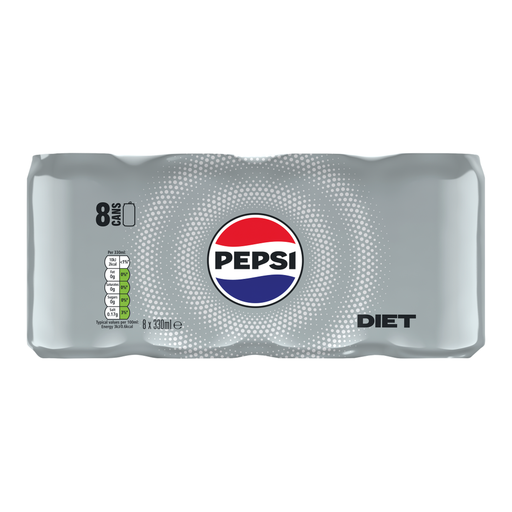
Why This Fits Their Persona: An 8-pack provides a manageable starting quantity for individuals, smaller households or shoppers who want sugar-free cola without committing to a larger case.
The smaller pack limits over-ordering and makes it easier to check whether the Diet Pepsi flavour suits your routine.
8 x 330ml cans; zero sugar and approximately 2 kcal per can according to the supplied nutrition information.

Why This Fits Their Persona: A full case of classic Pepsi suits hosts, families and office buyers who want a familiar cola flavour for meals, gatherings and shared fridges.
The listing states the exact quantity and can size, helping buyers compare the total volume against smaller cola multipacks.
24 x 330ml cans; regular Pepsi contains 135 kcal and 34g sugar per can in the supplied nutrition panel.

Why This Fits Their Persona: Suitable for households, evening meals and workplaces that want a large supply of sugar-free Pepsi without caffeine.
The product name specifies caffeine-free, avoiding the common mistake of assuming all Pepsi Max or zero-sugar cola is caffeine-free.
24 x 330ml cans; 0g sugar and 2 kcal per can according to the supplied product details.
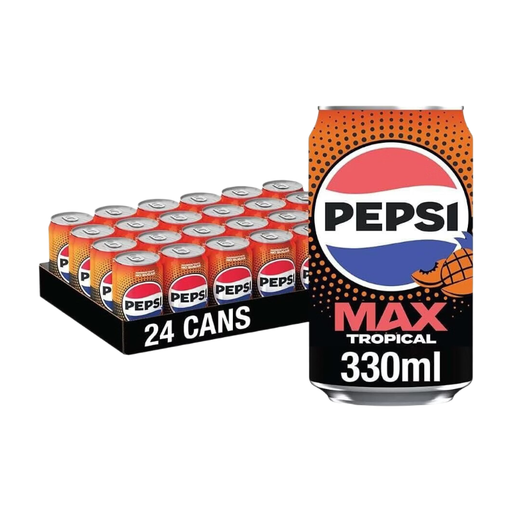
Why This Fits Their Persona: A practical option for shoppers who enjoy a fruit-led twist on cola and need enough cans for parties, mixers or regular entertaining.
The tropical flavour is clearly named, so it is less likely to be confused with standard Pepsi Max when ordering online.
24 x 330ml cans; zero sugar and approximately 2 kcal per can in the supplied nutrition information.
We have compiled a complete, real-time list of products that fully satisfy these strict selection criteria and UK safety regulations.
Unopened cans can usually be stored until the best-before date shown on the packaging, provided they remain cool, dry and away from direct sunlight. Best-before dates relate mainly to quality. Do not use cans that are leaking, swollen or seriously damaged and check the pack when it arrives.
Not generally. Many Pepsi Max and Diet Pepsi products contain caffeine. The product must specifically state “caffeine free” if that is an important requirement. Always read the current ingredients and product description before buying.
Yes, 330ml cans are convenient single servings and do not require sharing once opened. For a party, calculate the number of guests, serving occasions and any alternative drinks before choosing an 8-, 18- or 24-can multipack. Keep cans chilled where possible and provide recycling facilities for empty aluminium packaging.