
24/7 Customer Support

Free returns

Same-day & Next-day Delivery

Quality Guaranteed

Unlock Your Welcome Offers: FREE Delivery | Up to 80% OFF | Free 30-day JoyPlus trial
Download the APP
A good pair of performance socks is one of the most overlooked pieces of kit for any active person in the UK. Whether you're hitting the pavement for a morning run, heading to the gym or gearing up for the ski slopes, the right socks can make the difference between comfort and a session cut short by blisters and discomfort.
However, the market is flooded with options, and it's easy to make a poor choice. Many of us have fallen into common traps, spending money on socks that fail to deliver. Before you buy another multi-pack that lets you down, let's look at the key pitfalls to avoid.
To choose wisely, you need to understand the core parameters that define high-quality performance socks. Focus on these three areas to ensure your next pair supports your feet properly.
The fabric is the most critical factor. Look for technical blends that are engineered to manage moisture and provide durability.
How a sock is constructed is just as important as its material. Look for these technical features.
The length of the sock should match your footwear and activity.
To help you navigate the options, we've matched some standout products to specific user needs, ensuring they address the common pitfalls and deliver on key performance features.
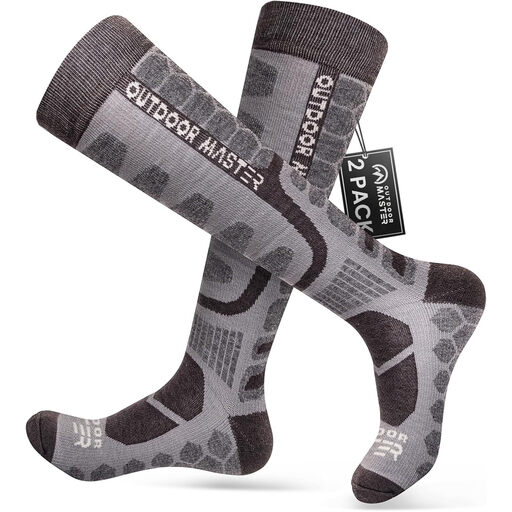
Why This Fits Their Persona: Perfect for skiers and snowboarders who spend hours in boots. The over-the-calf height protects shins from boot rub, while the Merino wool blend provides warmth without bulk and the compression design aids muscle support during long days on the slopes.
This is a purpose-built ski sock, not a generic sport sock. Its Merino wool blend actively manages moisture, avoiding the cold, damp feeling of cotton.
Targeted compression zones for muscle support and enhanced circulation. Natural odour resistance and temperature regulation from the Merino wool.
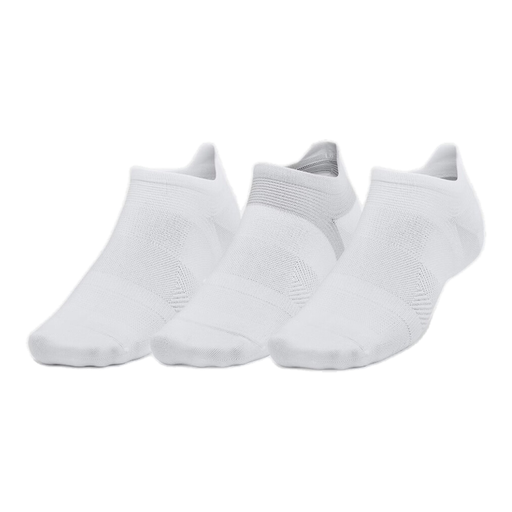
Why This Fits Their Persona: For runners who prioritise a lightweight feel and blister prevention. The no-show cut is unobtrusive, while the technical fabric is engineered for maximum moisture dispersion, keeping feet dry and cool over long distances.
It features a left/right specific anatomical design, avoiding the poor fit of generic socks. The ArmourDry yarn technology is built to evaporate sweat rapidly, directly countering the moisture-retention problem of cotton.
Advanced moisture-wicking for a remarkably dry feel. A seamless toe and built-in arch support work together to reduce friction and foot fatigue.
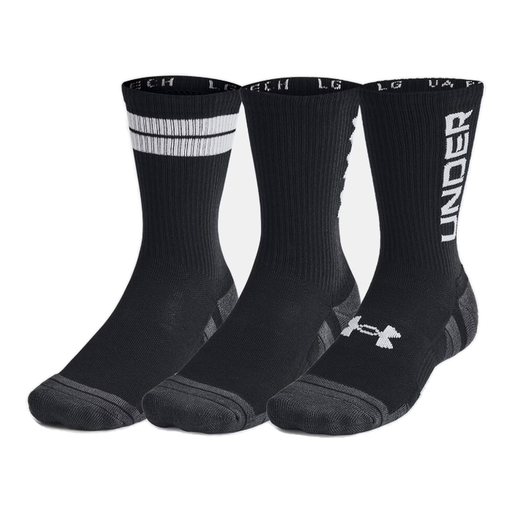
Why This Fits Their Persona: An excellent workhorse sock for those who mix cardio, weightlifting and classes. The crew cut is versatile, while the medium cushioning provides all-around comfort and impact absorption without being too bulky in a training shoe.
It avoids the "one-size-fits-all" trap with features like a Locked-In Fit design to prevent heel slip and built-in arch support, which are often missing from basic men's sports socks multi-packs.
A durable technical fabric with strategic mesh panels for enhanced ventilation. The balance of medium cushioning and arch support makes it highly versatile.
We have compiled a complete, real-time list of products that fully satisfy these strict selection criteria and UK safety regulations.
The lifespan of performance socks depends on the frequency of use and the intensity of your activity. A good rule of thumb is to inspect them regularly. If you notice the fabric becoming thin, especially in the heel or ball of the foot, or if the elastic no longer provides a snug fit and the sock starts to slip, it's time for a new pair. For heavy users, this could be every 6-12 months.
While you can, it may not be ideal. Running socks are typically lightweight and focused on breathability. They might not offer enough cushioning or protection for court sports like basketball, which involve a lot of lateral movement, or for hiking, where a thicker, more durable sock is needed to prevent rubbing against a stiff boot. It's always better to match the sock to the specific demands of the activity.
Many modern athletic socks are sold as unisex and are designed to fit a wide range of foot shapes based on shoe size. Where there are gender-specific models, the main differences are typically in sizing and colourways. Some women's specific socks may have a narrower profile and a smaller heel pocket, but for most people, a unisex sock that matches their UK shoe size will provide an excellent fit.