
24/7 Customer Support

Free returns

Same-day & Next-day Delivery

Quality Guaranteed

Unlock Your Welcome Offers: FREE Delivery | Up to 80% OFF | Free 30-day JoyPlus trial
Download the APP
Choosing permanent hair dye in the UK is not simply a matter of picking a shade from the front of the box. Your starting colour, previous treatments, grey level and desired result all affect the outcome. A suitable at-home hair colour should also be practical to apply, clearly labelled and supplied with the care products needed after colouring.
The shade shown on the packaging is a guide, not a guarantee. Permanent hair colour usually performs differently on dark brown, blonde, grey or previously coloured hair. For example, an ash blonde dye may appear more muted on light hair but may not remove strong orange tones from a dark, previously dyed base.
Check the shade guidance and compare it with your current natural hair colour. If your hair has been coloured before, remember that permanent dye generally cannot reliably lighten an old artificial colour.
Ingredients such as hyaluronic acid, oils, ceramides and conditioning agents can contribute to a softer or smoother hair feel after colouring. However, permanent colour still involves developer and colourant ingredients, so “nourishing hair dye” does not mean the product is risk-free or suitable for every scalp and hair condition.
Look for a complete kit containing a conditioner, shampoo or mask, but still follow a suitable maintenance routine. A colour-safe shampoo, regular conditioning and reduced heat styling can help preserve the finished appearance.
A non-drip crème or oil-in-gel formula may be easier to control than a runny liquid, particularly when colouring roots in a small bathroom. Even so, the mixture must be applied thoroughly and left on only for the stated development time.
Do not mix products from different kits, save unused mixed dye or improvise the processing time. These shortcuts can produce uneven colour and unnecessary scalp or hair discomfort.
If your priority is grey coverage hair dye, select a permanent shade designed for coverage and check whether your chosen colour is close enough to your existing base. Natural brown, darkest brown and natural blonde shades are often easier to maintain than a dramatic shift.
For a softer result, choose a shade within roughly one or two levels of your current colour. If you want a significant change, particularly from brunette to blonde, read the restrictions carefully and consider professional advice.
Warm yellow, orange or red undertones can become more visible after lightening. An ash blonde hair dye or other cool-toned shade may help create a cooler-looking finish, while a purple shampoo or mask can be useful for managing yellow-looking tones between applications.
Anti-brass products do not reverse every unwanted tone. Purple products are generally intended for yellow tones, while orange or red warmth may require a different colour direction. Check the shade description rather than relying solely on the word “cool”.
A complete permanent hair colour kit should normally include colour cream, developer, gloves and post-colour care. Some products also include a shampoo, mask or anti-brass conditioner.
A non-drip hair dye can make sectioning and root application more manageable. Also check the total quantity: longer or thicker hair may require more than one pack for even coverage. Once colourant and developer are mixed, use the mixture immediately and dispose of any unused product according to the instructions.
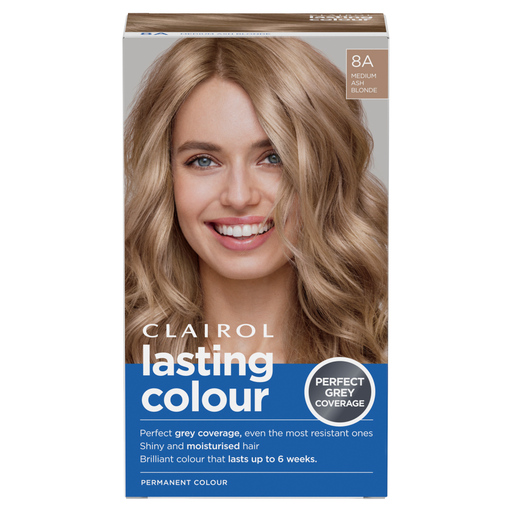
Why This Fits Their Persona: A single complete kit suits someone trying an ash blonde at-home hair colour without buying separate application essentials.
The 8A shade clearly identifies its cool medium ash direction, helping buyers avoid choosing a generic blonde when brassiness is the concern.
Includes colour cream, developer, gloves and Colourlast conditioner; designed for at-home use.
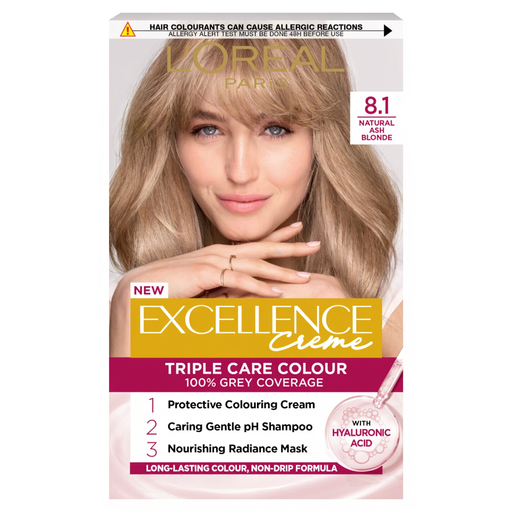
Why This Fits Their Persona: Suitable for shoppers who want a complete colour-and-care routine, including post-colour cleansing and conditioning.
Its non-drip crème and Triple Care Colour Ritual address the common problem of messy application and missing aftercare.
The listing states up to 100% grey coverage and includes shampoo and a radiance mask alongside the colour kit.
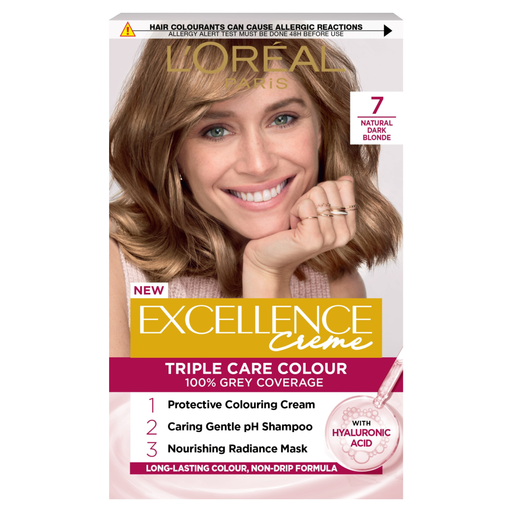
Why This Fits Their Persona: A practical option for regular colour maintenance where grey coverage and cool-tone care are both priorities.
Purple shampoo and mask are included, making the anti-brass routine part of the kit rather than an unexpected extra purchase.
Permanent colour, non-drip crème texture, hyaluronic acid in the care products and a stated up-to-100% grey coverage claim.
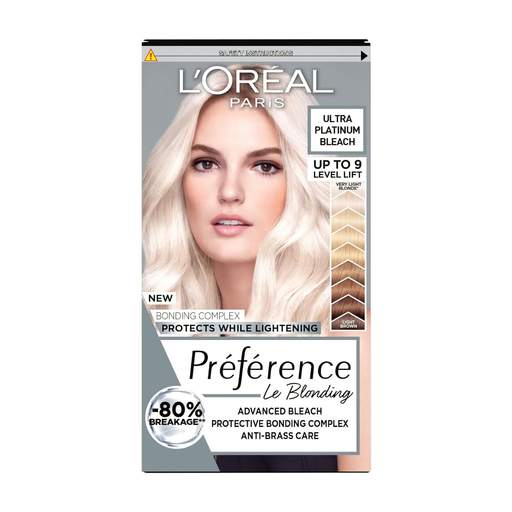
Why This Fits Their Persona: Intended for shoppers considering a substantial lightening change and willing to follow more detailed restrictions.
The instructions specify hair types it is unsuitable for, including dark brown or black hair and previously dark-coloured hair, helping prevent unrealistic expectations.
Oil-in-gel formula is described as non-drip; the kit includes anti-brass reinforcing conditioner and final protective care.
We have compiled a complete, real-time list of products that fully satisfy these strict selection criteria and UK safety regulations.
Before each use, complete an allergy alert test 48 hours in advance, even if you have used the same product before. Do not use permanent hair dye on eyelashes or eyebrows. Avoid colouring if your scalp is irritated, damaged or unusually sensitive, and follow restrictions relating to bleaching, perming, relaxing, henna and metallic dyes.
The cost of maintaining permanent hair colour depends on whether you colour the full length or only regrowth. Root applications may use less product, while long or thick hair can require two packs. Keep the shade name and product code recorded so future purchases are consistent, and check the packaging for the latest ingredients, batch information and expiry guidance.
Permanent colour remains in the hair until it grows out or is replaced by another colour, but visible vibrancy and tone can fade. Grey regrowth and natural roots may become noticeable after several weeks, depending on hair growth and the contrast between shades.
Many permanent formulas are designed for grey coverage, but the result depends on the percentage of grey, hair condition and selected shade. Follow the product’s shade guidance and apply enough product for full saturation, particularly around the hairline and parting.
It can be, provided the selected shade matches the starting colour and the instructions allow use on your hair. For lightening, read restrictions carefully; for maintaining a cool blonde, an ash shade or anti-brass care product may be more suitable than a warm blonde.