
24/7 Customer Support

Free returns

Same-day & Next-day Delivery

Quality Guaranteed

Unlock Your Welcome Offers: FREE Delivery | Up to 80% OFF | Free 30-day JoyPlus trial
Download the APP
A good permanent marker feels like a simple tool, but choosing the wrong one can lead to faded labels, smudged work and wasted money. Whether you're a builder on a dusty site, an office manager stocking the supply cupboard or a student organising revision notes, the marker you pick matters. The market is filled with options, and it's easy to fall for common pitfalls that leave you with a pen that isn't fit for purpose.
This guide cuts through the clutter. We'll highlight the key mistakes to avoid when buying permanent markers and break down the essential features you need to check. This will help you find a reliable marker that performs exactly as you need it to, every time.
Before you add a pack of markers to your basket, be aware of these frequent issues that catch many buyers out:
To ensure you get a marker that works for you, focus on these three non-negotiable parameters.
The tip of the marker dictates its application. Understanding the main types is the first step to making a smart choice.
The ink inside the barrel is what determines if your mark will last.
Finally, consider how you'll be using the markers.
Here are a few recommendations from our catalogue, matched to specific user needs to help you avoid the common traps.
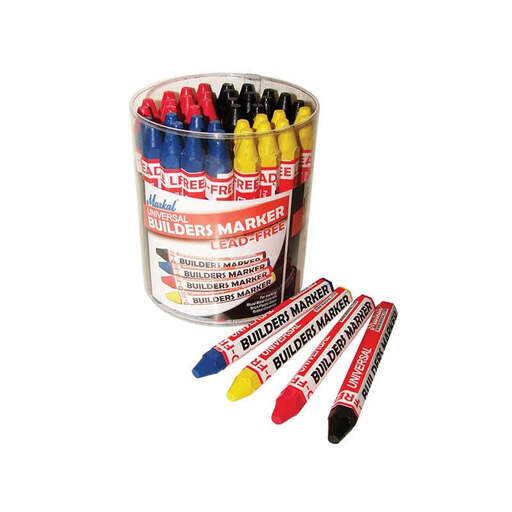
Why This Fits Their Persona: Built for the demands of a construction site or workshop, this bulk pack provides durable, weather-resistant markers designed for marking on materials like wood, concrete and metal. The assorted colours are perfect for complex projects.
It directly counters the "permanent myth" by using a weather-resistant ink formulation specifically made for the tough, varied surfaces found on a job site, ensuring marks don't fade or wash away.
Durable construction and weather-resistant ink provide reliable performance outdoors. The 48-pack offers excellent value for large projects.
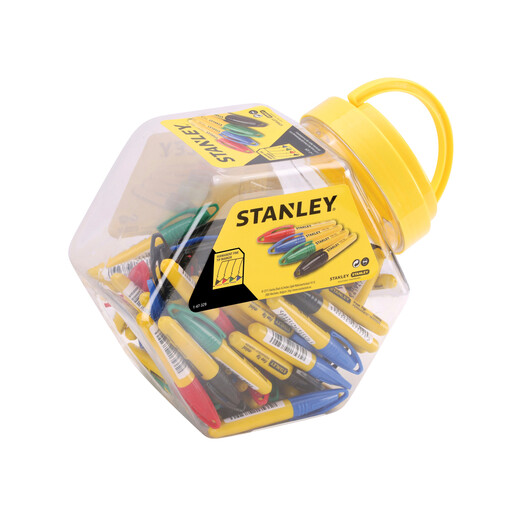
Why This Fits Their Persona: For anyone managing a busy office, classroom or home, this bulk pack of fine tip markers is ideal. The fine tip is perfect for labelling, note-taking and calendar-marking, while the assorted colours aid organisation.
This pack avoids the "one-tip-fits-all" fallacy by providing the correct tool—a fine tip—for detailed organisational tasks. The quick-drying ink also prevents smudging on files and labels.
Excellent value with a 72-pack. The fine tip allows for precise, neat writing, and the multiple colours are great for colour-coding systems.
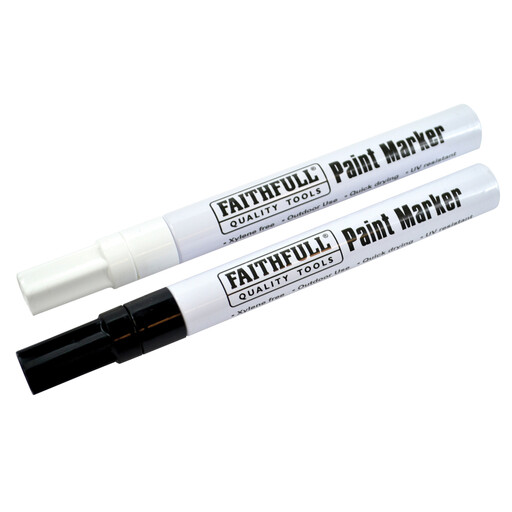
Why This Fits Their Persona: For mechanics, fabricators or warehouse operatives who need to mark on non-porous surfaces like metal, plastic or glass. The oil-based paint provides a durable, high-contrast mark that won't wipe away.
This paint marker directly solves the "ignoring the surface" pitfall. Its oil-based ink is specifically formulated to adhere to the smooth, non-porous materials where standard markers fail completely.
Quick-drying, oil-based paint creates a truly permanent, smudge-resistant mark. The black and white pack offers excellent contrast on both light and dark surfaces.
We have compiled a complete, real-time list of products that fully satisfy these strict selection criteria and UK safety regulations.
To maximise the life of your markers, always replace the cap securely after use to prevent the tip from drying out. It is also good practice to store them horizontally. This ensures the ink remains evenly distributed along the wick and doesn't pool at one end, keeping the nib saturated and ready for use.
Not all of them. While most are water-resistant on paper, their performance varies greatly on non-porous surfaces. For tasks requiring true waterproofing, such as outdoor labelling or marking on plastic, you should specifically look for products labelled as waterproof markers or opt for oil-based paint marker pens, which offer superior resistance to moisture.
The method depends entirely on the ink and the surface. For non-porous surfaces like glass or a whiteboard, you can sometimes remove a mark by drawing over it with a dry-erase marker and then wiping both away. For other surfaces, isopropyl alcohol (rubbing alcohol) can be effective. Always test any removal method on a small, hidden area first to ensure it doesn't cause damage.