
24/7 Customer Support

Free returns

Same-day & Next-day Delivery

Quality Guaranteed

Unlock Your Welcome Offers: FREE Delivery | Up to 80% OFF | Free 30-day JoyPlus trial
Download the APP
Permanent markers are useful for far more than labelling cardboard boxes. UK tradespeople use them on timber, pipework and metal; warehouse teams mark stock and packaging; artists and crafters work on glass, plastic and card; while schools and offices often need dependable fine lines in several colours.
However, choosing by colour or pack size alone can lead to disappointing results. The right permanent markers depend on the surface, required line width, durability and whether the mark should remain permanent or be removed later.
Permanent ink usually performs well on porous materials such as paper, card and untreated wood. Smooth or non-porous surfaces, including glass, glossy plastic and some metals, may require paint markers or permanent paint pens for better opacity and adhesion.
Always check the listed surface compatibility. A marker that works on paper may appear faint on dark metal or rub away from a frequently handled plastic component.
A waterproof marker may resist occasional contact with water, but outdoor markings can also face UV exposure, rain, abrasion and temperature changes. For construction and maintenance work, look for stated features such as water resistance, fade resistance or weather resistance rather than assuming they are included in every permanent marker.
For exposed steel, concrete or timber, a solid paint stick or industrial marker may be more appropriate than a standard alcohol-based pen.
An assorted marker pack can offer useful colour variety, but a fine tip is not suitable for bold warehouse labelling, while a chisel tip can be awkward for tiny notes. Consider the line width before buying. Replacing unsuitable markers can cost more than choosing the correct format initially.
For workplace use, check the packaging for ventilation guidance and warnings about contact with eyes or skin. Ink can stain clothing and surfaces, so testing on an inconspicuous area is sensible.
Fine tip markers are suited to signatures, small labels, diagrams and detailed artwork. A bullet tip provides a consistent line, while a chisel tip marker can create both narrow and broad strokes by changing the writing angle. The Stanley FatMax chisel-tip format, for example, is intended for flexible line widths.
Medium taper tips sit between these options and can provide broader marks without losing all control. For awkward spaces, deep-hole markers use a long, narrow design to reach recesses, drilled holes and narrow gaps.
Look for a securely fitting cap, a barrel that is comfortable to hold and clear information about storage. Many marker types should be stored horizontally with the cap fitted tightly to help maintain ink flow.
For a home project, a two- or six-pack may be sufficient. Offices, schools, warehouses and large workshops may benefit from assorted marker packs or 20- and 72-packs, provided the colours and tip sizes match regular tasks.
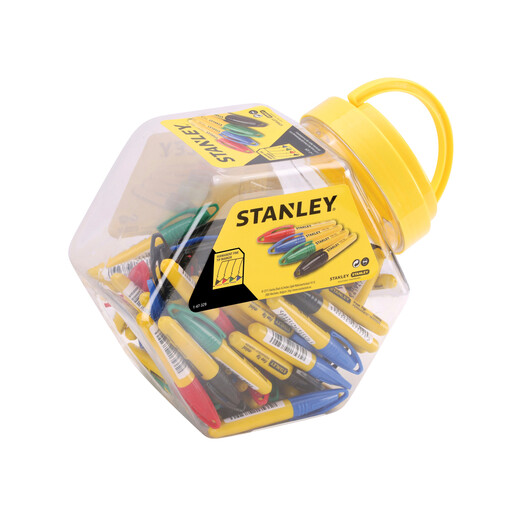
Why This Fits Their Persona: A substantial pack suits students, office users, classrooms and households that need multiple colours for regular labelling, notes or craft work.
The fine tip is clearly specified, helping avoid buying a broad marker for detailed writing. The colour selection is also stated rather than implied.
72 markers; black, red, green and blue colours; mini fine tips for small spaces.
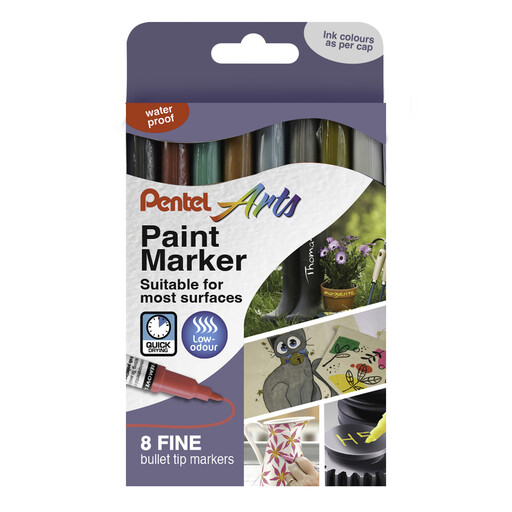
Why This Fits Their Persona: Suitable for creative users and detailed decorative work who want metallic colour options and a controlled 2.9mm bullet tip.
The product specifies opaque pigment-based ink, a fine bullet tip and suitable materials rather than relying only on broad “all-purpose” wording.
Eight metallic colours; low-odour formulation; suitable for card, metal, glass, plastic and rubber.
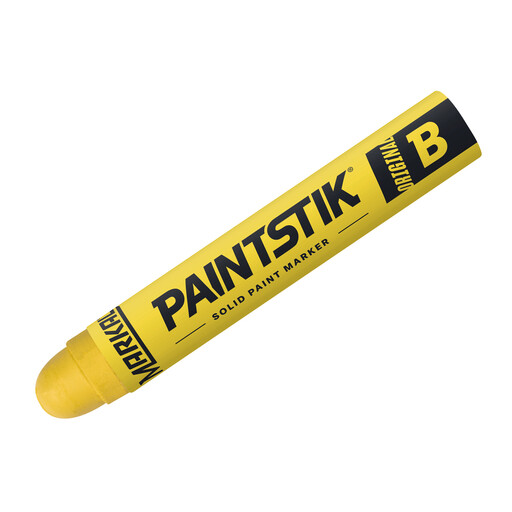
Why This Fits Their Persona: Construction, fabrication and maintenance teams marking metal, wood, plastic or concrete can use a solid paint stick without carrying separate liquid paint.
The solid, no-drip format avoids the mess associated with liquid paint, while the product information specifically lists weather-resistant use.
Bright yellow visibility; direct application; suitable for indoor and outdoor marking on several materials.
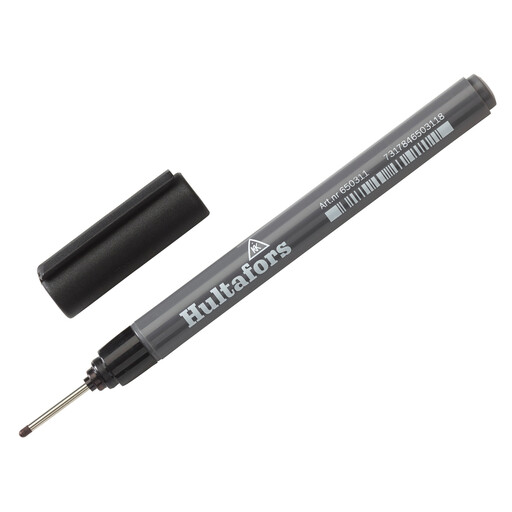
Why This Fits Their Persona: Carpenters, builders and DIY users working around fixings, drilled holes and narrow gaps need access that a standard marker cannot provide.
Its specific deep-hole design addresses access rather than claiming that a conventional fine tip can reach every location.
Designed for deep holes and tight spaces; suitable for wood, metal and plastic; ergonomic grip.
We have compiled a complete, real-time list of products that fully satisfy these strict selection criteria and UK safety regulations.
For commercial workplaces, keep permanent and removable markers in separate storage containers. This prevents a wet-erase pen being used accidentally on a parcel or a permanent marker being applied to a reusable display board.
Some are designed to resist water, but performance varies by formulation and surface. Check the product description for explicit water-resistant or waterproof information. For outdoor construction marks, weather-resistant paint sticks or industrial markers may be more suitable than standard writing pens.
Marker lifespan depends on frequency of use, cap security, storage and the surface being marked. Fine tips may use less ink per line, while paint markers require correct shaking and priming. A tightly closed cap and horizontal storage can help maintain ink flow.
Yes, wet-erase markers and chalk markers are intended for removable writing on non-porous surfaces. They can generally be wiped with a damp cloth, but porous materials may absorb ink and make removal difficult. Always check the surface guidance before use.