
24/7 Customer Support

Free returns

Same-day & Next-day Delivery

Quality Guaranteed

Unlock Your Welcome Offers: FREE Delivery | Up to 80% OFF | Free 30-day JoyPlus trial
Download the APP
A personal blender can simplify breakfast smoothies, protein shakes and quick sauces, but the wrong model may become an expensive cupboard item. UK shoppers often compare wattage and marketing language first, while overlooking capacity, cleaning and whether the blender suits their daily routine.
Before choosing a smoothie maker, watch for these common buying pitfalls.
A 1200W blender has more stated motor power than a 300W model, but wattage alone does not tell you how well ingredients will blend. Blade design, cup shape, liquid levels and programme settings also affect results.
A compact protein shake blender may perform well with milk, powder and soft fruit, while a blender for frozen fruit or ice needs suitable instructions, sufficient liquid and a motor designed for that workload.
A cordless blender is convenient for offices, gyms and travel, but a 475ml cup is intended for an individual serving. It will not replace a larger worktop appliance when preparing drinks for several people.
Likewise, a travel blender that fits in a car cup holder may have a smaller motor and shorter blending cycle than a corded high-performance blender. Consider where you will use it and how much you normally prepare.
Some appliances have removable, dishwasher-safe cups and blades, while the motor base must only be wiped with a damp cloth. Check the manufacturer’s cleaning instructions and whether the blade assembly can be removed safely.
Food residue around seals and blades can become a nuisance if the cup is difficult to rinse immediately after use. A dishwasher-safe blender may save time, but only when the specific removable parts are listed as suitable for dishwasher cleaning.
For occasional smoothies and softer ingredients, a compact 300W personal blender may be adequate. A 900W blender offers more power for thicker mixtures, frozen fruit, nuts and ice, while a 1200W blender is more suitable for frequent, demanding blending.
Do not select power in isolation. Check the recommended operating time, whether the model has overload protection and whether it is suitable for hot liquids. Many personal blenders are designed for cold drinks only.
A 475ml cup works for one smoothie or protein shake. A 600ml bottle gives more room for a substantial drink, while a 900ml cup is useful for larger servings or preparing drinks for later.
Look for clearly stated food-contact materials such as BPA-free plastic or Tritan-style material. Shatter-resistant cups can be practical for commuting and gym bags, but inspect the lid seal and avoid carrying a freshly blended drink until it is securely closed.
A one-touch blender is simple for repeat recipes, whereas pulse control allows you to adjust texture for dips, sauces or thicker mixtures. A cordless model should state its charging connection and approximate blends per charge.
For UK kitchens, corded products should be compatible with the stated 220–240V supply. Also compare included accessories: additional cups, drinking lids and different blade assemblies can make a kit more useful than a motor base sold alone.

Why This Fits Their Persona: Its two 0.6L bottles suit students, office workers and first-time buyers who want individual smoothies or shakes without a large appliance.
The capacity and included bottles are stated clearly, avoiding the surprise of a small cup or extra accessory costs.
300W motor, two 0.6L Tritan bottles, pulse function and dishwasher-safe removable parts.
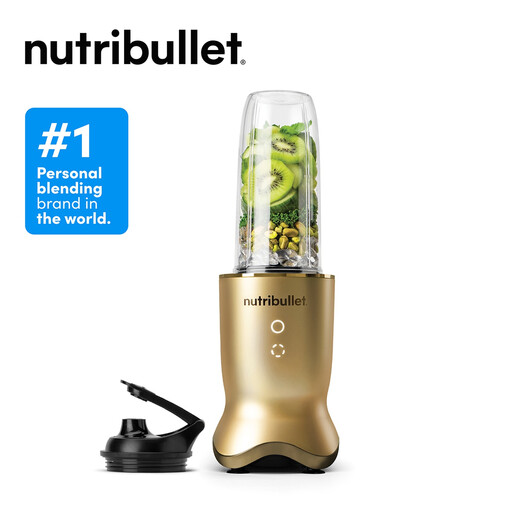
Why This Fits Their Persona: A suitable option for households wanting a more powerful smoothie blender with automated operation and a larger 900ml cup.
The specification lists both the 1200W motor and the two available blending controls, rather than relying on vague performance language.
1200W motor, 30-second automated cycle, manual pulse control and dishwasher-safe Tritan Renew cups.

Why This Fits Their Persona: Regular smoothie makers, fitness users and home cooks can use the larger cups and additional accessories for repeated preparation.
The 900ml capacity, 900W rating and stated 60-second operating limit make its intended workload easier to judge.
Two 900ml cups, extractor and emulsifying blades, 25,000 RPM stated blade speed and dishwasher-safe parts.

Why This Fits Their Persona: A cordless format suits commuters, gym users and travellers who have access to a USB-C charger but not always a kitchen socket.
Its 475ml capacity, USB-C cable and stated 15+ blending cycles set realistic expectations for portable use.
Rechargeable battery, to-go lid, stainless steel extractor blade and dishwasher-safe cup, lid and blade assembly.
We have compiled a complete, real-time list of products that fully satisfy these strict selection criteria and UK safety regulations.
Yes, provided the cup has enough capacity and the model is designed for cold liquids. A 475ml to 600ml cup is generally practical for a single shake. Add liquid before powder and solid ingredients, and follow the manufacturer’s maximum fill guidance.
Running cost depends on the appliance’s rated power and how long it operates. For example, a 1200W model uses more power per minute than a 300W model, but a shorter blending cycle may reduce the difference. To estimate cost, multiply the blender’s kilowatt rating by operating time in hours and your electricity tariff.
Lifespan depends on frequency of use, cleaning and whether the appliance is used within its stated limits. Avoid overfilling, boiling liquids and continuous operation beyond the manual’s recommended duration. Unplug the base before removing blades, and replace cracked cups or damaged seals rather than continuing to use them.