Shared-kitchen shake maker
You make occasional single servings in a communal kitchen and want a drinking lid and parts you can clean promptly, without leaving a mess for colleagues.


For an occasional single-serving vanilla shake in a shared office, prioritise a suitable cup, a secure lid and manageable clean-up over motor wattage alone. A cordless blender suits blending away from a socket and carrying the drink in the same cup; a compact mains blender suits an approved kitchen setup if you want a larger bottle. In either case, check workplace rules, cleaning instructions and whether the exact model is intended for any ice or frozen fruit you use.
You make occasional single servings in a communal kitchen and want a drinking lid and parts you can clean promptly, without leaving a mess for colleagues.
You may not have a convenient socket where you blend and want to carry the finished shake away in its cup. A cordless model still needs charging before use.
You sometimes add ice or frozen fruit. Check the exact model’s ingredient and fill instructions rather than assuming that every portable blender handles them.
Check where your office permits blending first; then choose the cup and cleaning arrangement that fits your routine before assessing power or ingredient claims.
| Concern | What to check | Who this matters to |
|---|---|---|
| Workplace disruption | Confirm permitted appliances and blending locations. Plan use away from calls; do not treat a compact design or a brand’s quietness claim as a measured noise comparison. | I need to make a shake without interrupting colleagues or using an appliance where it is not allowed. Around 45% of consumers would put considerate, permitted use first. |
| Cleaning and spills | Check the lid design, which parts detach and exactly which parts the instructions say are dishwasher-safe. | If I use a communal kitchen, I want to carry my drink away and clear up promptly. Clean-up and spill control would be the primary concern for around 33% of consumers. |
| Location and ingredients | Check whether the blender needs a socket and whether its exact-model instructions cover your usual ingredients, especially ice or frozen fruit. | I need a setup that works where I can blend, and I may want tougher additions in my shake. Around 22% of consumers would prioritise that flexibility over the other concerns. |
Even a short blend can interrupt a call. Ninja describes its Blast as its quietest blender, but that brand comparison is not a sound-level measurement you can use to compare these models.
Confirm where and when blending is permitted. If noise is decisive, look for measurements made under comparable test conditions for the exact models.
A blender suited to milk and soft ingredients is not automatically suited to ice or frozen fruit. Ingredient claims and restrictions can differ by model.
Match your usual recipe to the exact model’s instructions, including ingredient and fill guidance, before using tougher additions.
A portable cup is less convenient in a shared kitchen if its parts are awkward to clean or its lid does not suit carrying the drink.
Check which parts detach, which are stated to be dishwasher-safe and how the lid closes. Clean the food-contact parts promptly and follow the instructions for keeping the motor base dry.
A UK product recall issued on 29 December 2023 identifies blade-breakage and battery-overheating risks for affected BlendJet 2 Portable Blenders.
If you own or are considering a BlendJet 2, check its serial number against the Office for Product Safety and Standards recall. Do not use an affected unit; follow the recall instructions.
Its Portable Blender and Flex offer two cordless approaches to a single-serving shake.
Ninja positions its rechargeable Blast BC151UK line for drinks at work and on the go.
The PBF01 is a mains-powered personal-blender option for an approved office kitchen setup.
These personal blenders suit a single shake to carry away. Compare their cup arrangements and confirm the power source, cleaning instructions and workplace fit for the model you choose.
 No image available
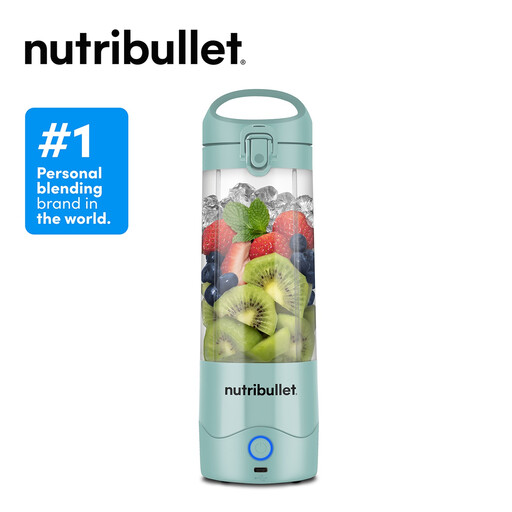
Consider this cordless model when you need to blend a single shake away from a socket and take it in the same cup.
The listed variant has a to-go lid and USB-C charging; nutribullet states that its Portable Blender delivers 15 or more blending cycles per charge. Keep it charged, and check the instructions before adding ice or frozen fruit.
 No image available
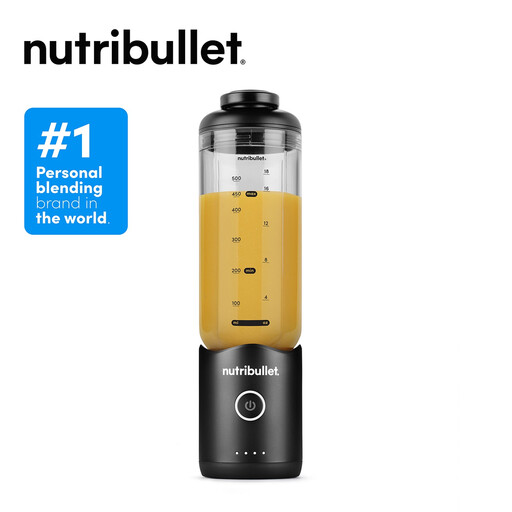
Consider the Flex if detaching the drink cup and cleaning the blade block separately would make a communal-kitchen routine easier.
The Flex has a detachable 500ml cup; nutribullet specifies a removable, dishwasher-safe blade block. Its listing describes a leakproof sip lid. Check the exact instructions before using ice or other hard ingredients, as the listing’s guidance on them conflicts.
 No image available
Consider this model if you want a 600ml travel bottle for a shake and can confirm that its setup suits your permitted blending location.
Its title specifies 300W, one-touch operation and detachable blades. Check its power source before relying on socket-free use, and confirm the lid and cleaning instructions if spill control or dishwasher cleaning matters to you.
Check your employer’s appliance and kitchen-use rules before buying one for work. A cordless model avoids needing a nearby socket, but it does not remove restrictions on where or when blending is permitted.
Not necessarily for a shake made with milk and soft ingredients. Choose against your actual recipe rather than wattage alone; if you add ice or frozen fruit, check the exact model’s ingredient instructions and limits.
A detachable drinking cup, removable blade block and clearly identified dishwasher-safe parts can make clean-up more manageable. The nutribullet Flex, for example, is specified with a detachable 500ml cup and dishwasher-safe blade block; follow its instructions for the other parts.
Yes, particularly if you own or are considering a BlendJet 2. An Office for Product Safety and Standards recall dated 29 December 2023 concerns affected units because of blade-breakage and battery-overheating risks; check the serial number against the recall instructions and do not use an affected unit.