Family-breakfast batch makers
If several people want a frappe at about the same time, compare a multi-serve jug or 2-in-1 blender with personal cups. A cup-based model may mean blending the drinks one after another.


Choose a personal blender if you are happy to make family coffee frappes in separate cups or successive batches. If several drinks need to be ready together, compare a multi-serve jug or 2-in-1 model instead; whichever format you choose, check the usable fill level and the exact model’s instructions for ice.
If several people want a frappe at about the same time, compare a multi-serve jug or 2-in-1 blender with personal cups. A cup-based model may mean blending the drinks one after another.
If separate portions fit your routine, a personal blender with supplied cups or bottles lets you prepare and serve drinks individually. Check how many vessels come with the particular bundle.
If your recipe contains ice, check the exact model’s ice guidance, maximum-fill mark and operating instructions before deciding whether its cup or jug size works for your breakfast.
Decide how many drinks you need to make at once before comparing cup bundles; for an ice-based frappe, check the model’s ice instructions separately.
| Concern | What to check | Who this matters to |
|---|---|---|
| Drinks per batch | Compare vessel capacity and its maximum-fill line with your usual portions; confirm whether the bundle includes a jug. | When everyone wants a frappe together, I would rather make one shared batch than repeat the blending. Around 36% of consumers put batch capacity first. |
| Ice use | Look for guidance for ice on the exact model, including fill and operating limits; do not rely on wattage alone. | If I use ice in my coffee drink, I need to know whether the model permits it. Roughly 29% of consumers prioritise ice suitability above the other concerns. |
| Portions and cleaning | Count the included cups or bottles and check which parts the manufacturer identifies as dishwasher-safe. | Separate servings would make breakfast easier for my household, provided the vessels are practical to clean. About 21% of consumers place individual portions and clean-up first. |
| Storage and portability | Check the appliance dimensions, where its cups will be stored and whether a to-go vessel would be useful. | Worktop space is limited, or I want to take my own drink away after breakfast; around 14% of consumers put compact storage or portability first. |
A cup-based blender may require several cycles when multiple drinks need to be ready together.
Work out your usual number of servings and compare their combined volume with the vessel’s maximum-fill line. Consider a multi-serve jug or 2-in-1 format if successive batches would be inconvenient.
Motor wattage does not, by itself, establish whether a particular blender can handle the ice in your recipe. Ice guidance differs by model.
Check the exact model’s ice instructions, including permitted quantities and operating limits, before planning an ice-heavy frappe.
The marked fill limit and cleaning instructions matter even when a cup or blade assembly is described as dishwasher-safe.
Follow the maximum-fill mark, unplug the blender before cleaning and keep the powered base, cord and plug out of water.
Electrical Safety First advises checking that a blender has a UK three-pin plug with a fuse.
Confirm those details for the appliance you intend to buy, use a reputable retailer and retain your proof of purchase.
The QB3001UKS personal blender and BN750UK 2-in-1 illustrate different ways to serve a family breakfast.
Its cup-based products and jug blender provide distinct formats to compare rather than one answer for every household.
The PBF01 is a compact, bottle-based alternative for separate servings.
These cup- and bottle-based choices suit individual frappes or successive breakfast drinks. If your priority is making several drinks in one shared batch, compare a multi-serve jug or 2-in-1 blender as a different format.
 No image available
Consider this cup-based format if separate breakfast drinks suit your household. The listing names a 900 ml capacity and 900 W motor; check the maximum-fill line and model instructions for your intended ice use.
 No image available
The two supplied bottles make this a format to consider for separate servings rather than one shared batch. Its title specifies 300 W; check the bottle fill marks and the model’s instructions before making drinks with ice.
 No image available
The stated 900 ml cup makes this worth comparing if you want a larger personal vessel, not a shared family jug. The title describes it as suitable for crushing ice; follow the model’s fill and ice instructions, and check the bundle details if you need multiple cups.
 No image available
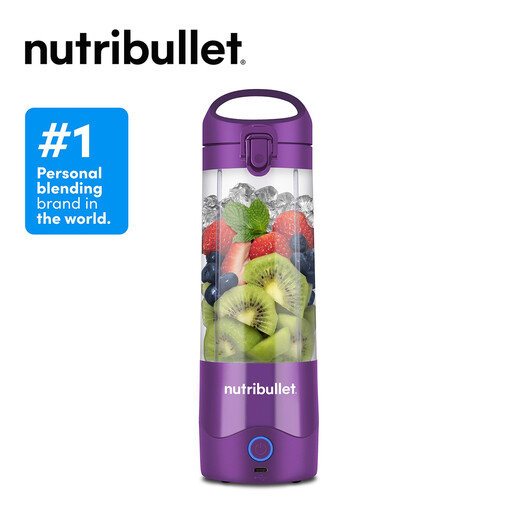
The 475 ml cup and to-go lid suit a single portable serving rather than one batch for the family. The title includes a USB-C charging cable; if you plan to blend ice, check the model’s permitted ingredient size and use instructions.
Yes, if separate portions or successive blends fit your routine. For drinks that need to be ready together, compare the personal cup’s usable fill level with a multi-serve jug or 2-in-1 model; The Ninja BN750UK is described as serving both personal and multi-serve needs.
Check the exact model’s ice guidance and follow its fill and operating limits. Ice crushing is described for the Ninja QB3001UKS, but that model-specific claim does not establish what another personal blender can handle.
Unplug it and follow the manufacturer’s cleaning instructions, checking which removable parts are dishwasher-safe. Keep the powered base, cord and plug out of water; Joybuy’s Nutribullet 600 Series instructions specifically warn against immersing them.
Confirm that the appliance has a UK three-pin plug with a fuse, as advised by Electrical Safety First. Check the details of the particular product listing before buying.
Check your local electrical-equipment recycling arrangements rather than putting a blender in general household waste. Oxfordshire County Council, for example, lists household waste recycling centres and retailer take-back when buying an equivalent replacement; arrangements elsewhere may differ.