
24/7 Customer Support

Free returns

Same-day & Next-day Delivery

Quality Guaranteed

Unlock Your Welcome Offers: FREE Delivery | Up to 80% OFF | Free 30-day JoyPlus trial
Download the APP
Choosing pet and bird feeders is not simply a matter of picking the largest hopper or the most connected device. The right choice depends on the animal, food type, available space and how much daily maintenance you can realistically manage.
For UK households, weather resistance, hygiene and secure placement matter just as much as attractive features. A feeder that looks convenient online may become difficult to clean, unstable outdoors or unsuitable for your pet’s food. The following guide highlights common buying traps, essential specifications and suitable options for different households.
A slow feeder designed for dry kibble may not work properly with wet food, raw food or liquid treats. Likewise, an automatic cat feeder may use a dispensing mechanism that only accepts compatible kibble sizes.
Always check the stated food compatibility before ordering. For example, the PETKIT YumShare Solo is designed for dry, freeze-dried, air-dried and mixed food, but its instructions state that it is not suitable for wet food.
Food residue, saliva and outdoor bird feed can create hygiene problems if a feeder has narrow grooves, inaccessible corners or parts that cannot be removed. “Easy clean” should be supported by practical details such as a removable bowl, dishwasher-safe components or a screw-top opening.
Bird feeders should be cleaned regularly, allowed to dry fully and checked for mouldy food. Outdoor products also need secure installation and protection from predators.
A smart pet feeder with camera can offer scheduled portions, video monitoring and two-way audio, but it may depend on 2.4GHz Wi-Fi, mains power or a separate battery. App functions can also be less useful if the feeder is difficult to refill or clean.
For simpler households, a reliable manual bowl, cat licking mat or garden bird seed feeder may be more practical than a connected device.
Start with the food your animal actually eats:
For cats and dogs that eat quickly, slow feeder bowls for cats and dogs use raised patterns or channels to make food more difficult to reach. This may extend mealtime, but the design should not be so complex that your pet becomes frustrated. Introduce a new feeder gradually and supervise initial use.
Look for clearly listed materials such as food-grade silicone, stainless steel or BPA-free plastic. These terms describe material composition, but they do not remove the need for regular washing or replacement when surfaces become damaged.
Silicone mats can suit wet, raw and liquid foods, while stainless steel bowls are useful for pets that may scratch softer surfaces. Dishwasher compatibility is helpful, but check whether every component—not only the bowl—is dishwasher safe.
For outdoor use, prioritise weather-resistant construction, a lid that closes securely and drainage or sheltered placement. A window bird feeder should also be attached to clean, smooth glass and checked regularly, particularly after cold or wet weather.
Measure the available space before buying. An elevated or adjustable dog bowl needs enough floor area to prevent tipping, while a window feeder must not obstruct blinds, windows or access routes.
The Blinkit 0159-1 adjustable feeder offers four height settings—10cm, 23cm, 27cm and 31cm—and includes a foldable stand. This can be useful where a pet’s size changes or storage space is limited. For outdoor feeders, hang products away from cats, busy pathways and windows where possible to reduce collision and predator risks.
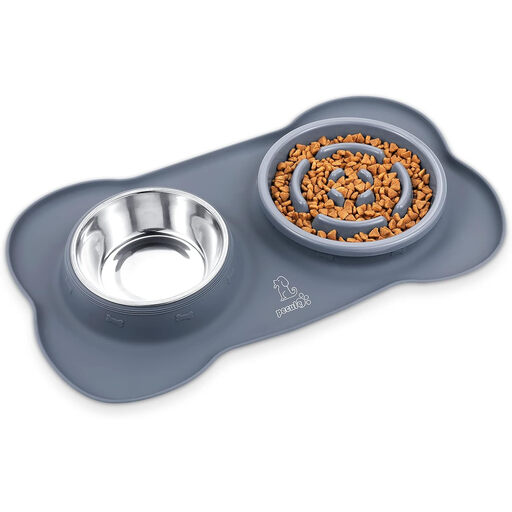
Why This Fits Their Persona: A practical all-in-one option for small dogs and cats needing food, water and spill control without buying separate accessories.
The 3-in-1 design combines a slow feeder, water bowl and drip-resistant mat, reducing the need for mismatched products.
Includes 400ml slow feeder and 400ml stainless steel water bowl; the bowls are dishwasher safe and the silicone base folds for storage.

Why This Fits Their Persona: Suitable for cat owners who want scheduled dry-food portions and remote visibility during workdays, travel or irregular routines.
The listing clearly identifies compatible food, 2.4GHz Wi-Fi and separate battery requirements, helping buyers plan around connectivity and power.
Provides a 1080P camera, two-way audio, app scheduling, dual food compartments and a stainless steel bowl.
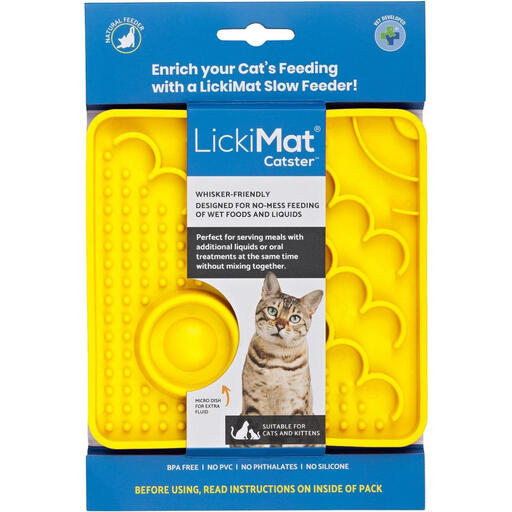
Why This Fits Their Persona: A flexible choice for cats that eat wet, raw, dry or liquid food and need a more engaging alternative to a conventional bowl.
It is not limited to dry food and includes multiple textures plus a micro dish for liquids, so one mat can support varied feeding routines.
Whisker-friendly surfaces accommodate several food types; the rubber mat is microwave-safe and freezer-friendly according to the product information.
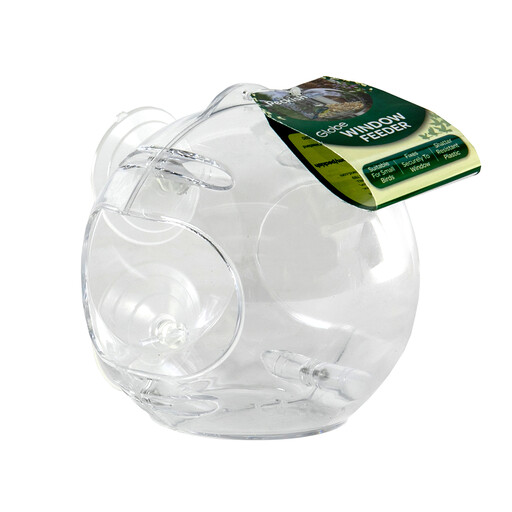
Why This Fits Their Persona: Designed for households wanting close-up views of smaller garden birds from a kitchen, lounge or home office window.
Two suction pads and a smaller feeding entrance make the intended installation and bird size clearer than a generic hanging feeder.
Plastic construction supports simple cleaning, while the window-mounted format enables close observation without using garden floor space.
We have compiled a complete, real-time list of products that fully satisfy these strict selection criteria and UK safety regulations.
They can be useful for portion scheduling, early starts, holidays and households with changing routines. Check food compatibility, app requirements, power backup and cleaning instructions first. An automatic feeder should supplement a responsible feeding routine, not replace checking the pet and the device.
Pet bowls and mats should generally be cleaned after use or according to the food type and manufacturer’s instructions. Outdoor bird feeders need regular cleaning, drying and inspection for mould or spoiled feed. Increase cleaning frequency during damp weather or when several birds are using the same feeder.
Not always. Birds may need time to recognise a new feeder. Use suitable seed, keep the feeder stable and position it where cats cannot easily ambush visiting birds. A clear window feeder also requires careful placement to reduce the risk of collisions.