
24/7 Customer Support

Free returns

Same-day & Next-day Delivery

Quality Guaranteed

Unlock Your Welcome Offers: FREE Delivery | Up to 80% OFF | Free 30-day JoyPlus trial
Download the APP
Choosing pet bowls can seem straightforward until food ends up on the floor, a bowl develops hard-to-clean marks or your pet struggles to reach the last mouthful. The right choice depends on your pet’s size, eating habits, feeding routine and the amount of cleaning you are prepared to do.
This guide explains the main buying traps and compares practical options for UK dog and cat owners, from a compact small dog bowl to a slow feeder bowl and a heavier ceramic design.
Decorative bowls can look attractive in a kitchen, but lightweight designs may slide or tip when used by enthusiastic eaters. A non-slip pet bowl with a rubber or silicone base can help keep the bowl in place, while a heavyweight ceramic pet bowl may be more resistant to movement simply because of its weight.
However, no bowl is completely spill-proof. The feeding surface should still be placed on a flat, stable floor and checked regularly for damage.
A large bowl is not automatically more practical. A small dog bowl or cat bowl should allow your pet to eat comfortably without having to reach too far down. Conversely, a large dog bowl needs enough capacity for the pet’s normal portion and water intake without frequent refilling.
Check the diameter, height and stated capacity rather than relying on labels such as “large” or “extra-large”. A 14cm bowl and a 21cm bowl will suit noticeably different feeding stations.
A bowl may look easy to wash but have grooves, seams or a base ring that traps residue. Look for a dishwasher-safe pet bowl if you want to simplify routine cleaning, and check whether all components—not just the inner bowl—can go into the dishwasher.
Material also affects use. Stainless steel is generally straightforward to clean, ceramic can be heavy and stable, while silicone is useful for foldable travel designs. Always follow the product instructions: dishwasher-safe does not mean microwave-safe.
Measure the available space and compare it with your pet’s feeding position. Consider:
The ideal depth depends on your pet’s muzzle and eating style. A shallow design may be more comfortable for some cats, while a deeper option can help contain water and dry food.
A stainless steel dog bowl offers a smooth interior that is usually simple to hand wash. Check the full construction, as some bowls combine stainless steel with resin, polypropylene or thermoplastic elastomer components.
A ceramic pet bowl can provide useful weight and a solid feel. Ceramic products should be inspected for chips and cracks because damaged surfaces can be harder to clean safely. A bowl described as microwave-safe may be suitable for gently warming food, but the temperature must be checked before serving.
Silicone is lightweight and foldable, making it suitable for travel. It should be checked for tearing, chewing damage and residue around textured sections.
A non-slip pet bowl may use a rubber ring, silicone mat or weighted base. These features are particularly useful for pets that push bowls across hard floors.
For enthusiastic eaters, a slow feeder bowl uses raised sections or maze-like shapes to make food take longer to reach. It should be selected according to the pet’s size and food type, and pets should be supervised while using it. A slow feeder is not a substitute for veterinary advice if your pet has recurring digestive or eating problems.
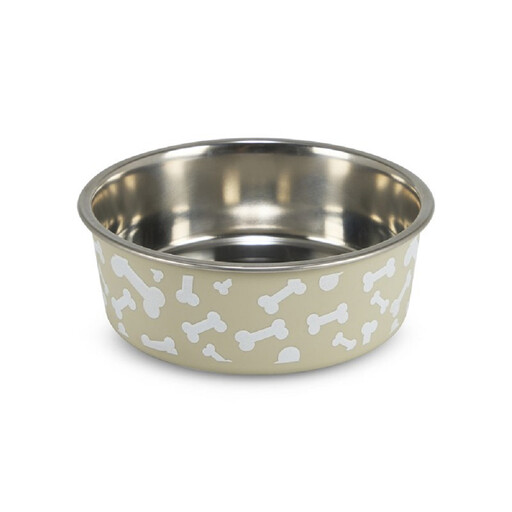
Why This Fits Their Persona: Its compact 14cm diameter suits cats and smaller pets, while the single-bowl format keeps the initial purchase simple for everyday food or water use.
The stated dimensions make it easier to avoid buying an oversized bowl, and the rubber base ring is designed to reduce sliding.
Polished stainless steel interior; dishwasher-safe construction; suitable for food or fresh water.
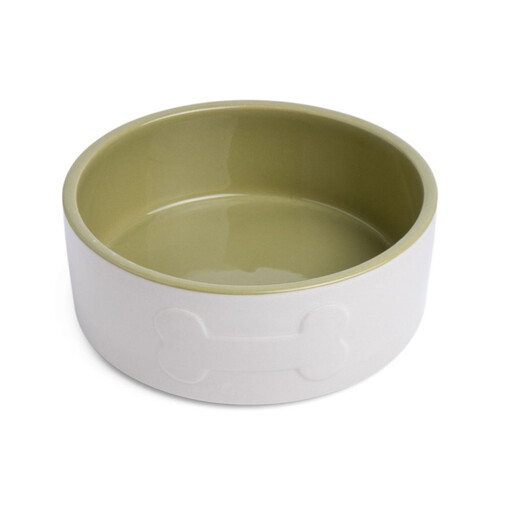
Why This Fits Their Persona: This two-bowl ceramic set suits owners who want coordinated pet food and water bowls with a heavier, more substantial design for the home.
The 20cm diameter and heavyweight ceramic construction are clearly specified, helping you assess stability and space before ordering.
Two-bowl set; dishwasher- and microwave-safe according to the product details; suitable for dogs, cats and small animals.
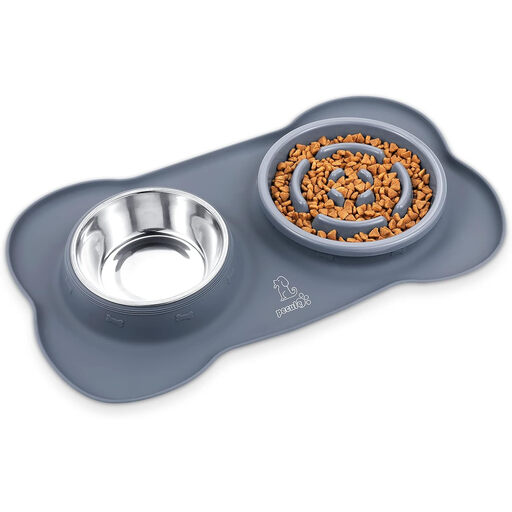
Why This Fits Their Persona: Designed for small dogs and cats that eat quickly, this set combines feeding, water and floor protection for indoor use, travel or compact storage.
The textured bowl is intended to slow access to food, while the integrated silicone mat helps limit movement and scattered spills.
400ml slow feeder and water bowl; food-grade silicone and 201 stainless steel; foldable mat; both bowls are dishwasher safe.
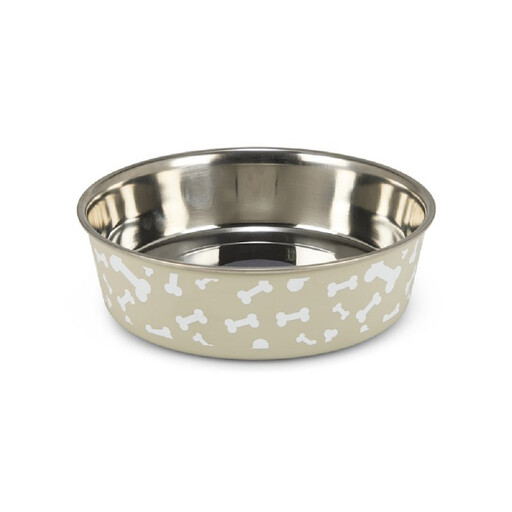
Why This Fits Their Persona: Its 21cm diameter provides more room for larger portions or water, making it a practical option for larger-breed dogs and busy households.
The stated size prevents guesswork, while the rubber base ring addresses the common problem of a bowl moving across the floor.
Polished stainless steel interior; resin outer layer; dishwasher-safe; suitable for food or water.
We have compiled a complete, real-time list of products that fully satisfy these strict selection criteria and UK safety regulations.
Food bowls should generally be cleaned after use, particularly when serving wet food. Water bowls also need regular washing and fresh water replacement, as residue can build up around the base and inner surface.
Both can be practical when correctly maintained. Ceramic is heavier and may be less likely to move, but it needs regular inspection for chips or cracks. Stainless steel has a smooth interior and is often convenient to wash. The construction, size and cleaning instructions matter as much as the material.
No. Slow feeder bowls are designed for pets that eat rapidly, but the pattern and depth must suit the animal’s size and eating style. Introduce the bowl gradually, supervise use and monitor whether your pet can access food comfortably.