
24/7 Customer Support

Free returns

Same-day & Next-day Delivery

Quality Guaranteed

Unlock Your Welcome Offers: FREE Delivery | Up to 80% OFF | Free 30-day JoyPlus trial
Download the APP
Choosing between pet bowls and water fountains may seem straightforward, but the wrong design can create daily problems. A bowl that slides across tiled flooring, a fountain with expensive replacement filters or a slow feeder that is too difficult to clean can quickly become a frustrating purchase.
For UK households, the most useful approach is to assess the product’s capacity, materials, stability and cleaning requirements before considering appearance or extra features.
Decorative cat bowls can look appealing, but lightweight products may move when a cat paws at food or water. This is particularly noticeable on smooth kitchen floors. Look for a non-slip cat bowl with a silicone or rubber base, and check that the base makes full contact with the floor.
For dogs, stability is equally important. A wider base, heavier construction or an elevated frame can reduce tipping and spilling. However, an elevated pet bowl should still suit the dog’s size and posture rather than being selected solely because it looks more substantial.
A pet water fountain does not remove the need for regular cleaning. Pumps, filters and water channels can collect food particles, hair and residue. Before buying, check:
A large reservoir may reduce refill frequency, but it can also take up considerable floor space. A smaller wireless pet water fountain may be easier to position, although it may require more frequent filling.
A slow feeder bowl is designed with ridges, sections or raised patterns that make food harder to consume quickly. That can be useful for fast eaters, but the pattern should not be so deep that a small cat, kitten or short-muzzled dog struggles to reach food.
Always supervise initial use and inspect the feeder for chewing damage. A slow feeder is a feeding accessory, not a toy, and it should be replaced if it becomes cracked, split or heavily worn.
Choose capacity according to the pet’s normal portion size and whether the bowl is used for food or water. A 250ml bowl can be suitable for many cats, while dogs and multi-pet households may need larger bowls or separate feeding stations.
For fountains, a 2-litre capacity may suit one or two smaller pets, whereas a 10-litre model is more appropriate for households seeking fewer refills. Remember that usable capacity may be lower than the advertised maximum because the unit needs to remain below its fill line.
Common materials include food-grade PP plastic, silicone, stainless steel, ceramic and stoneware. Check the product description for clear material information and avoid damaged surfaces that may harbour residue.
A ceramic cat bowl or stoneware bowl can feel substantial, but it may chip if dropped. Plastic is lightweight and practical, while stainless steel is often chosen for its smooth, washable surface. If a product is described as BPA-free or food-grade, treat this as a product specification rather than a guarantee of suitability for every pet.
A dishwasher-safe pet bowl can reduce daily cleaning time, but check whether this applies to the whole product or only a removable bowl. For example, some products are top-rack safe but should not be exposed to microwave, oven or boiling-water temperatures.
With an automatic pet water dispenser, unplug the unit before filling or cleaning. Keep electrical components dry, use the supplied adapter and follow the manufacturer’s filter replacement instructions. These basic precautions are particularly important in busy kitchens and homes with curious puppies or kittens.
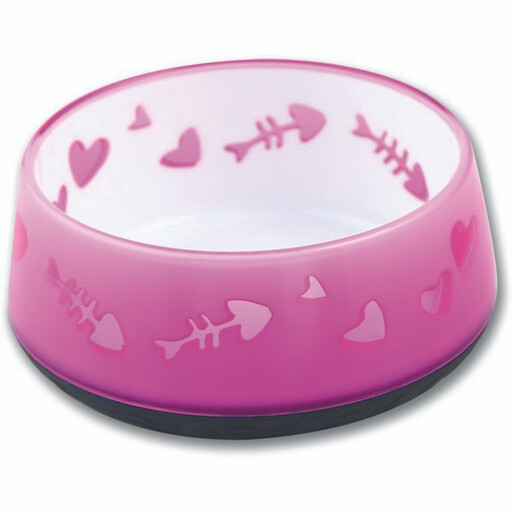
Why This Fits Their Persona: This 250ml cat bowl offers a straightforward option for everyday food or water, making it suitable for new cat owners, kittens and smaller feeding areas in UK homes.
Its silicone non-slip base is designed to reduce sliding and tipping on smooth floors, while the shallow profile avoids an unnecessarily deep eating area.
Food-grade PP plastic and silicone; smooth surfaces; top-rack dishwasher cleaning is listed by the manufacturer.

Why This Fits Their Persona: The ceramic top and two-litre format suit owners who want a more considered indoor drinking station for cats or dogs without a large reservoir.
The listing specifies a wireless pump for easier disassembly and cleaning, while the stated two-litre capacity makes the refill requirement clear.
Ceramic and ABS construction; dual water-flow modes; stated operating noise below 20dB; integrated UVC pump feature.
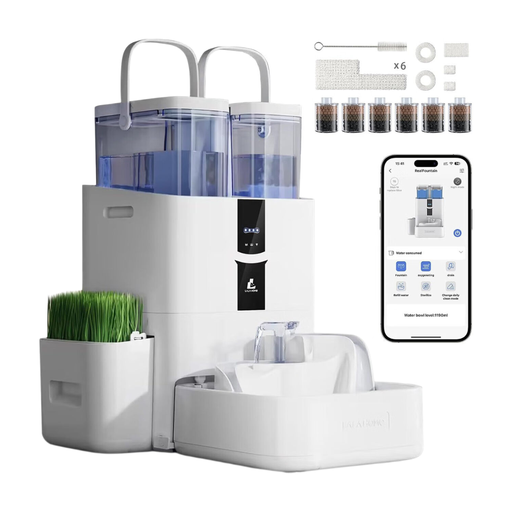
Why This Fits Their Persona: The 10-litre dual-reservoir design is aimed at multi-pet households or owners who need a larger automatic pet water dispenser for indoor use.
The product information states filter and cleaning intervals, helping buyers budget for maintenance rather than treating a large reservoir as maintenance-free.
10-litre dual reservoirs; five-stage filtration; optional app and Wi-Fi control; operates without Wi-Fi according to the listing.

Why This Fits Their Persona: A four-level adjustable dog bowl stand can be adapted as a puppy grows or used across different-sized cats and dogs in the same home.
The height settings are clearly stated as 10cm, 23cm, 27cm and 31cm, so shoppers can compare the stand with their pet’s size before ordering.
Slow feeder and stainless-steel bowl combination; four height levels; foldable stand; listed dimensions of 42 × 27 × 10cm.
We have compiled a complete, real-time list of products that fully satisfy these strict selection criteria and UK safety regulations.
They can be useful for owners whose cats prefer moving water or for households that want a circulating drinking option. They still require regular water changes, pump cleaning and filter replacement. Compare the running cost of replacement filters before buying.
Food bowls should generally be washed after use, particularly when serving wet food. Water bowls need fresh water regularly and should be cleaned frequently to remove slime, hair and residue. Dishwasher-safe designs may make this routine easier.
No. The correct height depends on the dog’s size, build and eating position. Measure the stand’s available settings and look for a stable base. If your dog shows difficulty using an elevated bowl, return to a floor-level design and seek veterinary advice where feeding posture is a concern.