
24/7 Customer Support

Free returns

Same-day & Next-day Delivery

Quality Guaranteed

Unlock Your Welcome Offers: FREE Delivery | Up to 80% OFF | Free 30-day JoyPlus trial
Download the APP
A pet carrier for cats and small dogs needs to do more than look attractive online. It should keep your pet secure, provide enough ventilation and support the type of travel you actually plan to do, whether that means a short vet visit, a car journey, a train trip or a weekend away.
Many buyers discover problems only after purchase. A carrier may be described as “spacious” but offer too little usable floor area, while a lightweight dog carrier bag may lack structure. Other designs have plenty of mesh but weak zips, uncomfortable straps or no reliable way to secure the pet inside.
This guide explains the specifications worth checking and highlights suitable options for different UK pet-owner profiles.
A stated limit such as “up to 6 kg” does not guarantee a comfortable fit. Cats and dogs need enough room to stand, turn around and lie down naturally. Body length, shoulder height and temperament matter as much as weight.
A carrier for cats up to 6 kg may suit a compact cat but feel restrictive for a long-bodied pet. Always compare your pet’s measurements with the internal dimensions supplied by the seller.
Large mesh panels can improve airflow, but a carrier with no shaded or covered section may leave a nervous cat feeling exposed. Conversely, a fully enclosed capsule can become warm if ventilation is inadequate.
For summer journeys, look for multiple ventilation panels, clear airflow routes and sensible use instructions. Never leave a pet unattended in a closed carrier, particularly in a parked car or direct sunlight.
Locking zips and a safety strap are useful, but they still need to be used correctly. A determined pet may push against a poorly closed opening or work through an incorrectly adjusted harness connection.
An escape-proof pet carrier should ideally combine secure closures, an internal safety strap and a stable structure. Check every zip and fastening before leaving home.
Start by measuring your pet from nose to the base of the tail, then measure standing height from the floor to the top of the head or ears, depending on how the carrier is designed. Compare these measurements with the product’s internal space, not only its external dimensions.
For smaller pets, a compact cat carrier backpack or small dog travel carrier may be easier to carry on public transport. For medium-sized pets, an expandable pet backpack can provide additional room during stops or rest periods.
Weight capacity should never be exceeded. For example:
Look for breathable mesh on more than one side, especially when the carrier will be worn as a backpack. A removable pad or washable liner makes regular cleaning more practical after muddy walks or travel accidents.
A hard base panel can help prevent the floor from sagging. Soft lining may improve comfort, but it should remain removable or wipeable. For longer journeys, consider whether the design allows your pet to change position rather than simply sit upright.
For car journeys, a pet carrier for car travel should have a way to prevent sliding or tipping. Tethers, shoulder straps or suitable restraint points may help, but check the carrier’s instructions and your vehicle’s requirements.
A portable dog crate with a metal frame can provide more room for temporary accommodation, camping or car use. It is different from a handbag-style carrier and may not be suitable for carrying over long distances.
If you need an airline pet carrier, check the airline’s current cabin or hold requirements before buying. Airlines can specify maximum dimensions, ventilation rules and whether the carrier must fit beneath the seat. A product described for travel is not automatically accepted by every airline.
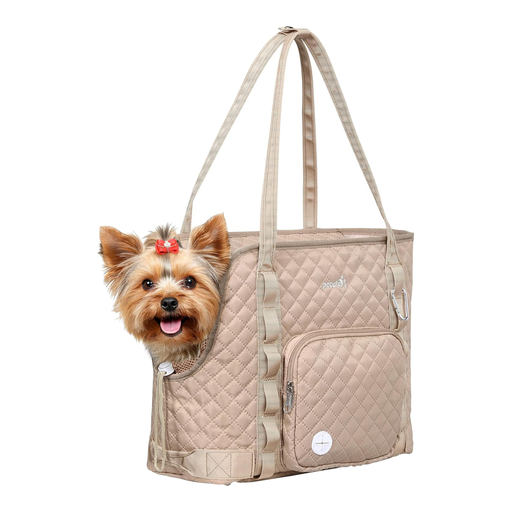
Why This Fits Their Persona: A lightweight choice for owners making short trips with a cat or small dog weighing 2.5–5 kg, including vet visits and everyday errands.
Its full-length zip closure works alongside an integrated safety strap, while the removable base panel avoids the sagging often found in unstructured bags.
Weighs 0.7 kg and includes two storage compartments, with a rear pocket designed to attach to suitcase handles.
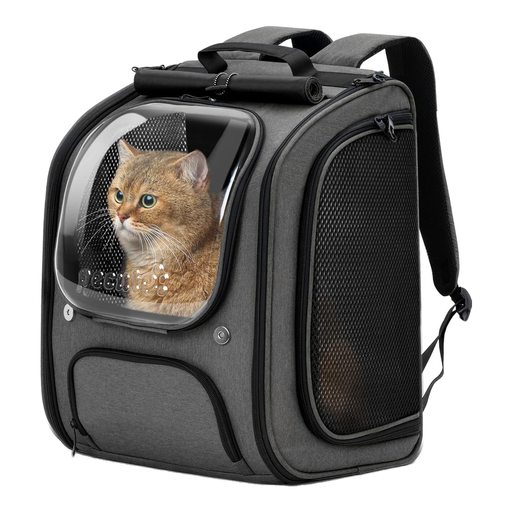
Why This Fits Their Persona: Suitable for owners wanting a structured cat carrier backpack for urban journeys, with a fit for cats under 6 kg and small dogs under 5 kg.
Locking zips, a safety harness, reinforced construction and double-sided mesh address common concerns about escapes, collapse and restricted airflow.
The 42 x 32 x 26 cm design has a removable machine-washable pad, storage pockets and an adjustable waterproof sunshade.
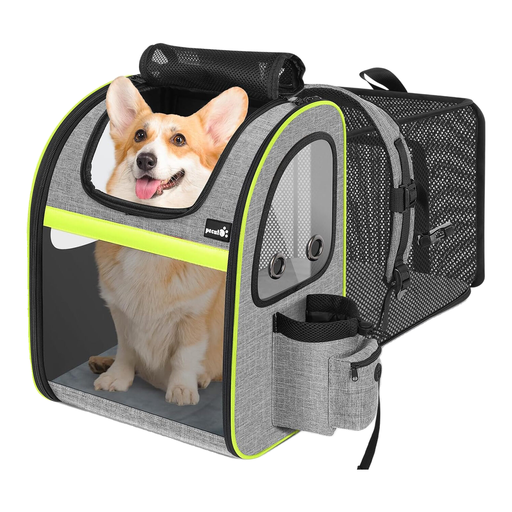
Why This Fits Their Persona: Designed for hiking, longer outings and medium-sized pets, accommodating cats up to 11 kg or dogs up to 10 kg within the stated size limits.
The expandable rear panel adds resting space and airflow, while four entrances, lockable zip buckles and an integrated safety lead support controlled loading and transport.
Widened shoulder straps, a waist belt, breathable mesh and side storage make it practical for carrying heavier pets outdoors.
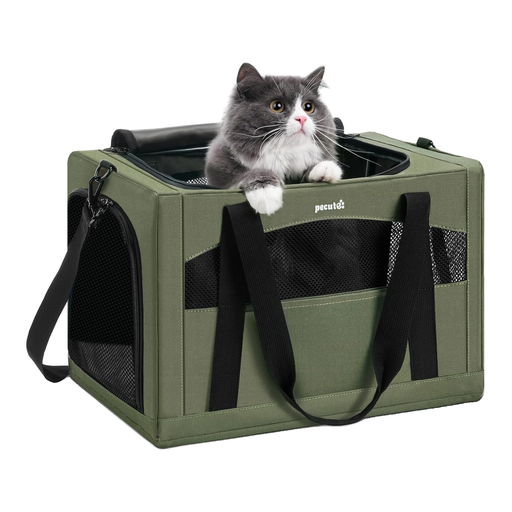
Why This Fits Their Persona: A structured option for cats and small dogs up to 5 kg, particularly useful for short car journeys and daily transport.
A 5 mm steel wire frame, fastening buckles, lockable zips and an internal safety strap help retain the carrier’s shape and limit escapes.
The design uses both a tether and shoulder strap for stabilisation, with breathable scratch-resistant nylon mesh and a 16.9-inch length.
For owners needing a roomier foldable pet carrier rather than a shoulder bag, the Feandrea Foldable Pet Carrier Bag Dog Travel Crate measures 60 x 42 x 42 cm and is designed for small to medium-sized dogs weighing 7–11 kg. Its metal frame, mesh windows and removable soft mat make it suitable for home relaxation, camping, vet visits and car travel.
When folded, it is 8 cm thick, which can be useful in a UK flat, boot or storage cupboard. Remove collars, leads and harnesses before placing a dog inside a crate, and do not use any carrier as a substitute for supervised exercise or access to water.
We have compiled a complete, real-time list of products that fully satisfy these strict selection criteria and UK safety regulations.
Measure body length, standing height and weight before ordering. Your pet should have enough room to turn around and lie down without being compressed. Do not select a carrier solely because its advertised weight limit matches your pet.
Yes, but choose a design with stabilising features and follow the manufacturer’s instructions. A tether, shoulder strap or suitable restraint point may reduce movement, but the carrier must still be positioned securely. Never leave a pet unattended in a parked vehicle.
Lifespan depends on frequency of use, scratching, chewing, cleaning and storage. Regularly inspect mesh, stitching, frames, base panels, straps and zip locks. Replace the carrier if any part no longer closes securely or the structure becomes unstable.