
24/7 Customer Support

Free returns

Same-day & Next-day Delivery

Quality Guaranteed

Unlock Your Welcome Offers: FREE Delivery | Up to 80% OFF | Free 30-day JoyPlus trial
Download the APP
As a pet owner in the UK, you want to share your life and adventures with your furry companion. Whether it’s a trip to the vet, a hike in the Peak District, or simply navigating the city, a reliable pet carrier is essential. However, the market is flooded with options, and it's easy to fall for marketing hype that leads to a poor purchase. A flimsy carrier isn't just an inconvenience; it can be a safety risk for your beloved pet.
This guide, from your Joybuy Product Recommendation Officer, cuts through the clutter. We'll highlight the common design flaws that cause frustration and explain the key features you must check before you buy, ensuring your pet travels safely and comfortably.
Many carriers look good online but fail in practice. Here are the three most common issues UK pet owners face:
To make a smart choice, focus on the functional aspects that guarantee safety and comfort. Here are the non-negotiable parameters to analyse.
The carrier's primary job is to keep your pet secure. Look for durable, scratch-resistant fabrics like 300D Oxford cloth or high-density nylon. The frame should be robust enough to prevent collapsing. For larger or more active pets, a dog travel crate with a steel wire frame offers superior stability.
Crucially, inspect the safety features:
A truly breathable pet carrier is essential for your pet's well-being. Prioritise designs with multi-sided mesh panels. Unlike solid plastic, mesh allows for continuous cross-ventilation, keeping your pet cool and reducing anxiety. This is a critical feature for any type of carrier, from a cat backpack to a larger soft-sided crate. Some models even offer roll-up covers, giving you the flexibility to provide privacy or protection from the elements when needed.
A carrier should work for you as well as your pet. If you’re considering a dog carrier backpack for hiking, look for wide, padded shoulder straps and adjustable chest and waist belts to distribute weight evenly and reduce strain.
For your pet's comfort, an expandable pet carrier is an excellent feature. These designs have a zipped compartment that folds out, giving your pet significantly more room to stretch and relax once you've stopped moving. Also, consider practical additions like storage pockets for treats, water and waste bags, which are common in a quality pet travel bag or small dog carrier purse.
We've matched some carrier types to different UK lifestyles. These selections are based on their ability to solve the common problems discussed above.
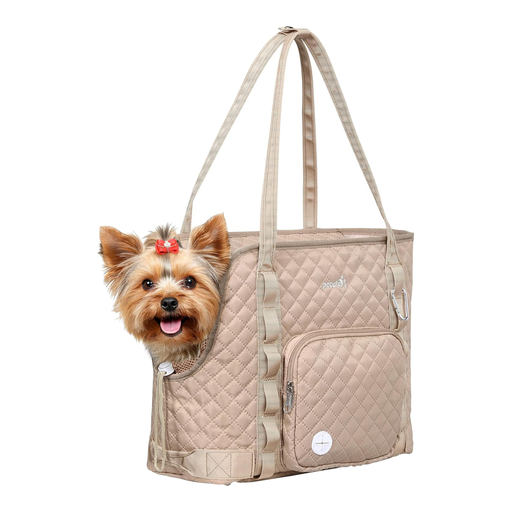
Why This Fits Their Persona: Ideal for the style-conscious owner of a small dog or cat. Its lightweight design (0.7 kg) and chic purse-like appearance make it perfect for trips to the cafe, vet visits or navigating public transport without the bulk of a traditional carrier. The rear pocket is designed to slide over a suitcase handle, making it a great travel companion.
It counters the "Great Escape" weakness with an integrated safety strap and a full-length zipper closure. The removable hard bottom panel prevents the sagging common in other tote-style carriers.
Combines style with practicality. Features two large storage pockets for essentials and protective foot pads to keep the base clean.
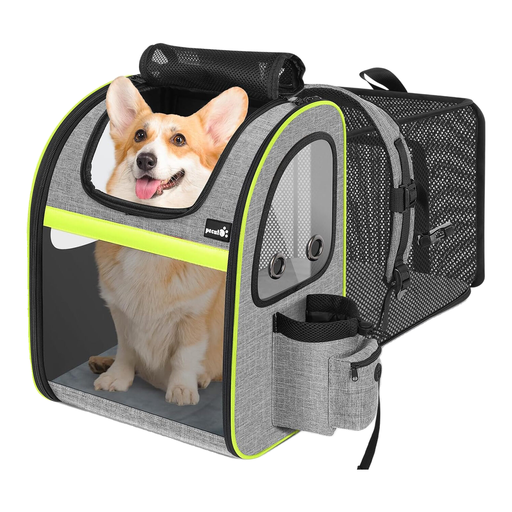
Why This Fits Their Persona: This is a proper dog carrier for hiking and longer excursions. The ergonomic design with widened shoulder straps and an adjustable waist belt makes carrying a pet up to 10-11 kg more comfortable. It's built for the outdoors with durable, water-resistant Oxford fabric.
It directly solves the "Greenhouse Effect" with four mesh entry points and an expandable back panel that dramatically increases airflow and space, preventing overheating and reducing stress during rest stops.
The expandable back is the standout feature, providing a comfortable resting area for your pet. It also includes lockable zippers and an internal safety strap for security on the trail.
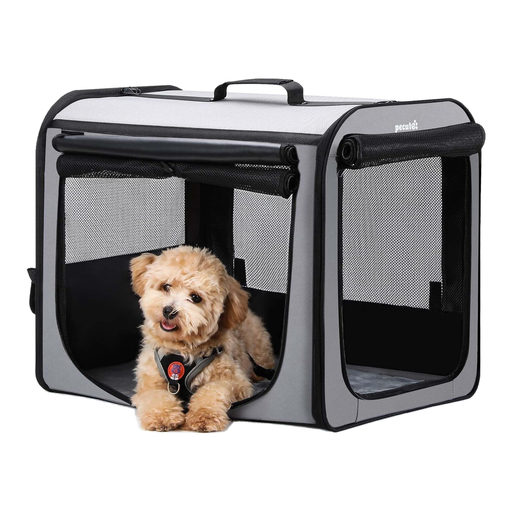
Why This Fits Their Persona: This versatile dog travel crate is for those who frequently travel by car or need a portable "safe space" for their pet. It's much lighter than a traditional metal crate but offers excellent stability thanks to its steel frame and honeycomb base. It folds down for easy storage, making it ideal for car boots or holiday homes.
It solves the "One-Size-Fits-None" problem by providing a spacious, stable structure that won't sag. The generous internal dimensions (61x45x52 cm) give dogs up to 15 kg ample room to stand and turn around comfortably.
Its hybrid construction offers the stability of a hard crate with the portability of a soft carrier. Features include a three-sided shade screen for privacy and four-sided mesh for ventilation.
We have compiled a complete, real-time list of products that fully satisfy these strict selection criteria and UK safety regulations.
Measure your pet's height (from floor to the top of their head/ears) and length (from the base of their neck to the base of their tail). The carrier's interior should be a few inches taller and longer than your pet's measurements to allow them to stand up, turn around and lie down comfortably. Always check the product's internal dimensions and maximum weight capacity, and choose the one that provides a snug but not restrictive fit.
When used correctly for appropriate durations, a well-designed backpack carrier is generally safe. Look for models with a rigid, flat base that provides proper support and prevents the carrier from sagging. This ensures your dog can sit or lie in a natural position. For the owner, ergonomic straps are key to prevent you from altering your posture, which in turn keeps the carrier stable for your pet. They are best suited for small to medium-sized dogs and for activities like hiking or commuting, rather than for all-day confinement.
Rules vary by operator, but generally, pets are allowed on most UK public transport as long as they are kept under control. On National Rail services, dogs must be on a lead or in an enclosed pet carrier. On the London Underground, they must be carried on an escalator and be in a carrier or on a lead. For buses, it is often at the driver's discretion. Always check the specific policy of the transport provider (e.g., TFL, National Rail or your local bus company) before you travel to ensure you comply with their requirements.