
24/7 Customer Support

Free returns

Same-day & Next-day Delivery

Quality Guaranteed

Unlock Your Welcome Offers: FREE Delivery | Up to 80% OFF | Free 30-day JoyPlus trial
Download the APP
For many of us in the UK, our small dogs and cats are cherished members of the family. We want them by our sides, whether we're running errands, visiting the vet or heading out on a weekend adventure. Finding a pet carrier that is safe, comfortable for them and practical for you can be a challenge. The right carrier should provide security and peace of mind, not add to your travel stress.
As a Joybuy Product Recommendation Officer, my role is to help you navigate the options. This guide offers practical advice and highlights a few carefully selected carriers to help you find a suitable match for your pet and your lifestyle.
Before looking at specific models, it's helpful to understand the key features that make a carrier a worthwhile investment. Consider these points to narrow down your search.
A carrier's primary job is to keep your pet safe. Look for a secure dog carrier or cat carrier with a sturdy frame that won't collapse. Key safety features include lockable zippers to prevent clever paws from staging an escape and an internal safety strap or tether that clips to your pet's harness. A solid, reinforced base provides stability and prevents the carrier from sagging, which can be stressful for an animal.
How you plan to use the carrier will determine the most suitable style.
Your pet's comfort is paramount. Ensure the carrier has ample ventilation, typically through strong, scratch-resistant mesh panels. Good airflow prevents overheating and allows your pet to see their surroundings, which can reduce anxiety. Also, consider the carrier's own weight. A lightweight cat carrier is much easier to manage, especially if you have a long walk from the car park to the vet. Always measure your pet and compare it to the carrier's internal dimensions, ensuring they have enough room to stand up and turn around.
Based on features that address safety, versatility and comfort, here are our recommendations for small pet owners.
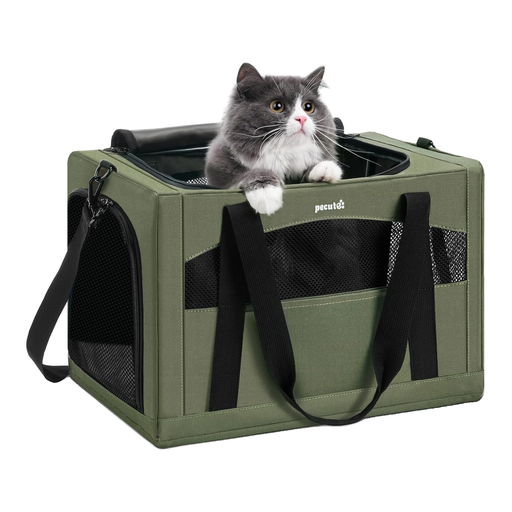
Why It Stands Out: This carrier's main strength is its robust and secure design. It uses a 5mm thick steel wire frame and a reinforced honeycomb panel to create a rigid, non-collapsible space, offering excellent protection for your pet.
Pros:
Who is it for? This is an excellent choice for pet owners whose top priority is safety and structural integrity, particularly for frequent car journeys or vet visits. It is well-suited for cats and small dogs up to 5 kg.
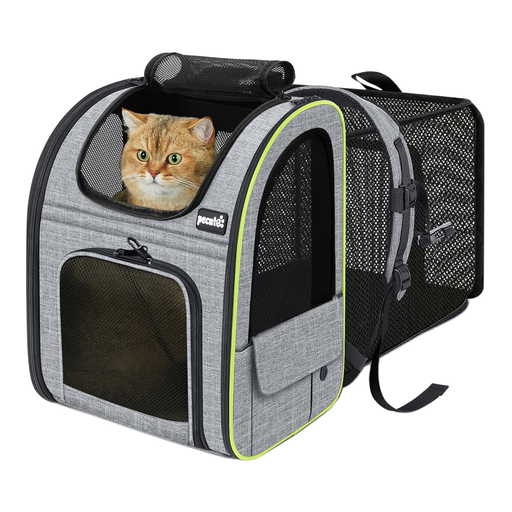
Why It Stands Out: This expandable pet backpack offers impressive versatility. The back panel unfolds to create a spacious, mesh-enclosed area, giving your pet significantly more room to stretch out and relax once you've reached your destination.
Pros:
Who is it for? Active owners who enjoy bringing their pets on hikes, long journeys or outdoor excursions. It’s designed for pets up to 8 kg and provides a comfortable solution for both pet and owner.
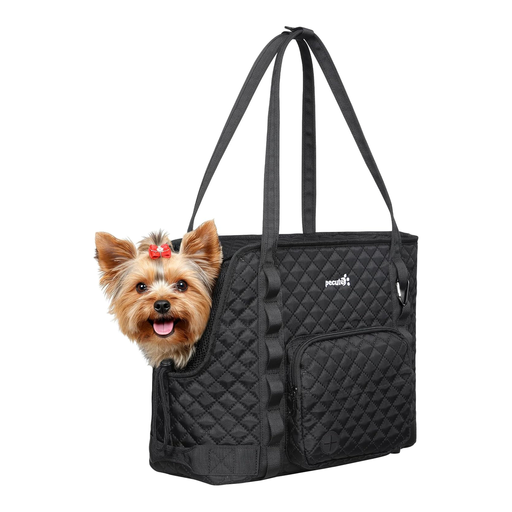
Why It Stands Out: This dog purse carrier combines a chic, understated design with practical features. Weighing just 0.7 kg, it’s an exceptionally lightweight option for quick trips around town without compromising on your pet's safety.
Pros:
Who is it for? Style-conscious owners of very small dogs or cats (up to 5 kg) who need a fashionable and functional carrier for short, everyday outings.
The carriers highlighted here are designed for specific uses, but the world of pet transport is vast. If you're searching for a different design, such as a classic tote or a simple shoulder bag, you can explore a wider selection of options.
Discover more styles in our Cat tote bag collection.
1. How do I know if a pet carrier is the right size for my pet? To ensure a good fit, measure your pet's length from their neck to the base of their tail, and their height from the floor to the top of their shoulders. A suitable carrier should be a few centimetres taller and longer than these measurements to allow them to stand, turn around and lie down comfortably. Always check the manufacturer's recommended weight and dimension limits.
2. What makes a pet carrier suitable for car travel? A good car seat pet carrier includes features to secure it firmly inside the vehicle. Look for carriers with built-in loops that a seatbelt can be threaded through or dedicated tethers that attach to the car's seat anchors. A rigid or semi-rigid structure is also beneficial, as it helps protect your pet during sudden stops or turns.
3. Are there airline approved pet carriers? The term airline approved pet carrier can be a generalisation, as every airline sets its own specific rules for in-cabin pet travel regarding size, weight and construction. Before you fly, it is essential to contact your airline directly to confirm their current requirements. Generally, carriers that are soft-sided, well-ventilated, have secure zippers and fit under the seat in front of you are more likely to be accepted, but you must always verify with the airline first.