
24/7 Customer Support

Free returns

Same-day & Next-day Delivery

Quality Guaranteed

Unlock Your Welcome Offers: FREE Delivery | Up to 80% OFF | Free 30-day JoyPlus trial
Download the APP
As a Joybuy Product Recommendation Officer, my role is to help you navigate the crowded market of pet accessories. When it comes to choosing a new pet carrier, it’s easy to be swayed by clever marketing or a stylish design, only to find the product is impractical or, worse, unsafe for your companion. Many UK pet owners find their purchase gathers dust after only a few uses. This guide will help you identify the crucial features that matter and avoid the common pitfalls.
Before you add any carrier to your basket, be aware of these frequent issues that lead to buyer's remorse:
To make a smart purchase, focus on these non-negotiable parameters. They are the difference between a carrier your pet tolerates and one they feel secure in.
The carrier's structure is its most important safety feature. For a soft-sided dog carrier or cat carrier, look for a sturdy internal frame, often made of steel wire, that prevents the sides from sagging. The base should be rigid and reinforced, often with a PVC or PP honeycomb board, to provide a stable floor for your pet. This is especially critical for a pet carrier for car travel, where a solid structure offers better protection. A foldable pet crate should lock firmly into place, with no wobble or give in its construction.
Proper airflow is essential for your pet's health and comfort. A high-quality pet travel carrier will feature large mesh panels on at least three sides. This not only ensures excellent ventilation but also allows your pet to see you and their surroundings, which can significantly reduce travel anxiety. Look for durable, claw-resistant nylon mesh that won’t tear if your pet gets restless.
Your pet's security is paramount. Check for lockable zips – these usually have interlocking loops that can be secured with a small clip or buckle, preventing clever paws from prying them open. Additionally, a built-in internal safety tether is a must-have. This short leash clips onto your pet's harness (never their collar) to prevent them from bolting out the moment you open the carrier.
Instead of a generic list, we've matched specific carriers to the needs of different UK pet owners.
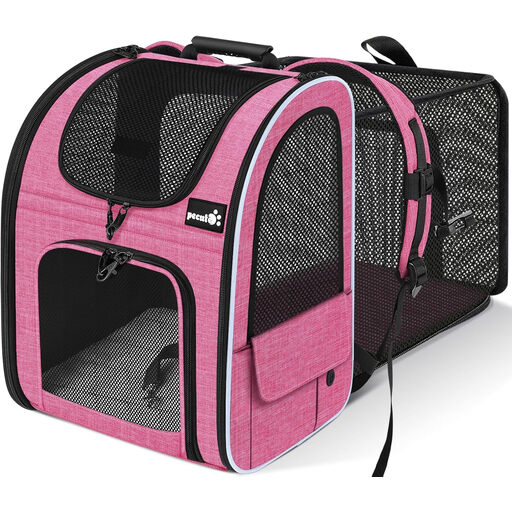
Why This Fits Their Persona: Ideal for pet owners who enjoy hiking or long days out. This dog backpack is designed for comfort over several hours, with ergonomic straps that distribute weight effectively, while the expandable back gives your pet room to stretch during rest stops.
It directly counters the "poor ventilation" trap. The four mesh windows and unique expandable back panel dramatically increase airflow and space, preventing overheating on active days.
The combination of an expandable cat backpack design for pet comfort and an ergonomic suspension system for owner comfort is its standout feature. It also includes locking zips and an internal tether.
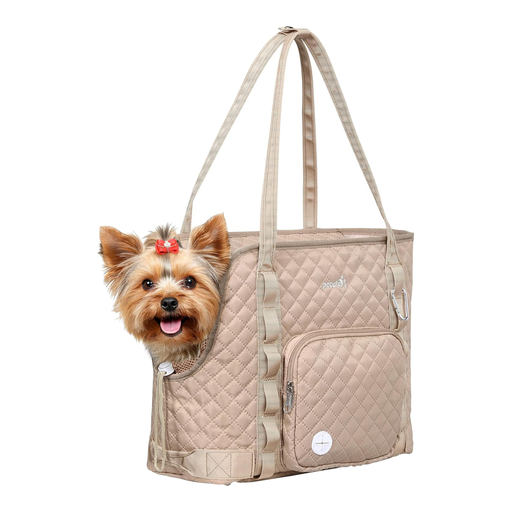
Why This Fits Their Persona: Perfect for the city dweller with a small dog carrier need. It's discreet, extremely lightweight (0.7kg) and has pockets for your phone and keys, making it ideal for quick trips to the vet, hopping on the bus or running errands.
This carrier avoids the "style over safety" trap. While it has a fashionable look, it includes a non-negotiable internal safety strap and a full-length zip, plus a removable hard bottom panel for structural support.
Its key advantage is its blend of portability and practicality. The lightweight dog carrier design is complemented by a smart rear pocket that slides over a suitcase handle, making it a versatile travel companion.
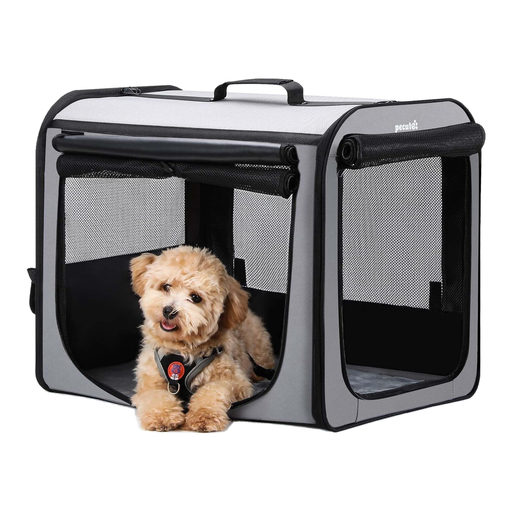
Why This Fits Their Persona: This is a versatile dog travel crate for those who frequently travel by car. It's more robust than a soft tote but lighter and easier to manage than a metal crate. It provides a secure space in the car and doubles as a familiar den at your destination.
It avoids the "one-size-fits-all" trap by being specifically designed for medium-sized dogs (up to 15kg) and car travel. The strong steel frame and honeycomb base provide stability that generic carriers lack.
Its versatility is the main benefit. It functions as a secure pet carrier for car use, an indoor pet house and a foldable pet crate for camping, offering excellent value and convenience.
We have compiled a complete, real-time list of products that fully satisfy these strict selection criteria and UK safety regulations.
1. How do I get my pet comfortable with a new carrier? Start by leaving the new carrier open in a room where your pet relaxes. Place treats, familiar toys or a soft blanket inside to encourage them to explore it on their own terms. Once they enter willingly, praise them. Gradually progress to closing the door for a few seconds, then longer periods. Finally, practice short trips around the house before venturing outside. Patience is key.
2. What are the general rules for taking a pet on public transport in the UK? Rules vary by operator, so always check beforehand. On National Rail, up to two domestic pets per passenger can travel for free, provided they are kept in an enclosed carrier that allows them to stand and lie down in. On the London Underground, pets must be carried in an enclosed carrier on moving escalators. For buses, policies are at the discretion of the driver, but a secure carrier is almost always required.
3. How should I clean and maintain my pet carrier? Most soft-sided carriers are not fully machine washable. Typically, you can remove the interior padded base, which is often machine washable. For the main body of the carrier, spot-clean with a damp cloth and a mild, pet-safe detergent. Always ensure the carrier is completely dry before storing it to prevent mould or mildew. Regularly inspect all zips, seams and straps for any signs of wear and tear.