
24/7 Customer Support

Free returns

Same-day & Next-day Delivery

Quality Guaranteed

Unlock Your Welcome Offers: FREE Delivery | Up to 80% OFF | Free 30-day JoyPlus trial
Download the APP
A suitable pet carrier for small dogs and cats should make transport calmer, safer and more manageable for both you and your pet. Whether you need a small dog carrier for the vet, a cat carrier for public transport, or a portable dog crate for car trips, the right choice depends on more than colour and appearance.
Several common buying traps can leave UK pet owners with an unsuitable carrier:
Take your pet’s length from nose to the base of the tail, standing height and current weight. The carrier should allow them to sit, turn around and lie down without being compressed. Allowing extra room is useful, but an oversized carrier can be difficult to carry and may offer less stability during movement.
For a pet carrier up to 8 kg, check the internal dimensions and the manufacturer’s recommended animal size. A pet’s body shape also matters: a long-bodied cat or dog may need more floor length, while a taller pet needs additional headroom.
A soft carrier should retain its shape when lifted. Look for a reinforced base, stable frame or internal board that prevents sagging. A removable, washable pad is practical for managing fur, dirt and occasional accidents.
For larger small dogs, a framed foldable pet carrier can provide more usable space than a handbag-style design. A portable dog crate with a metal frame may be appropriate for car travel, camping or temporary rest areas, but it is not a substitute for a properly secured vehicle restraint.
A breathable pet carrier should have mesh panels that remain open when the carrier is placed against your body or inside a vehicle. Multiple entrances can help with loading a nervous cat or small dog, while privacy panels may be useful in busy stations.
Look for:
Never attach an internal safety strap to a collar if the product instructions specify harness use. Also remove collars, leads and loose straps when using a crate that is not designed for tethering.
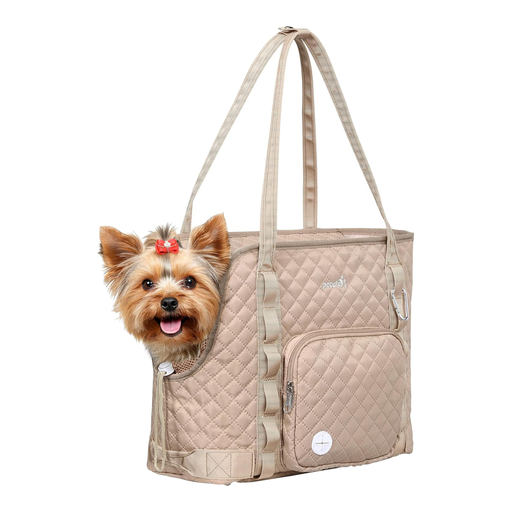
Why This Fits Their Persona: A practical choice for short vet visits, taxis and public transport with pets weighing 2.5–5 kg. Its 0.7 kg carrier weight is easier to manage for occasional users.
The full-length zip and built-in safety strap address common escape points. The removable base panel also makes routine cleaning more manageable.
0.7 kg construction; two storage compartments; rear pocket designed to attach to suitcase handles.
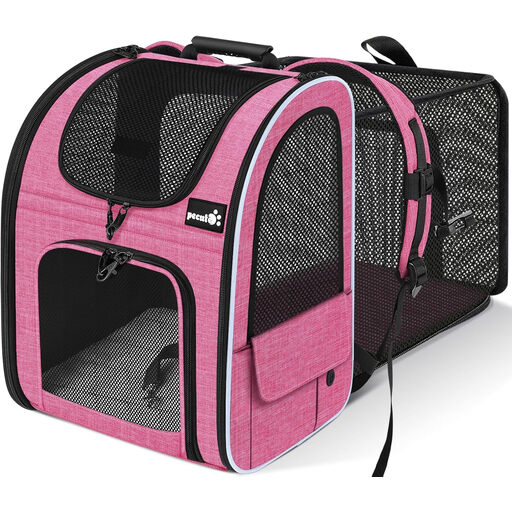
Why This Fits Their Persona: Suited to owners who regularly walk, commute or travel outdoors with a cat or small dog up to 8 kg and want backpack-style carrying with additional interior space.
The expandable panel helps avoid the cramped-interior problem, while locking zips and a retractable safety tether add practical escape control.
Expandable back panel; four mesh windows; padded shoulder straps with stabilisation adjustments.

Why This Fits Their Persona: Designed for small to medium dogs weighing 7–11 kg, making it suitable for car travel, camping, home use and longer transport where a handbag carrier may be too compact.
The metal frame and PVC base board reduce collapse concerns, while the 60 x 42 x 42 cm internal format gives larger small dogs more usable room.
Folds to 8 cm thick; three mesh windows; removable pad and side storage pocket.

Why This Fits Their Persona: A flexible option for commuters and travellers carrying cats or small dogs up to 8 kg, particularly where hands-free transport and suitcase connection are useful.
All-side mesh supports airflow and visibility, while metal locking zips, a buckle and an internal harness attachment help address escape risks.
17.7 x 13.7 x 12.6 inch dimensions; foldable structure; luggage trolley sleeve and removable machine-washable pad.
We have compiled a complete, real-time list of products that fully satisfy these strict selection criteria and UK safety regulations.
Before the first journey, leave the carrier open at home with familiar bedding inside. Short practice sessions can help your pet become accustomed to the carrier before a vet appointment or train journey.
For safe use:
An airline-style pet carrier must meet the specific airline’s current requirements for dimensions, ventilation and containment. Confirm acceptance directly with the airline before booking.
Measure length, height and weight rather than relying on the phrase “small”. Your pet should be able to stand or sit naturally, turn around and lie down. Compare these measurements with the carrier’s internal dimensions and stated load limit.
Yes, provided the carrier is suitable for your pet and can be stabilised correctly. Use a vehicle tether or seat-belt-compatible attachment where supplied, place the carrier securely and prevent it from moving around. Do not allow a loose carrier to slide across the vehicle.
Service life depends on frequency of use, pet behaviour, cleaning and storage. Regularly check the frame, base, mesh, seams and zip locks. Replace the carrier if it no longer holds its shape, has damaged ventilation panels or shows weakened safety attachments.