
24/7 Customer Support

Free returns

Same-day & Next-day Delivery

Quality Guaranteed

Unlock Your Welcome Offers: FREE Delivery | Up to 80% OFF | Free 30-day JoyPlus trial
Download the APP
A smart automatic pet feeder can make daily routines easier when you work long shifts, travel between UK homes or need more consistent meal times for a cat or small dog. However, a connected dispenser is not automatically suitable for every pet or type of food. The useful features are often found in the details: portion increments, food compatibility, backup power and how easily the bowl and dispensing mechanism can be cleaned.
Before choosing an automatic cat feeder or automatic dog feeder, consider these common buying pitfalls.
Most smart feeders are designed for dry kibble, air-dried or freeze-dried food. Moist or sticky food can obstruct the rotor, spoil inside the hopper and make cleaning more difficult. Always check the permitted food type and maximum kibble diameter before ordering.
A large container may reduce refilling, but it does not guarantee suitable portion control. Check how many meals can be scheduled and how each portion is measured. A feeder offering several small servings may be more practical than one that releases a large quantity at once.
A Wi-Fi pet feeder can be managed remotely, but the app cannot refill an empty hopper, remove a blockage or replace flat batteries. Look for low-food, low-battery and fault notifications, then continue checking the device and your pet’s bowl when you are away.
Confirm the maximum food size in millimetres. For example, some models accept particles up to 12mm, while larger or irregular pieces may jam the outlet. An anti-clogging rotor, self-closing outlet and pet-proof lid can help, but they do not remove the need to use compatible food.
A timed pet food dispenser should also have a stable base and a bowl that sits securely beneath the outlet. This is particularly important for pets that push, paw or attempt to tip feeding equipment.
A programmable pet feeder should match your intended routine. Check:
The PETKIT Fresh Element SOLO, for example, supports up to 10 meals per day, with one to five servings per meal. Each serving is listed as approximately one-tenth of a cup. These figures help you compare the dispenser with your pet’s existing feeding plan, but portion suitability will depend on the food and your pet’s individual requirements.
A stainless steel pet feeder bowl is removable and can be simpler to clean than a permanently attached plastic bowl. Look for clear cleaning instructions and avoid immersing the electronic base in water.
For stored food, a sealed lid, reinforced gasket and desiccant compartment can help limit moisture exposure. Check how often the desiccant needs replacing and whether replacement packs are readily available.
Power is another practical consideration in UK homes. Some devices rely on a mains or USB connection, while others accept batteries as backup. Confirm whether batteries are included, which type is required and whether the feeder continues its schedule during an interruption.
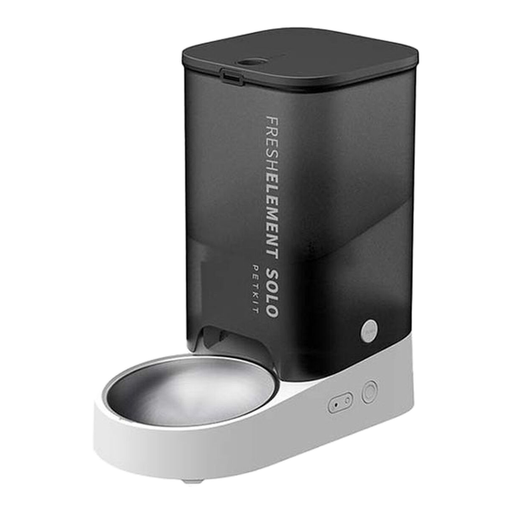
Why This Fits Their Persona: A straightforward option for a cat owner who wants app scheduling without camera features or a dual hopper. Its 3L storage is suited to regular dry-food routines and fewer refills.
The product specifies dry, dehydrated and freeze-dried food up to 12mm, while app alerts cover low food, low battery and desiccant replacement.
Up to 10 meals daily; removable 304 stainless steel bowl; 2.4GHz Wi-Fi and Bluetooth setup.

Why This Fits Their Persona: Suitable for owners who want scheduled feeding alongside remote visual checks and voice interaction while at work or travelling.
The device combines a 1080P camera with food-level monitoring and a specified battery option, rather than relying on app control alone.
Two-way microphone; 20-second voice messages; dual food compartment and 304 stainless steel bowl.
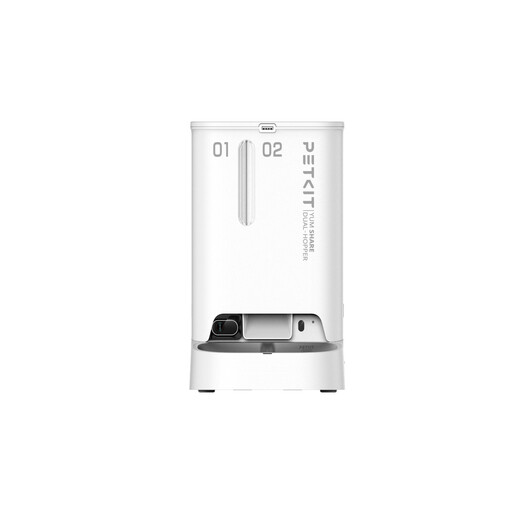
Why This Fits Their Persona: A practical match for households managing two dry food types, multiple pets or longer periods between refills.
The dual-compartment layout separates food types, while the anti-jam rotor and battery backup address common dispensing and outage concerns.
Approximate total capacity of 4.5L; 1080HD camera; mains power with five-AAA battery backup option.
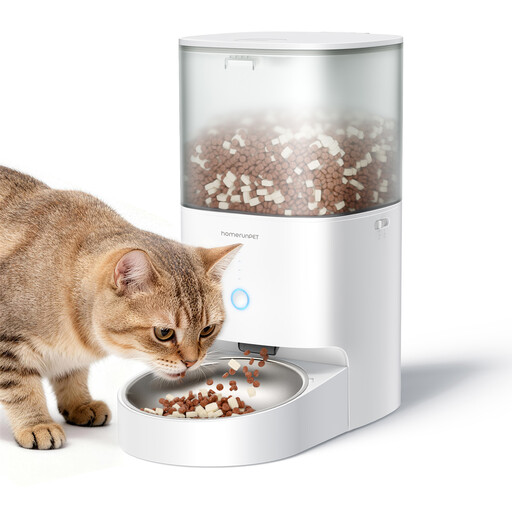
Why This Fits Their Persona: Designed for owners who prioritise longer operating intervals, app reminders and a simple daily feeding setup for cats or dogs.
The listed anti-clogging dispensing chamber and sealed freshness design directly address blockages and exposed food.
4L capacity; app-based feeding records and reminders; stainless steel or ceramic bowl options are listed.
Place the feeder on a level, dry surface near a secure power outlet. Connect the app to the supported 2.4GHz Wi-Fi network, then run several supervised feeding cycles before relying on it while away. Measure the dispensed amount into a kitchen scale or measuring cup so you understand the actual output for your chosen food.
Keep cables away from chewing pets, insert backup batteries where supported and check that the bowl cannot be easily pushed aside. Clean the bowl regularly, wipe the hopper according to the instructions and inspect the outlet for food residue. A smart feeder supports a routine; it should not replace occasional checks by you or another responsible person during holidays.
We have compiled a complete, real-time list of products that fully satisfy these strict selection criteria and UK safety regulations.
Not always. Basic timed feeders can run from an internal clock, but a smart pet feeder with app control generally needs Wi-Fi for remote scheduling, notifications and feeding records. Check whether the model supports 2.4GHz networks, as many connected feeders do not use 5GHz-only connections.
The duration depends on hopper size, food density, portion size and the number of pets. A 3L hopper may hold approximately 1.33kg of food according to the listed product specification, but the actual number of days will vary. Refill and inspect the food regularly rather than relying only on the advertised capacity.
Some can, but portion increments and kibble size vary considerably. Compare the serving settings with your dog’s normal meal quantity, and confirm the feeder is intended for your pet’s size. Many compact dry food dispensers are more suitable for cats and small dogs than for large-breed feeding routines.