
24/7 Customer Support

Free returns

Same-day & Next-day Delivery

Quality Guaranteed

Unlock Your Welcome Offers: FREE Delivery | Up to 80% OFF | Free 30-day JoyPlus trial
Download the APP
As a nation of animal lovers, we want what’s right for our furry companions. Yet, stepping into the pet food aisle, either physically or online, can feel overwhelming. With shelves packed with countless options, it’s easy to fall for marketing claims that don’t quite tell the whole story. As the Joybuy Product Recommendation Officer, my role is to help you navigate this complex market and make informed choices for your cat or dog.
Before you add anything to your basket, let’s look at a few common pitfalls that can lead to confusion and wasted money.
To choose with confidence, it helps to know what you’re looking for. A quick scan of the packaging can reveal a lot about the quality of a cat food or dog food.
Ingredients are listed in descending order of weight. Look for a named meat or fish source (e.g., "Chicken," "Salmon") as one of the first ingredients. The term "Meat and Animal Derivatives" is a legally defined category for animal tissues, but a specific source like "Chicken 25%" offers greater transparency. This is often a key feature of what many consider natural pet food.
This section provides a breakdown of the nutritional content.
The feeding guide on the packet is just that—a guide. Your pet's individual needs will vary based on their age, breed, activity level and whether they have been neutered. Use the guide as a starting point and adjust the amount to help your pet maintain a lean, healthy body weight.
To help you find a suitable match, here are a few options from our catalogue, aligned with different needs and priorities.
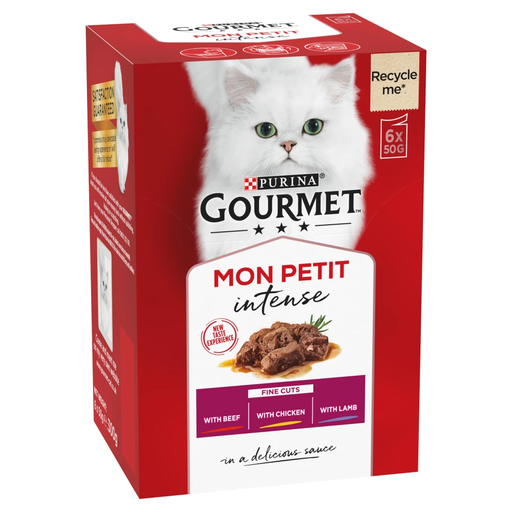
Why This Fits Their Persona: This multipack cat food is ideal for owners who want to provide variety without committing to large portions. The smaller 50g pouches ensure freshness at every meal and help manage portion control for less active indoor cats.
It is clearly labelled as a "Complete pet food," so you can be confident your cat is getting a balanced diet, avoiding the common complementary food mix-up.
Provides portion-controlled servings in three different flavours to keep cats interested. The ingredient percentages for the named meats are clearly stated.
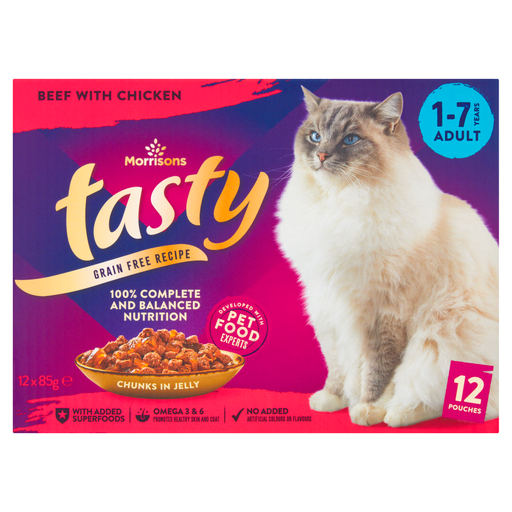
Why This Fits Their Persona: For owners prioritising high meat content and specific dietary needs, this grain free pet food is an excellent fit. It's designed for cats who may have sensitivities and includes added Omega 3 & 6 for skin and coat health.
This food sidesteps the "flavoured with" trap by clearly stating its high meat content upfront: Beef (26%) and Chicken (23%). This transparency allows owners to see exactly what they are buying.
It offers a grain-free recipe that is 100% complete and balanced. It also contains no added artificial colours or flavours, appealing to those seeking a more natural diet for their cat.
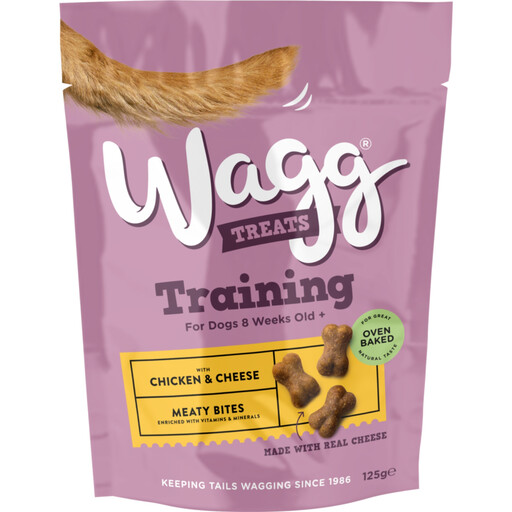
Why This Fits Their Persona: Perfect for puppy or adult dog training, these small, bone-shaped dog training treats are designed for positive reinforcement. Being oven-baked, they are palatable and easy to handle during training sessions.
These are correctly identified as "Complementary treats," which immediately informs the owner that they are for rewarding, not for replacing a main meal. This helps prevent accidental under-nutrition.
The recipe has no added sugar and is suitable for dogs from 8 weeks old. They are also enriched with vitamins and minerals to support your dog's daily health.
We have compiled a complete, real-time list of products that fully satisfy these strict selection criteria and UK safety regulations.
To avoid digestive upset, it's important to transition your pet to a new food gradually. Start by mixing a small amount of the new food (around 25%) with their old food (75%). Over the course of 7-10 days, slowly increase the proportion of the new food while decreasing the old food until you have fully switched over.
Both wet and dry foods can provide complete nutrition. Dry food is often more economical, convenient to store and can help with dental hygiene through chewing. Wet food has a high moisture content, which is great for hydration, and is often more palatable for fussy eaters. Many owners find that a mixed diet of both wet and dry food works well.
Treats should only make up a small part of your pet's daily calorie intake, typically no more than 10%. This includes cat treats and dog treats. Always check the feeding guide on the treat packaging and remember to reduce their main meal portion accordingly to prevent weight gain.