
24/7 Customer Support

Free returns

Same-day & Next-day Delivery

Quality Guaranteed

Unlock Your Welcome Offers: FREE Delivery | Up to 80% OFF | Free 30-day JoyPlus trial
Download the APP
Managing your pet's coat can feel like a never-ending task. Whether it's the constant moulting, stubborn tangles or just keeping their fur looking healthy, finding the right tool is key. With so many options available, from a simple dog brush to a high-tech pet steam brush, it can be difficult to know where to start.
This guide is designed to help you understand the different types of pet grooming brushes and identify which features are most important for your furry companion. We'll look at options suitable for various coat types and pets, helping you make an informed choice for effective at-home grooming.
Before looking at specific products, consider these key factors. A little thought now can save you and your pet a lot of hassle later.
A pet's coat type is the most important consideration.
brush for long haired cats or dogs needs longer pins to penetrate the coat without pulling. These help prevent mats and tangles from forming, especially in areas like behind the ears and under the legs.deshedding tool for dogs or a slicker brush is often effective here.Grooming should be a pleasant experience for both of you. Look for features that make the job easier.
self-cleaning slicker brush often features a button that retracts the bristles, allowing you to wipe away collected fur in one go. This is a significant time-saver.While many brushes are versatile, some are designed with a specific animal in mind. A small rabbit grooming brush, for instance, will be sized appropriately and have gentler bristles for their delicate skin, whereas a large dog brush will be more robust. Always check the product's suitability for your pet's size and species.
Here are a few standout options that cater to different grooming needs, selected for their practical features and user-friendly designs.
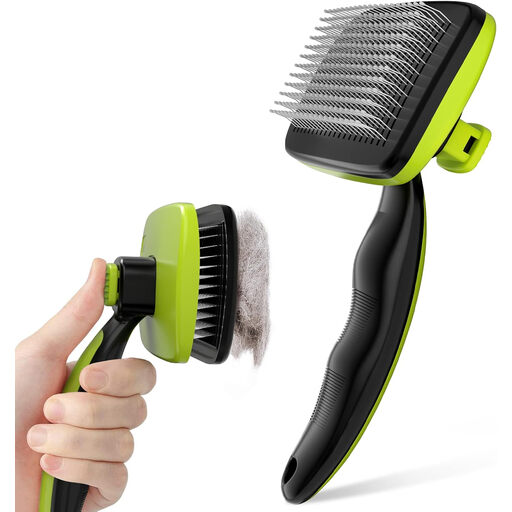
cat brush or dog brush for daily grooming and managing moderate shedding. Its convenience makes it a great starting point for new pet owners.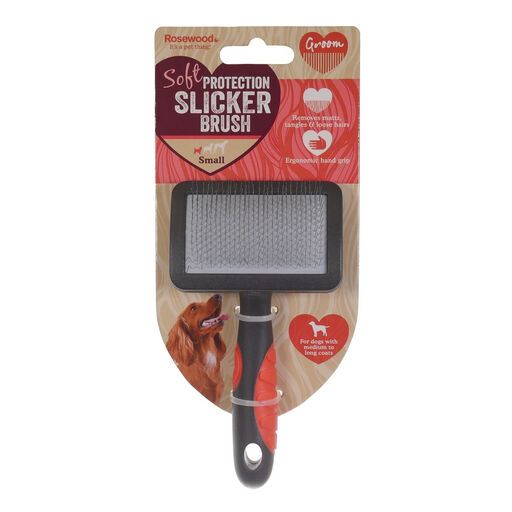
moulting brush for petite companions.rabbit grooming brush. It is particularly useful for preventing knots in delicate fur.
pet steam brush uses a cool mist (not hot steam) to help groom your pet. The moisture helps to soften knots, reduce static and lift away dirt and dander more effectively than a dry brush. It combines brushing with a gentle cleaning action.The products highlighted here cover some of the most common grooming needs. However, every pet is unique. If you're looking for a different type of tool, such as a grooming glove, a de-matting rake or other specialised brushes, you can explore our full range.
[Explore our complete collection of body brushes for pets here.](https://www.joybuy.co.uk/explore/body-brushes/d4okDrzl)
1. How often should I brush my pet? This depends on their coat type, length and shedding level. Long-haired pets may need daily brushing to prevent mats, while short-haired pets might only need it once or twice a week. During moulting season, you may need to increase the frequency for all coat types.
2. What is the difference between a slicker brush and a deshedding tool? A slicker brush, like the Rosewood or pecute models above, typically has fine, short wires packed closely together. It's great for removing loose fur, detangling and smoothing the coat. A deshedding tool for dogs, on the other hand, is specifically designed to reach through the topcoat and remove loose hair from the undercoat. While slicker brushes help with shedding, dedicated deshedding tools are often more aggressive and efficient for heavy shedders.
3. Can I use the same pet grooming brush for my dog and cat? In many cases, yes. A versatile tool like the pecute Basic Retractable Comb is suitable for both. However, always consider the size of the pet and the sensitivity of their skin. A brush designed for a large, thick-coated dog might be too harsh or unwieldy for a small cat. It's often best to choose a tool that is appropriately sized and designed for each pet.