
24/7 Customer Support

Free returns

Same-day & Next-day Delivery

Quality Guaranteed

Unlock Your Welcome Offers: FREE Delivery | Up to 80% OFF | Free 30-day JoyPlus trial
Download the APP
Choosing among pet grooming brushes can be harder than it looks. A brush that works well on a long-haired dog may be unsuitable for a guinea pig, while a soft bristle brush may not reach through a dense double coat. The right choice depends on your pet’s size, coat condition, skin sensitivity and how often you groom.
Joybuy’s Product Recommendation Officer has filtered the practical differences below to help UK pet owners avoid common purchasing mistakes and select a brush that suits everyday use.
“Suitable for all coat types” can be a broad description rather than a guarantee of ideal performance. Fine slicker pins may help lift loose fur from a thick coat, but a small bristle brush is generally more appropriate for gentle daily grooming on a rabbit or guinea pig.
Before buying, check whether the tool is intended for:
A dog grooming brush designed for a large breed may be too cumbersome around a small cat’s face, ears and legs.
Rounded tips, massage nodules and flexible pins can improve comfort, but excessive pressure can still irritate skin or pull tangled fur. No slicker brush for dogs should be dragged forcefully through a severe mat.
Use short strokes in the direction of hair growth. For knots, hold the fur above the tangle to reduce pulling on the skin, then work gradually from the outer edge. Avoid brushing broken, inflamed or irritated skin.
A self-cleaning pet brush can save time by retracting the pins and releasing collected fur. However, a retractable mechanism does not remove the need to clean and inspect the brush. Similarly, a pet spray comb may be useful for pets that tolerate mist, but it requires charging, refilling and careful handling around the eyes, ears and nose.
Consider your actual routine before paying more for a rechargeable battery, mist function or large water tank.
Look for rounded or smooth pin ends, particularly if your pet has delicate skin. Fine stainless-steel pins can reach further into medium or long coats, while soft bristles are less intrusive for sensitive small animals.
The handle also matters. A non-slip or soft-grip handle gives better control around the belly, paws and behind the ears. Lightweight designs may be more comfortable during longer sessions; for example, the Pecute Basic Retractable Pet Comb weighs 89g, while the Ancol Ergo Universal Slicker Small is listed at approximately 60g.
Hair left between pins can reduce brushing efficiency and harbour dirt. After every session:
Do not immerse electronic spray brushes or non-waterproof grooming tools. Replace any brush that scratches, loses pins or causes your pet discomfort.
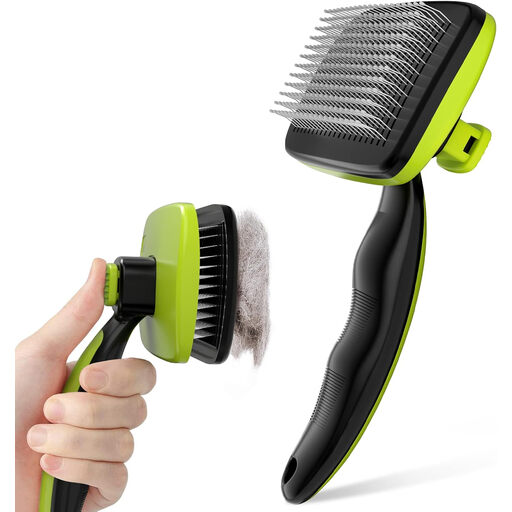
Why This Fits Their Persona: A compact option for owners who want one everyday brush for a dog, cat, rabbit or other small pet without adding a powered feature.
The one-touch mechanism retracts the bristles for easier hair removal, but the instructions still make clear that extremely long, curly or fragile hair may not be suitable.
89g design, anti-slip handle and stainless-steel bristles with massage nodules. Suitable for loose fur, dander and dirt on several pet types.

Why This Fits Their Persona: Suitable for dog and cat owners who value a more feature-led grooming routine and are comfortable charging and refilling a brush.
It is clearly specified as a cold-mist brush rather than hot steam. The product is not waterproof, and its instructions require water to be added with the supplied bottle.
Two mist modes, a 1.86 fl oz see-through tank, one-click hair ejection and USB-C charging. The listed battery runtime is 240 minutes in gentle mode and 60 minutes in power mode.
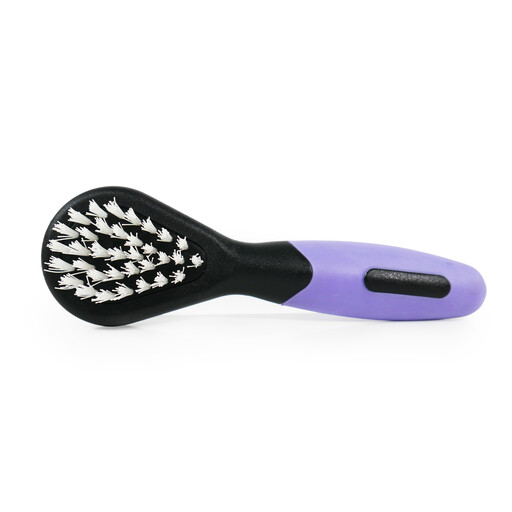
Why This Fits Their Persona: A practical rabbit grooming brush or guinea pig brush for owners who prioritise gentle, regular coat care over deep detangling.
Its mini format and gentle bristles are more appropriate for delicate small-animal coats than a large, rigid dog brush. It is still intended for light, controlled strokes.
Soft, dense bristles, a compact handle and suitability for rabbits, guinea pigs, hamsters, gerbils, mice, rats, chinchillas and degus.
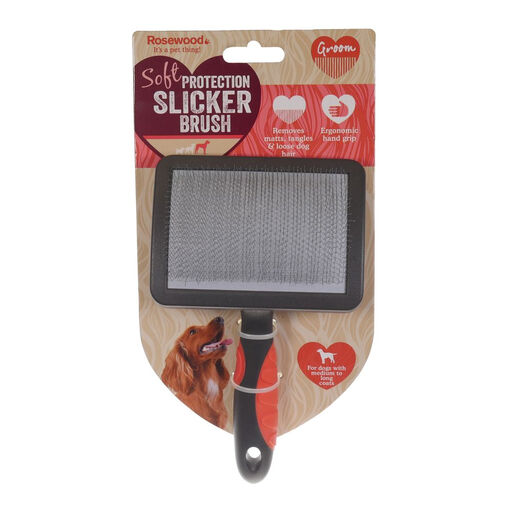
Why This Fits Their Persona: Designed for medium to large dogs and longer coats, making it suitable for owners managing frequent shedding or recurring minor tangles.
The large size is matched to bigger or longer coats rather than presented as a universal tool. The instructions emphasise light pressure and patient work on knots.
Fine flexible pins, a soft-grip handle and a larger brushing surface for loose fur, mats and tangles on suitable dog coats.
We have compiled a complete, real-time list of products that fully satisfy these strict selection criteria and UK safety regulations.
Start with a calm pet and let them sniff the brush. Begin on the back, where most animals are more comfortable, then move gradually towards sensitive areas. Keep sessions short at first and reward relaxed behaviour.
For many medium-coated pets, brushing two or three times weekly may help manage loose fur. Long-haired animals or pets prone to tangles may need more frequent grooming. The correct schedule depends on coat growth, moulting and the individual pet’s tolerance.
A brush cannot safely resolve every mat. Tight, skin-level matting may require help from a qualified groomer or veterinary professional, particularly if your pet shows pain or the skin looks inflamed.
Some are, but choose a tool specifically marked for small animals. Soft bristle brushes are suitable for light daily grooming, while a small slicker may help with minor tangles when used gently. Avoid forcing a brush through knots or using a large dog brush on a small pet.
There is no fixed lifespan. Inspect it before each use and replace it when bristles become bent, loose, broken or sharp. Electronic pet spray combs should also be checked for charging-port, tank and nozzle damage. Correct dry storage and removal of fur after each session can help maintain the tool.
The self-cleaning mechanism usually ejects collected hair but does not make the brush self-sanitising. Remove the fur after use and follow the care instructions. Many models should only be wiped with a damp cloth, while spray brushes must not be immersed in water.